Julian Ungar-Sargon

  • Home
  • Theological Essays
  • Healing Essays
  • Podcast
  • Poetry
  • Daf Ditty
  • Deep Dive Ditty
  • Videos
  • Publications
  • Military Service
  • Dominican University
  • Home
  • Theological Essays
  • Healing Essays
  • Podcast
  • Poetry
  • Daf Ditty
  • Deep Dive Ditty
  • Videos
  • Publications
  • Military Service
  • Dominican University
Julian Ungar-Sargon copy 3.jpg

Daf Ditty

A wide-ranging commentary on the daily page of Talmud.

Detail from the MENORAH in front of the Knesset in Jerusalem

Bava Metzia 86: אַשְׁרֶיךָ רַבָּה בַּר נַחְמָנִי

jyungar May 24, 2024

For the source text click/tap here: Bava Metzia 86

To download, click/tap here: PDF

The Gemara relates that while Rabah bar Nachmeni was fleeing for his life from the Persian authorities, an argument was taking place in the Yeshiva in Shamayim. The argument involved the Halachah in the case of a white hair and a Baheres spot that appear on one's skin, but there is a doubt which appeared first. Hash-m, as it were, ruled that it is Tahor, while all of the members of the heavenly Yeshiva ruled that it is Tamei. They asked who could decide the matter conclusively, and they answered that Rabah bar Nachmeni could decide the matter since he was the greatest expert on Nega'im and Ohalos.

They sent a Shali'ach to bring Rabah to them, but the Mal'ach ha'Maves could not take him from this world because he did not stop learning Torah. At that moment, a wind blew and made the reeds move and make noise. Rabah heard the noise and thought that the Persian legions were coming to kill him. He prayed that he should die at that moment rather than be taken by the authorities. At the moment that he died he declared, "Tahor! Tahor!”

We explore the extraordinary tale of his martyrdom and clarify its site I’m level with other Syriac/Persian martyrology stories with the help of Simcha Gross.

Tags 49th
Comment

Bava Metzia 85: חֲבִיבִין יִסּוּרִין

jyungar May 23, 2024

For the source text click/tap here: Bava Metzia 85

To download, click/tap here: PDF

Rebbe said: Suffering is beloved. Thereupon, he undertook to suffer for thirteen years, six through tzemirta (stones in the kidneys) and seven through tzefarna (disease in the mouth). Others reverse it that it was seven through tzemirta and six through tzefarna. The Gemora relates that Rebbe’s stableman was wealthier (from selling the manure from all of Rebbe’s horses) than the King of Persia.

When he placed fodder for the animals,their noises could be heard for three mils, and he intentionally threw it before them just when Rebbe entered the bathroom (in order that the noises emanating from Rebbe, due to his pain, would not be heard). Yet even so, his cry was louder than theirs, and was heard even by the seafarers.

Nevertheless, the sufferings of Rabbi Elozar the son of Rabbi Shimon were superior in virtue to those of Rebbe.

We explore the possible nature of his disease(s) as well as other agaric pearls on this amazing daf.

Tags 49th
Comment

Bava Metzia 84: אֲנָא אִשְׁתַּיַּירִי מִשַּׁפִּירֵי יְרוּשָׁלַיִם

jyungar May 22, 2024

For the source text click/tap here: Bava Metzia 84

To download, click/tap here: PDF

Two of the great Sages of Eretz Yisrael were Rabbi Yohanan and Reish Lakish, first generation amora’im. The Gemara on our daf describes each of them, how they met and their unique relationship.

Rabbi Shimon ben Lakish – Reish Lakish – was, apparently, from a poor but important family. Because of the financial situation at home, Reish Lakish searched for employment and because of his great physical strength trained to become a gladiator.

Rabbi Yohanan was considered one of the most handsome men in the Jewish community in Israel, although it should be noted that looks and appearance is something that is dependent on cultural norms. Aside from stating that he was handsome, the Gemara also describes Rabbi Yohanan as being obese.

Tags 49th
Comment

The Living Dead: Ecclesiastes Through Art

Bava Metzia 83: אָגְרִיתוּ לִי כְּפוֹעֵל דְּאוֹרָיְיתָא

jyungar May 21, 2024

For the source text click/tap here: Bava Metzia 83

To download, click/tap here: PDF

Most of the laws that regulate relationships between employer and employee are discussed in the sixth perek of Massekhet Bava Metzia. The seventh perek – ha-Sokher et ha-Po’alim – which begins on our daf, focuses on the rights of the worker as regulated by the Torah or by common practice in the community, e.g. the right that a worker in the field has to eat the fruit that he is harvesting (see Devarim 23:25-26).

The first Mishna teaches that the employer must follow the accepted practice that is common in a given community – hakol ke-minhag ha-medina. The Gemara explains that even in situations where workers commonly were fed breakfast at the home of the employer, he cannot feed them breakfast in the field.

We review the perek and explore the story of Rabbi Elazar who encountered a laundryman who vilified him by using the same epithet of vinegar the son of wine. This time, though, the disrespectful remark was perceived by Rabbi Elazar as an insult to the office of rabbi rather than merely a personal slight. He thought the person wicked and had the offender arrested. In doing so, he veered from his usual ethic of only arresting those he was certain committed a crime. He later regretted his peremptory decision and sought to ransom the individual, but to no avail. The ethical implications of arbitrary use of peer are discussed.

Tags 49th
Comment

Bava Metzia 82: ?נִתְקַל לָאו פּוֹשֵׁעַ הוּא

jyungar May 21, 2024

For the source text click/tap here: Bava Metzia 82

To download, click/tap here: PDF

What level of responsibility does someone have when they are holding collateral for a loan?

According to the Mishnah (80b) if one person lends money to another and accepts collateral to guarantee the loan, he is considered a shomer sachar – a paid watchman – who has a fairly high level of responsibility for the object, i.e. he is liable to pay for the object if it is lost or stolen.

Our daf continues with Rabi Yehudah who says: A shomer chinam should take an oath, while a shomer sachar should pay. Each (of the guardians) pay according to their laws (he holds that tripping is not negligence, thereby exempting the shomer chinam).

Even if he was not negligent, he still should be liable to pay (for tripping is similar to it getting stolen)!?And even a shomer chinam (it can be asked); it is understandable if he tripped in a sloping area (for then he will be exempt, since it is close to unavoidable), but when he tripped in a place that was not sloping at all, how can he take an oath that he was not negligent (it most definitely was a negligence)?

We explore the notion of exemption from liability for slip and falls as well as the ethics and halacha of collateral damage in war.

Tags 49th
Comment

Bava Metzia 81: הִלְוָהוּ עַל הַמַּשְׁכּוֹן

jyungar May 20, 2024

For the source text click/tap here: Bava Metzia 81

To download, click/tap here: PDF

§ The mishna teaches: One who lent to another based on collateral is a paid bailee for the collateral. The Gemara comments: Let us say that the mishna is not in accordance withthe opinion of Rabbi Eliezer. As it is taught in a baraita: With regard to one who lends to another based on collateral and the collateral was lost, the lender take an oath that he was not negligent in his safeguarding, and then he may take his money that he lent him.

We explore the history of collateral loans.

Tags 49th
Comment

Bava Metzia 80: επιλαμβάνειν

jyungar May 18, 2024

For the source text click/tap here: Bava Metzia 80

To download, click/tap here: PDF

In selling a cow the seller specified one blemish and said that there were others as well (but he did not mention them by name), the halachah is that (if it emerged that the animal did have the specified blemish) the sale is valid (for the buyer obviously accepted to purchase the animal with that particular blemish).

The Gemara finds a support in a baraita (Tosefta, Bava Batra 4:3): With regard to one who sells a maidservant to another and says to him: This maidservant is an imbecile, she is epileptic, she is crazy [meshuamemet]; but in reality she had only one defect and he inserted it among the other defects, this is a mistaken transaction. But if the seller stated: The maidservant has this defect, i.e., the defect that she in fact has, and other defects, without specifying what they were, this is not a mistaken transaction.

We explore the history of epilepsy or epilambanein in antiquity.

Tags 49th
Comment

Illustrated Version of Ancient Mariner

Bava Metiza 79: מִשּׁוּם שִׁינּוּי דַּעְתָּא

jyungar May 17, 2024

For the source text click/tap here: Bava Metzia 79

To download, click/tap here: PDF

The braisa states: If someone rented a boat and it sank midway through the journey, Rabbi Nassan says that if the owner of the boat already collected the rent, the renter cannot claim anything. If the renter did not yet pay, he does not have to pay.

The Gemora asks: What are the details of the case? If one asked to rent a specific boat and said he was going to transport wine on it to his destination, why can’t he have a claim? He should say, “Give me a boat that will transport my wine!”

Rather, the case must be that he rented a boat in general in order to transport specific cases of wine.

We explore ancient maritime trading and harbors especially in the Levant.

Tags 49th
Comment

C. 1480 BC, fugitive slave treaty between Idrimi of Alakakh(now Tell Atchana) and Pillia of Kizzuwatna (now Cilicia)

Bava Metzia 78: אוֹ שֶׁנַּעֲשֵׂית אַנְגַּרְיָא

jyungar May 16, 2024

For the source text click/tap here: Bava Metzia 78

To download, click/tap here: PDF

According to the Mishnah on our daf if someone rents a donkey from his friend and it is taken as an angarya the owner can simply tell him that it is his responsibility and loss. If, however, the donkey dies or breaks a leg, then the owner is obligated to replace the animal according to their agreement.

An angarya is temporary forced labor that someone may be called upon to do for the king. It was fairly common for the king’s men to force laborers to leave their normal work and participate in various public works.

We continue our exploration of forced labor worldwide.

Tags 49th
Comment

Andrea del Sarto Parable of the vineyard: the payment of the laborers

Bava Metzia 77: אַכְלוֹשֵׁי דְמָחוֹזָא

jyungar May 15, 2024

For the source text click/tap here: Bava Metzia 77

To download, click/tap here: PDF

When a casual work agreement is made between two people, there is no perceived need for a formal contract that includes all of the conditions and requirements of the work and the job that is to be completed. Our perek focuses on clarifying questions that arise from such informal agreements.

The case presented in the first Mishnah describes someone who hired workers ve-hit’u zeh et zeh – they deceived one another – they can complain, but there is no obligation to pay damages.

We continue with our daf where Rava taught a halacha regarding a hired worker who was hired for a day in order to do a specific job, and the task was completed in the middle of the day.

If the one who hired the worker has another job for him to do which is easier than the original job for which he was hired, the worker is expected to continue and do the second job as well.

If the only work to do is a task which is more difficult than the original job for which he was hired, the worker cannot be expected to do the second job. In this case, even though the worker is idle for part of the day, he must be paid full wages as originally agreed.

We continue to explore labor law today comparing Halachah with Islamic jurisprudence.

Tags 49th
Comment

In loving memory of Matan Mergil

Bava Metzia 76: חָזְרוּ זֶה בָּזֶה

jyungar May 14, 2024

For the source text click/tap here: Bava Metzia 76

To download, click/tap here: PDF

Our daf offers us a deeper understanding of how labourers were treated in ancient Jewish society. Continuing with the Gemara based on yesterday's Mishna, the rabbis discuss what should be done when an agreement has been made between labourers and an employer. Whether or not those labourers are subcontractors, the rabbis are concerned about their payment.

We learned yesterday that in such a contract, the person who changes the contract and/or the person who reneges on the contract is at a disadvantage. This means that if there is a dispute regarding payment of wages or fees, the court will side with the person who is at an advantage. But what about situations where the work is completed early? What about cases where the work is easier or more strenuous that was believed when the contract was ratified?

We explore labor laws according to Jewish practice.

Tags 49th
Comment

Bava Metzia 75: וְלִפְנֵי עִוֵּר לֹא תִתֵּן מִכְשׁוֹל

jyungar May 14, 2024

For the source text click/tap here: Bava Metzia 75

To download, click/tap here: PDF

Our Gemara brings a teaching by Rav Yehuda in the name of Rav that if someone lends money without having witnesses to the transaction, he transgresses the prohibition of lifnei iver lo titen mikhshol – do not put a stumbling block before the blind (Lev 19:14). Reish Lakish, quoting a passage in Psalms (66:11) adds that he brings a curse upon himself, since if the borrower denies receiving the loan, people will curse the lender, accusing him of falsely claiming that he is owed money.

We explore the implications of “lifne iver.”

Tags 49th
Comment

Bava Metzia 74: אֶלָּא שֶׁרָצָה לְהַחְמִיר עַל עַצְמוֹ

jyungar May 12, 2024

For the source text click/tap here: Bava Metzia 74

To download, click/tap here: PDF

The Mishna had stated: If the seller was the earliest harvester [(meaning he was not a merchant who committed to supply wheat, but he actually had wheat), he can enter into a forward contract on his harvest (without having to wait for the market to set a price). This can also be done with vessels full of grapes or olives, on “eggs” of pottery (before they are made into pottery), and on plaster when going into the kiln.]

Rav said: If only two processes are missing before the goods are completed, a forward contract may be made (for then it is considered as if the goods are in his possession); if three are missing, no contract may be made.

Shmuel said: If the processes are to be done by the hands of man, even if a hundred are missing, a forward contract may be effected; if they are processes dependent on the hand of Heaven, even if only one is missing, no contract may be made.

We explore the world of sharecropping and metayage in antiquity and rural America.

Tags 49th
Comment

Bava Metzia 73: כִּדְקָא אָזֵיל אַפַּרְווֹתָא דְזוּלְשְׁפָט

jyungar May 11, 2024

For the source text click/tap here: Bava Metzia 73

To download, click/tap here: PDF

Shmuel said to those who lend seed grain to the sharecroppers to be returned in new grain (which should be forbidden on account of lending a se’ah for a se’ah): Cultivate the land for yourselves in the field that you may solely own this portion of the land (and the seeds given back from this portion will be your seeds to begin with, and not a loan), for if not, it will be accounted as a loan to you, and therefore forbidden.

We explore the legal concept of adverse possession in Roman and Jewish law.

Tags 49th
Comment

Bava Metzia 72: אֲפִילּוּ כַּדּוֹרְמוּס הַזֶּה

jyungar May 10, 2024

For the source text click/tap here: Bava Metzia 72 


To download, click/tap here: PDF

Our mishnah teaches that one who wishes to advance money to a merchant in order for the merchant to provide him with produce at a later time may not fix a price for the purchase if the produce is not currently in the hands of the merchant or the market-price for the produce has not been set. The fear is that the buyer will give money to the merchant and then the produce will rise in value and it will be as if the buyer received a discount for having advanced the money. This is a form of interest since in return for giving his money in advance and letting the seller use them the buyer will get a greater deal of merchandise in return.

We explore the history of price-fixing in markets.

Tags 49th
Comment

Broadside with cartoon showing a Jew, an Armenian, and people indicated by occupation mourning the death of Credit, Poland, seventeenth century

Bava Metzia 71: מַלְוֶה יִשְׂרָאֵל מְעוֹתָיו שֶׁל נׇכְרִי

jyungar May 9, 2024

For the source text click/tap here: Bava Metzia 71

To download, click/tap here: PDF

The passage in Sefer Shemot (22:24) teaches im kesef talveh et ami et he-ani imakh – “if you lend money to any of My people, even to the poor” – which is understood by Rav Yosef in the Gemara as teaching that lending to a Jewish person takes precedence over lending to a non-Jewish person; similarly lending to a poor person takes precedence over lending to a wealthy person.

We explore the history of Jewish Free Loan societies especially in early American history.

Tags 49th
Comment

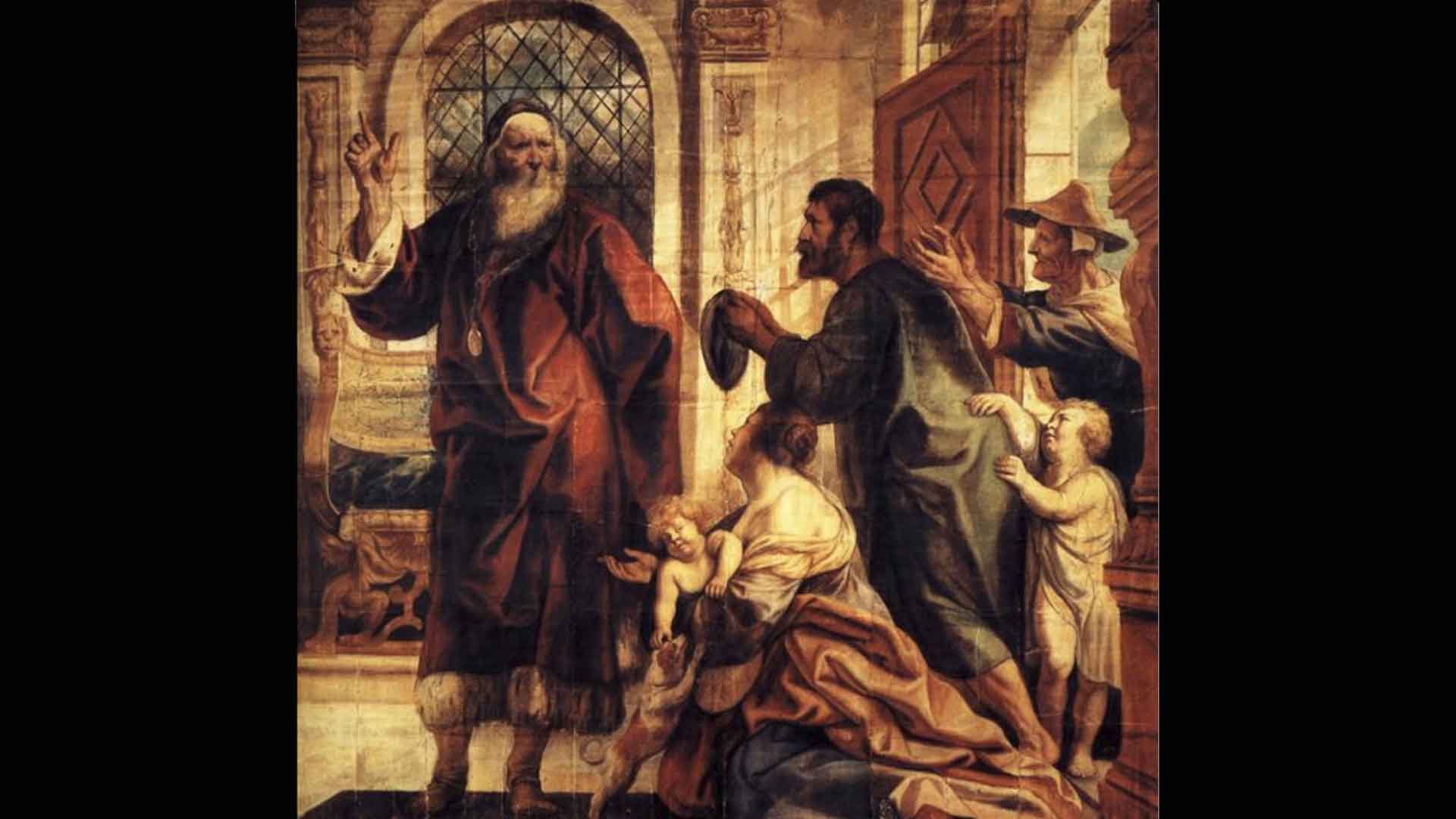
Usury is a great evil, 1645 - Jacob Jordaens

Bava Metzia 70: לַנׇּכְרִי תַשִּׁיךְ

jyungar May 8, 2024

For the source text click/tap here: Bava Metzia 70

To download, click/tap here: PDF

A new Mishna teaches us that a Jew may not care for the sheep of another as a guaranteed investment. This particular investment offers partial profit but full responsibility for the care of the animal - far too close to interest. This practice is permitted with non-Jews, for interest is not an issue.

One is not allowed to put money into a business venture where he shares in profits but not in losses or even where his proportionate share of profits is greater than that of his losses. The guaranteed part of the investment is then a loan, and its profit is a form of interest prohibited by the Sages.

We continue our exploration of the talmudic attitude to gentiles and usury in antiquity.

Tags 49th
Comment

AI image of the three ships of Christopher Columbus: Santa Maria, Niña, and Pinta

Bava Metzia 69: אַגְרָא וּפַגְרָא

jyungar May 7, 2024

For the source text click/tap here: Bava Metzia 69

To download, click/tap here: PDF

One may increase the rent for his land (although he intends to lend money to the renter), and he need not be concerned that this is interest.

What is the case? If one rents a field from his fellow for ten kor annually, and proposes, “Loan me two hundred zuz to improve the land, and I will pay you twelve kor annually,” it is permitted (for it is not a loan; rather, the renter is merely an agent of the landowner to improve the field). But an increased rental may not be offered for a store or a ship (if the money will be used for merchandise for the store or the ship; it would only be permitted if it would be used for the store or the ship itself).

And the men of pitch [benei kufera], i.e., sailors, are accustomed to paying rent at the time of pulling and paying for damage at the time of breakage.

"Men of Pitch” בְּנֵי כוּפְרָא allows us to explore the history of shipbuilding and the use of resins like pine tar.

Tags 49th
Comment

Max Gaisser The Money Lender

Bava Metzia 68: דִּנְפִישׁ טִרְחֵיהּ

jyungar May 6, 2024

For the source text click/tap here: Bava Metzia 68

To download, click/tap here: PDF

A new Mishnah states that an investor cannot set up a storekeeper to sell his goods in order that the storekeeper should receive half of the profits.

[Being that the storekeeper is also responsible for half of the stock, even under forced circumstances, it is as if he is giving the storekeeper a loan in order that he should make money, which is deemed interest ]

The braisa states: [When the Mishna says he receives wages,] It means like a worker who is paid for his time (but he does not have to expend any effort). The Gemora asks: How is this applicable here (he has to put in effort to sell the fruit)?

Abaye says: It means that he is paid to rest from his difficult work and do this instead.

We return to the Halacha of Iska and Rav Lichtenstein’s analysis of the miderabanan innovations thereof.

Tags 49th
Comment

Ancient depiction of Jews as money lenders and financiers

Bava Metzia 67: בְּאַתְרָא דִּמְסַלְּקִי

jyungar May 5, 2024

For the source text click/tap here: Bava Metzia 67

To download, click/tap here: PDF

Does the law that asmachta is not a valid sale apply only to land or also to moveable property? If someone is allows someone to take something of theirs without complaining mechila and later finds out that it was a mistake, is this valid or not? Does it depend on the situation?

Cases are discussed regarding one who eats fruit off of property given to him as collateral – does it need to be returned or not (is it interest from the rabbis or from the Torah)?

We continue our exploration of medieval jewish money lenders and the tragic outcome in Vienna 1420.

Tags 49th
Comment
  • Daf Ditty
  • Older
  • Newer

Julian Ungar-Sargon

This is Julian Ungar-Sargon's personal website. It contains poems, essays, and podcasts for the spiritual seeker and interdisciplinary aficionado.​