Julian Ungar-Sargon

  • Home
  • Theological Essays
  • Healing Essays
  • Podcast
  • Poetry
  • Daf Ditty
  • Deep Dive Ditty
  • Videos
  • Publications
  • Military Service
  • Dominican University
  • Home
  • Theological Essays
  • Healing Essays
  • Podcast
  • Poetry
  • Daf Ditty
  • Deep Dive Ditty
  • Videos
  • Publications
  • Military Service
  • Dominican University
Julian Ungar-Sargon copy 3.jpg

Daf Ditty

A wide-ranging commentary on the daily page of Talmud.

Gittin 34: הָא דְּאִתַּחְזַק, הָא דְּלָא אֶתַּחְזַק

jyungar June 19, 2023

For the source text click/tap here: Gittin 34

To download, click/tap here: PDF

Our new Mishnah states:

Initially, a person used to change his name and her name (they wrote the names in the get according to the way they were called in the place where the get was written, even though different names were used in their place of residence), the name of his city and the name of her city,

and Rabban Gamliel the Elder enacted for the benefit of the public that he should write, “This man So-and-so and every name that he has,” “This woman So-and-so and every name that she has.”

How does this solve the problem of multiple names? The Mishnah's concern is that we will not be able to identify the husband -- based on the name written in the Get -- in a city in which he is called by a different name. If every Get includes the words "and every other name that he has," the concern remains; we still will not be able to identify the husband.

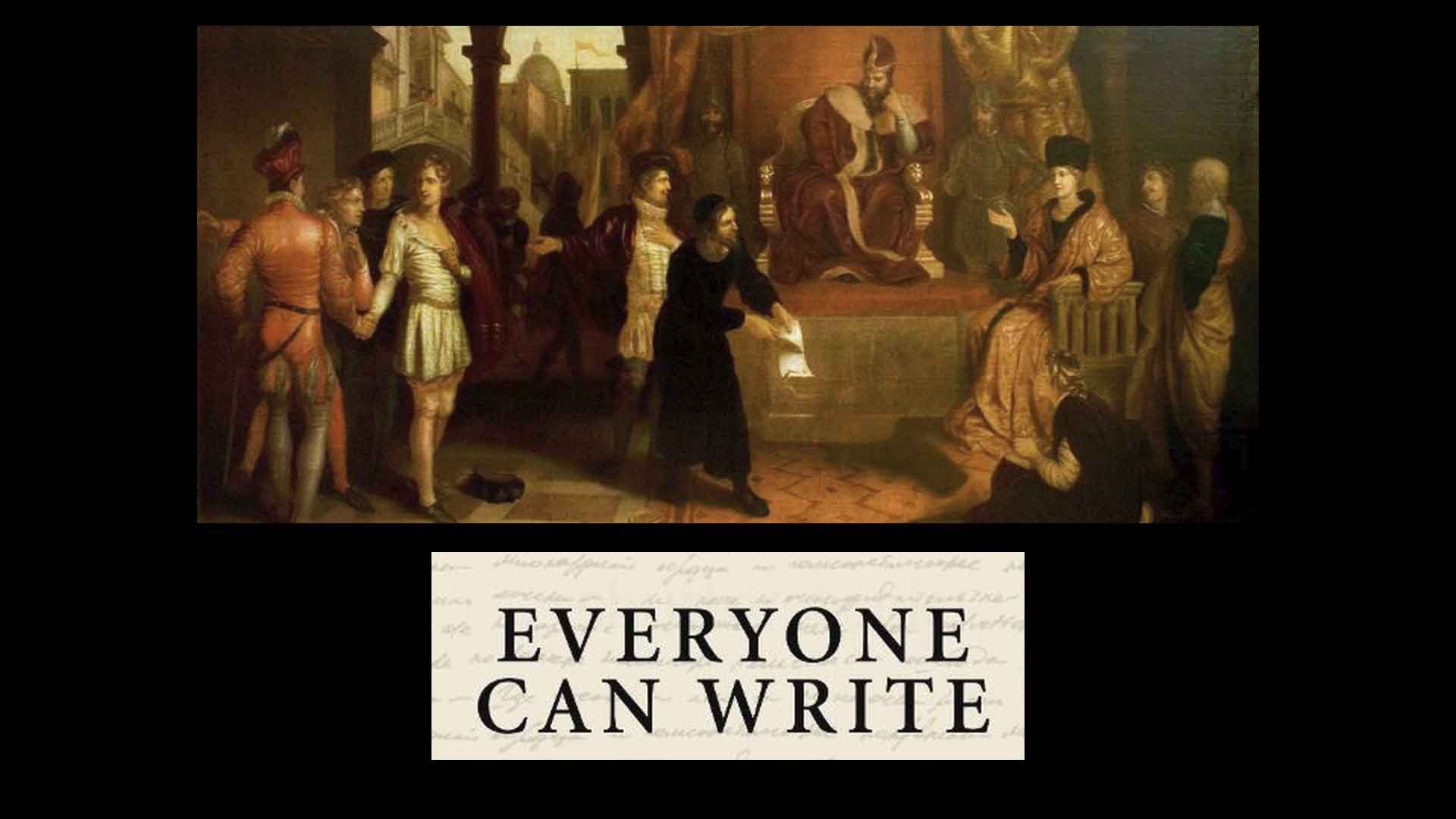
We explore divorce in antiquity in Greece and Rome.

Tags 38th
Comment

Gittin 33: כל דמקדש-אדעתא דרבנן מקדש

jyungar June 18, 2023

For the source text click/tap here: Gittin 33

To download, click/tap here: PDF

In the ongoing discussion of Rabban Gamliel the Gemora on our daf objects to Rabban Shimon ben Gamliel’s position, arguing that the Sages do not have the power to uproot a clearly established marriage.

If the husband has the power to annul the geṭ and chooses to wield that power, the divorce is never carried out and his wife is still married to him.

How can the Rabbis undo the marriage?!

In answer, the Gemara points out that every Jewish marriage is predicated on the agreement of the Rabbis, and the couple effectively agrees to abide by rabbinic rulings on the matters of marriage.

“Anyone who betroths a woman betroths her contingent upon the will of the Sages, andwhen one fails to conform to their will in matters of marriage and divorce the Sages expropriated his betrothal from him retroactively."

The language used at the wedding ceremony is that the wedding is being done ke-dat Moshe ve-Yisra’el – according to the statutes of Moses and the Jewish people. Should one party attempt to break these regulations, the Rabbis have the authority to dissolve the marriage.

We explore this authority.

Tags 38th
Comment

The Old Rabbi—Rembrandt

Gittin 32: תִּיקּוּן הָעוֹלָם

jyungar June 17, 2023

For the source text click/tap here: Gittin 32

To download, click/tap here: PDF

The fourth perek of Massekhet Gittin begins on our daf and deals with a wide variety of rabbinic enactments that were made for the betterment of society: mipnei tikkun ha-olam.

As we have learned, a geṭ can be sent by a husband to his wife by means of a messenger. Since the geṭ is only meaningful if the husband desires that the divorce take place, in theory up until the time that the geṭ is actually delivered, the husband can choose to nullify the geṭ – even without the knowledge of the messenger and without notifying his wife.

Thus, a situation could be created where the woman may enter unknowingly into an adulterous relationship, thinking that she can remarry, unaware that she is legally still her first husband’s wife. To avoid this situation, the Sages decreed that a person cannot nullify a geṭ unless he is in the presence of the messenger.

As we have learned, the Mishna quotes Rabban Gamliel as forbidding a husband to nullify the geṭ unless he does so in the presence of the messenger.

We explore this unique Rabbi and his interactions with Rome, Christianity and his appropriation by the church as a convert to Christianity.

Tags 38th
Comment

The Anemoi were the four wind gods in Greek mythology, each of them corresponding to one of the four cardinal directions (North, South, West, East) from which they came. They were the children of Aeolus, the Keeper of the Winds, and Eos, the Titan goddess of the dawn. The four were Boreas (North Wind), Notus (South Wind), Zephyrus (West Wind) and Eurus (East Wind).

Gittin 31: אַרְבַּע רוּחוֹת

jyungar June 16, 2023

For the source text click/tap here: Gittin 31

To download, click/tap here: PDF

The Mishna had stated: Rabbi Yehudah says: At three seasons (during the year) they examine the wine (to see if it turned into vinegar, for if so, it cannot be separated as terumah or ma’aser for wine): during the time that the east wind blows at the conclusion of the Festival of Sukkos, and when the blossom fall off and the grapes begin to appear in the clusters, and when the water enters the unripe grapes.

We learned in a braisa: It is when the east wind blows at the conclusion of the Festival of Sukkos, but only in the new season (in the autumnal equinox, but if it was still in the summer season, we would have no need to be concerned that it turned into vinegar).

The rabbis seem to believe that there are four winds: the north, south, west, and east winds. The east wind seems to hold great power, both figuratively and practically speaking. At the end of today's daf the rabbis discuss wind, heat, and the effects of these elements on people and upon objects.

We explore the mythology of the four winds in antiquity, native culture and Kabbalah.

Tags 38th
Comment

Papal Indulgence

Gittin 30: אֵין אוֹנֶס בְּגִיטִּין

jyungar June 15, 2023

For the source text click/tap here: Gittin 30

To download, click/tap here: PDF

A new Mishna continues an earlier conversation about the effects of the death of one party on a gift or a loan. An example is the provision of a loan for a Kohen, a Levite or a poor person. If those people change status in some way, the original loan agreement holds.

If one of them dies, the lender must contact his heirs to ensure that other laws are not forgotten.

The Gemara discusses laws around poor people and how they might differ for Jews, Samaritans and other Gentiles. Part of the determination of whether to continue to separate tithes and teruma in the case of a death of the receiver has to do with what is 'common’.

We explore the rules of charity and inheritance as well as the history of priests and indulgences and the abuse thereof.

Tags 38th
Comment

Gittin 29: שָׁלִיחַ דְּשָׁלִיחַ

jyungar June 14, 2023

For the source text click/tap here: Gittin 29

To download, click/tap here: PDF

Steinsaltz writes:

The Mishnayot on our daf discuss cases where an agent who was sent to deliver a geṭ became ill and could not fulfill his mission. When the geṭ was sent in Israel, the Mishna teaches that the messenger can pass on the responsibility to another; if it was sent from the Diaspora to Israel – a situation where the messenger is obligated to testify that the get had been written and signed in his presence – then the messenger would need to appear before a beit din, which would appoint a messenger to replace the first one.

The Gemara emphasizes that the messenger can only turn over his responsibilities to another if he becomes unable to fulfill them himself, i.e., he becomes sick or suffers some other ones – something beyond his control. According to Rabbi Abbahu, if necessary, the second messenger can appoint a third, and the third can appoint a fourth – as many as are necessary to deliver the geṭ.

In response to Rabbi Abbahu’s ruling, Rav Ashi teaches that if the first messenger dies, the power of all of later messengers to carry out the mission is lost, and the geṭ cannot be delivered.

Apparently, Rav Ashi’s original approach viewed the creation of a messenger as handing over all rights with regard to this issue to him, thus with his demise the mission cannot be fulfilled.

We explore the nature of court appointed officers and in light of recent police officer abuses, the Torah view on excessive use of force by David Polsky.

Tags 38th
Comment

Gittin 28: בְּחֶזְקַת שֶׁהוּא קַיָּים

jyungar June 13, 2023

For the source text click/tap here: Gittin 28

To download, click/tap here: PDF

According to the Mishna on our daf, if a man sends a messenger to deliver a geṭ the messenger is obligated to do so, even if the person sending the geṭ is elderly or ill. Simply put, we do not assume that someone who was alive in the recent past has passed away. This rule holds true not only for divorces, but also with regard to other laws.

Rava limits the rule presented by the Mishna to ordinary cases only – for instance, to an elderly person or to someone who has an illness from which most people recover, but not to someone who has reached 80 years old. Were the person who sent the messenger older than 80 or if he appeared to be on his death bed at the time, then we cannot assume that he remains alive for a significant period of time. Abaye counters Rava’s ruling by quoting a baraita which states that even someone who has reached 100 years old is assumed to be alive and his messenger would be obliged to hand the get to his wife as instructed.

We explore the notion of longevity in the talmud as well as presumption of life חֶזְקַת שֶׁהוּא קַיָּים

Tags 38th
Comment

“A guide, on finding a man who has lost his way, brings him back to the right path—he does not mock and jeer at him and then take himself off. You also must show the unlearned man the truth, and you will see that he will follow. But so long as you do not show it him, you should not mock, but rather feel your own incapacity.”

Epictetus

Gittin 27: בַּחֲפִיסָה אוֹ בִּדְלוֹסְקָמָא

jyungar June 12, 2023

For the source text click/tap here: Gittin 27

To download, click/tap here: PDF

The Mishna teaches that a messenger who loses the geṭ that he was sent to deliver can still hand it over to the wife if he locates it straightaway. If, however, he does not find it immediately then we fear lest the get that he finds might not be the one that he lost – perhaps it is another one that has the same names, which could not be used for this couple.

The Mishna concludes, however, that if he recognizes the document then he would be allowed to complete his obligation and deliver it.

We explore the notion of the lost self in both cases of aphasia as well as spiritual loss and recovery

Tags 38th
Comment

Gittin 26: מִשּׁוּם תַּקָּנַת סוֹפְרִים שָׁרוּ רַבָּנַן

jyungar June 11, 2023

For the source text click/tap here: Gittin 26

To download, click/tap here: PDF

In order to facilitate the work of scribes, the sages permitted them to write standard forms that would be ready for use.

The Mishna on our daf discusses how different types of standardized documents are written. Specifically, the spaces that need to be left empty should include:

In divorces, the names of the husband, the wife and the date;

In loans, the names of the lender, the borrower, the sum of money and the date;

In land sales, the purchaser, the seller, the price, the parcel of land and the date.

The mishna teaches that the scribe may write the standard part of the document in advance, leaving empty the essential part, due to the ordinance. The Gemara asks: To what ordinance is the mishna referring? Rabbi Yonatan says: Due to the ordinance for the benefit of a scribe, i.e., to enable a scribe to write the standard part of a document in advance so that when a customer arrives he will not need to write the document hurriedly. And it is in accordance with the opinion of Rabbi Elazar, who says: Witnesses of the transmission of the bill of divorce effect the divorce. And according to Rabbi Elazar’s opinion, by right it should have been that the scribe would not write even the standard part of the document in advance, as that part must also be written for her sake, but due to the ordinance for the benefit of scribes, the Sages permitted it.

The mishnah cryptically explains that these must be left blank “because of the takkanah”, or “enactment”, without explain what the “takkanah” is. There are several explanations for this, each of which is not without its problems. One explanation is that the “takkanah” was that scribes may write the formulas ahead of time so that when people request a certain document that document would be readily available.

We explore more modern approaches to women’s role in Halacha from Blu Greenberg to the conservative movement viewpoint.

Tags 38th
Comment

Gittin 25: דְּאֵין בְּרֵירָה

jyungar June 10, 2023

For the source text click/tap here: Gittin 25

To download, click/tap here: PDF

We learned in the Mishna on yesterday’s daf that if a man married to two women who share the same name tells a scribe to write a geṭ for one of them and that he will decide later on which wife to divorce, the geṭ would be invalid.

From this ruling our Gemara wants to conclude that en berera – that we do not take seriously a later action which clarifies an earlier issue. The question of whether or not halakha recognizes berera – the later clarification – is a topic discussed in relation to many laws throughout the Talmud.

In late 1793, when the Habsburg Monarchy led the coalition against Revolutionary France and all of Europe was at war, one Jewish woman waged her own private struggle in Trieste, the thriving Habsburg free port on the Adriatic. The desperate twenty-three-year-old Rachele Morschene Luzzatto sought to extricate herself from her failing marriage to Lucio Luzzatto, a thirty-eight-year-old broker, her husband of five years, and father of their two-year-old daughter.

We examine the Jews of the Hapsburg Empire.

Tags 38th
Comment

Gittin 24: סוֹפְרִין מַקְרִין, סוֹפְרִין קוֹרְאִין

jyungar June 9, 2023

For the source text click/tap here: Gittin 24

To download, click/tap here: PDF

Steinsaltz writes:

The third perek of Massekhet Gittin begins on our daf and deals with two main issues:

A continuation of the discussions of li-shmah – the law requiring that a geṭ be written with a specific married couple in mind, and

The laws dealing with the messenger who delivers the geṭ. For example, if a messenger travels a significant distance to deliver the geṭ, he cannot be totally certain that the husband is still alive at the time that he hands the geṭ to the wife. As we have learned, a geṭ cannot be given after the husband has died. Although the woman is free to marry whether she is a widow or a divorcee, there are differences between those two situations regarding such laws as marrying a kohen or being obligated in yibum.

We explore the legal function of transferring legal documents (Rav Taragin) and Pro Yair Furstenberg’s paper on the shaping of rabbinic divorce in the setting of Roman Jurisdiction.

Tags 38th
Comment

Odysseus questions the blind seer Tiresias

Gittin 23: אֶלָּא בִּטְבִיעוּת עֵינָא דְּקָלָא

jyungar June 8, 2023

For the source text click/tap here: Gittin 23

To download, click/tap here: PDF

Anyone is fit to serve as an agent to bring a bill of divorce to a woman except for a deaf-mute, an imbecile, or a minor, or a blind person, or a gentile.

The exceptions are again those people who categorically do not have awareness. In all areas of halakhah, someone who does not have “awareness” cannot act as someone else’s agent. A blind person can also not deliver a get, even though blind people were not considered to lack “awareness”.

But why is a blind person disqualified from serving as an agent? Rav Sheishes answers: It is because he does not know from whom he is taking the get, or to whom he is giving the get. Rav Yosef asks: How, if so, will a blind person be permitted to have marital relations with his wife? And how is an ordinary person permitted to have marital relations with his wife at night (when due to the fact that he cannot see her, he might be cohabiting with a different woman)?

Rather, Rav Yosef concludes, it is permitted because he recognizes her voice. So too, here, the blind person should be qualified to serve as an agent, for he can recognize their voices (the husband and the wife)!?

We explore the notion of voice recognition and dive into the mythology of the blind prophets of yore.

Tags 38th
Comment

Gittin 22: גּוֹי, לְדַעְתֵּיהּ דְּנַפְשֵׁיהּ עָבֵד

jyungar June 7, 2023

For the source text click/tap here: Gittin 22

To download, click/tap here: PDF

Our next Mishnah states:Anyone is qualified to write a bill of divorce, even a deaf-mute, an imbecile, or a minor. Additionally, a woman may write her own bill of divorce and give it to her husband so that he can present it to her. And a man may write his own receipt, which must be given to him by the woman to confirm that he has paid her the value of her marriage contract. This is because the ratification of a bill of divorce is only through its signatories, and it is irrelevant who wrote it.

We explore the legal status of mental incompetency and the use of documents in gentile courts.

Tags 38th
Comment

Gittin 21: כְּתָבוֹ לַטּוֹפֶס כְּתָבוֹ לַתּוֹרֶף

jyungar June 6, 2023

For the source text click/tap here: Gittin 21

To download, click/tap here: PDF

One may not write a bill of divorce on anything that is attached to the ground. If one wrote it on something that was attached to the ground, and afterward he detached it, signed it, and gave it to her, then it is valid. Rabbi Yehuda deems a bill of divorce invalid unless its writing and its signing were performed when it was already detached.

We continue our exploration of divorce with attention to Gender, Multiculturalism and Dialogue by Lisa Fishbayn.

Tags 38th
Comment

Gittin 20: גֵּט שֶׁכְּתָבוֹ שֶׁלֹּא לִשְׁמָהּ

jyungar June 5, 2023

For the source text click/tap here: Gittin 20

To download, click/tap here: PDF

Rav Chisda said: If a get was not written lishmah (for the sake of the woman) and the scribe traced over it with ink lishmah, we have arrived at an argument between Rabbi Yehudah and the Chachamim. For we learned in a braisa: A scribe was supposed to write the Name of Hashem in a Sefer Torah, and instead intended to write the name Yehudah.

He forgot to insert the “dalet” and ended up writing the Name of Hashem but without the required intention necessary to write the Holy Name. Rabbi Yehudah posits that the scribe can pass his quill over the Name of Hashem and have the proper intention of writing the Name. The Chachamim disagree, claiming that this is not the best way to write the Name of Hashem, and the Sefer Torah is subsequently invalid.

[We derive from this dispute that Rabbi Yehudah maintains that writing over previous writing is deemed writing, and therefore, according to Rabbi Yehudah, when the scribe writes lishmah over the previous writing on the get, it will be valid. According to the Chachamim, however, writing over previous writing is not deemed writing, and writing lishmah over the previous writing will not validate the get.]

We examine intentionality re the notion of lishmah and Rabbi Jachter’s essays on Wartime Gittin.

Tags 38th
Comment

Gittin 19: שֶׁלֹּא יְהוּ בְּנוֹת יִשְׂרָאֵל עֲגוּנוֹת

jyungar June 4, 2023

For the source text click/tap here: Gittin 19

To download, click/tap here: PDF

The new Mishnah states:

One may write a bill of divorce with any material that can be used for writing: With deyo, with paint [sam], with sikra, with komos, with kankantom or with anything that produces permanent writing. However, one may not write withother liquids, nor with fruit juice, nor with anything that does not produce permanent writing.

We explore the history of inks and writing.

Tags 38th
Comment

Le Get (The Divorce), painting by Moshe Rynecki, c. 1930.

Gittin 18: לָא מַקְדֵּים אִינָשׁ פּוּרְעָנוּתָא לְנַפְשֵׁיהּ

jyungar June 3, 2023

For the source text click/tap here: Gittin 18

To download, click/tap here: PDF

Our Gemara asks: From when do we begin counting for a divorce? Rav says the significant moment for the geṭ is when the geṭ is handed over; Shmuel says that it is from the time that the geṭ is written. After some discussion the Gemara concludes that we can begin counting from the time that it is written.

The need to know when we can begin counting “for the geṭ” refers to a period called havhana (literally, “a period of distinction”) – three months from the time that the couple has separated.

We explore divorce and the timing of the get…comparing with Islamic Fiq..

Tags 38th
Comment

Great Mongol (Demotte) Shahnama- The Sassanians: Ardashir Babakan. Ardashir's minister stands before him.

Gittin 17: Persian Priest [Habbara]

jyungar June 2, 2023

For the source text click/tap here: Gittin 17

To download, click/tap here: PDF

Our daf describes a time when Rav Yehuda and Rabbah came to visit Rabba bar bar Ḥana while he was ill. After a discussion of halakhot related to messengers who brought a geṭ from the Diaspora to Israel, a Habara walked into the house and took away the light that they had in the room.

Rabba bar bar Ḥana reacted to this by saying that he would prefer to be ruled by God – or even by the Romans – rather than by the Persians who made life so difficult for the Jews.

The term Habara is what the Gemara calls Zoroastrians – the Persian priests – who are also referred to as amgushim and magim. They were an independent tribe who, over time, developed into the priestly caste of the Persian empire.

During one of their holidays the only lights that were permitted were those in their temple, and they had agents whose job it was to extinguish all other forbidden lights.

We explore the interaction between Talmudic and Persian texts and their influence

Tags 37th
Comment

Gittin 16: הַקָּטַפְרֵס

jyungar June 1, 2023

For the source text click/tap here: Gittin 16

To download, click/tap here: PDF

Our daf digresses from the discussion of messengers who deliver giṭṭin from the Diaspora to Israel and raises a number of other unrelated issues. These range from a questionOur daf digresses from the discussion of messengers who deliver giṭṭin from the Diaspora to Israel and raises a number of other unrelated issues. These range from a question about the height of a fence that separates between two reshuyot – public and private domains – when there is a height differential between two areas with regard to the laws of Shabbat, to several discussions about laws of tumah ve-taharah.

One surprising halakha that we find discussed on our daf is the rule that a person who enters a pool of mayim she’uvin – simple water that was drawn, and therefore cannot be used for a mikvah – or has such water poured on him, becomes tameh!

Due to Memorial Day we bring discussions of the importance of the flag and what it represents and the intriguing she’lot regarding the flag in a beit knesset.

Tags 37th
Comment

JACOB BLESSES SONS. Jacob's twelve songs gathered to hear their father's prophecies regarding each of them and to receive his blessing (Genesis 49) Woodcut from the Cologne Bible, 1478-1480

Gittin 15: Deathbed Wishes

jyungar May 31, 2023

For the source text click/tap here: Gittin 15

To download, click/tap here: PDF

The second perek of Gittin reiterates the prior mishnayot of the first perek:

If someone brings a get (to Eretz Yisroel) from abroad and says, “The get was written in my presence,” but he did not say, “It was signed in my presence,” or if he said, “It was signed in my presence,” but he did not say, “It was written in my presence,” or if he said, “The entire get was written in my presence and half of it was signed in my presence” (I saw only one of the witnesses signing), or if he said, “Half of it was written in my presence and all of it was signed in my presence,” the get is invalid. If one person said, “It was written in my presence,” and another person said, “It was signed in my presence,” it is invalid.

We continue our exploration of death wishes in the Bible, and down to the Victorian age.

Tags 37th
Comment
  • Daf Ditty
  • Older
  • Newer

Julian Ungar-Sargon

This is Julian Ungar-Sargon's personal website. It contains poems, essays, and podcasts for the spiritual seeker and interdisciplinary aficionado.​