Julian Ungar-Sargon

  • Home
  • Theological Essays
  • Healing Essays
  • Podcast
  • Poetry
  • Daf Ditty
  • Deep Dive Ditty
  • Videos
  • Publications
  • Military Service
  • Dominican University
  • Home
  • Theological Essays
  • Healing Essays
  • Podcast
  • Poetry
  • Daf Ditty
  • Deep Dive Ditty
  • Videos
  • Publications
  • Military Service
  • Dominican University
Julian Ungar-Sargon copy 3.jpg

Daf Ditty

A wide-ranging commentary on the daily page of Talmud.

Sotah 22: Fake Frumkeit

jyungar April 20, 2023

For the source text click/tap here: Sotah 22

To download, click/tap here: PDF

Our dad teaches that there are seven types of perushin that fall into this category, the common thread among them is that these people are hypocrites who present themselves as God-fearing, religious people when in fact they are just putting on a show.

The perushin are the Pharisees, the sages of the Talmud, while the zedukim are the Sadducees, the elite class that rejected many of the traditions of the perushin.

Those who use the crown of Torah to further their personal objectives were the dangerous ones.

We explore the phenomenon of false piety and fake frumkeit.

Tags 36th
Comment

Art by Zalman Kleinman

Sotah 21: מְלַמְּדָהּ תִּיפְלוּת

jyungar April 19, 2023

For the source text click/tap here: Sotah 21

To download, click/tap here: PDF

Rabbi Eliezer said: If someone teaches his daughter Torah, he is teaching her lewdness. Tosfos cites a Yerushalmi which notes that Ben Azzai does not follow the exposition of Rabbi Elozar ben Azaryah. For it is written regarding the mitzvah of Hakhel that men, women, and children should assemble.

The Rambam rules that a woman who studies Torah receives reward, but not in the same capacity as a man. However, the Chachamim commanded a father not to teach Torah to his daughter, for women, in general, are not capable of understanding the intricacies and the fine details of the Torah, and it will lead them to incorrect halachic conclusions.

This admonition is only applicable to the Oral Law; however, with respect of the Written Law, one should not teach it to her, but if he does, it is not regarded as if he taught her lewdness.

We explore women’s learning from a number of perspectives.

Tags 36th
Comment

Sotah 20: פַּחדְּאָ צמָיֵת, בּיִעתֲוּתאָ מרְפַּיְאָ

jyungar April 18, 2023

For the source text click/tap here: Sotah 20

To download, click/tap here: PDF

Steinsaltz writes:

According to the Mishna on our daf, if the sota is in fact guilty of adultery, after she drinks the “bitter water” her face will begin to turn green and her eyes will bulge out. At that point the people standing nearby immediately remove her from the Temple precincts lest she me-tameh the holy place.

The Gemara attempts to clarify what the fear of ritual defilement might be.

Abaye explains that the concern is that she might bleed and become a nidda.

The Gemara offers support to the idea that a sudden fear might cause a woman to become a nidda from the passage in Megillat Esther (4:4), which is understood by Rav to mean that Esther became a nidda upon hearing that Mordekhai was in sackcloth following Haman’s decree.

At the same time, the Gemara questions whether this is true, given the Mishna in Massekhet Nidda which teaches that fear stops a woman from menstruating. The Gemara’s explanation is that although a long-term fear may keep a woman from menstruating normally, a sudden shock may cause a woman to bleed.

We explore the evidence for the influence of stress and menstruation.

Tags 36th
Comment

Sotah 19: כַּלְבּוֹס שֶׁל בַּרְזֶל

jyungar April 17, 2023

For the source text click/tap here: Sotah 19

To download, click/tap here: PDF

The priest would force the woman to drink the bitter water of a sota, and afterward he would sacrifice her meal-offering. Rabbi Shimon says: The priest would sacrifice her meal-offering and afterward he would force her to drink.

The Gemara asks: But does Rabbi Akiva in fact hold that the woman is forced to drink against her will? But isn’t it taught in a baraita (Tosefta 2:3) that Rabbi Yehuda says: A hook [kelabus] made of iron is forcibly placed into her mouth, so that if the scroll was erased and she said: I will not drink, she is forced to drink against her will.

We explore the use of coercion in forcing confessions in the talmud and in western law.

Tags 36th
Comment

Sotah 18: “״אָמֵן״ ״אָמֵן

jyungar April 16, 2023

For the source text click/tap here: Sotah 18

To download, click/tap here: PDF

“Amen, amen” (Number 5:22), mentioned twice, why?

The mishna explains that it includes of the following: Amen on the curse, as she accepts the curse upon herself if she is guilty, and amen on the oath, as she declares that she is not defiled.

She states: Amen if I committed adultery with this man about whom I was warned, amen if I committed adultery with another man. Amen that I did not stray when I was betrothed nor after I was married.

We explore the double expression and the use of amen in liturgy and as an affirmative.

Tags 36th
Comment

Sotah 17: תְּכֵלֶת דּוֹמֶה לַיָּם

jyungar April 15, 2023

For the source text click/tap here: Sotah 17

To download, click/tap here: PDF

The Gemara relates that in the merit of Avraham Avinu's declaration, "Im mi'Chut v'Ad Seroch Na'al" -- "I will not take from a thread to a sandal strap [and I will not take anything that is yours, lest you should say, 'I have made Avram rich']" (Bereishis 14:23), the Jewish people were rewarded with the Mitzvah of Techeles.

The Gemara asks what is unique about Techeles such that it was given as the reward for Avraham Avinu's statement. The Gemara answers with the words of Rebbi Meir who says that Techeles is unique because the color of Techeles "is similar to the sea, the sea is similar to the sky, and the sky is similar to the Kisei ha'Kavod," the throne of Hashem's glory.

We explore what is the significance of this comparison and where are we halachically with techies and the mystical significance of the color blue.

Tags 36th
Comment

Paul Laurence Dunbar

Sotah 16: צִפּוֹר דְּרוֹר

jyungar April 14, 2023

For the source text click/tap here: Sotah 16

To download, click/tap here: PDF

Rabbi Yishmael says that a Revi'is of water is used for a Metzora so that the blood of the bird will be discernible in the water.

A bird called Tzipor Dror is used in the purification of a Metzora.

D’ror Bird

Rabbi Yirmiyah inquired of Rabbi Zeira: What is the halachah if the bird is so large that its blood engulfs the water, or if the bird is so small that its blood is engulfed by the water? Rabbi Zeira replied: Have I not told you not to take yourself outside the halachic decisions (do not raise questions about exaggerated points)!

The Chachamim (when ruling that a revi’is of water is required) measured using a d’ror bird, and you will not find one that is so large that its blood will engulf the water, and you will not find one so small that its blood will be engulfed by the water!

We explore the relationship between pshat and Halacha,

with Martin Lockshin’s essay and the way early Christianity formed by interpretation of pshat…

Tags 36th
Comment

Sotah 15: מַיִם חַיִּים

jyungar April 13, 2023

For the source text click/tap here: Sotah 15

To download, click/tap here: PDF

The mishnah starts to follow the order of the verses which describe the Sotah ritual in Numbers 5. Verse 15-17 and describes the minhah sacrifice (yesterday’s mishnah) and the water in the earthenware bowl, into which the name of God will be rubbed out.

The verse only says that the priest takes some water, but it does not say where he takes it from. The mishnah adds that it is taken from the laver.

There is a debate about how much water is to be put into the bowl, but in either case the amount of water is just sufficient to absolve the ink from God’s name. Rabbi Judah gives a smaller measurement for the water since he prescribes the least amount of writing (see tomorrow’s mishnah).

We explore the ritual through the lens of Andrew Durbin’s review of the secondary literature on the rabbinic including feminist readings.

Tags 36th
Comment

The monastic complex atop Mt. Nebo grew in the fourth–sixth centuries around where Moses was buried according to the Bible.

Sotah 14: וְלאֹ־ידַָע֥ אִישׁ אֶת־קְבֻרָ֣ת֔וֹ

jyungar April 12, 2023

For the source text click/tap here: Sotah 14

To download, click/tap here: PDF

"the garrison [gastera] of Beth Peor and said to them: Show us where Moses is buried. As the men stood above on the upper section of the mountain, it appeared to them as if the grave was below in the lower section. As they stood below, it appeared to them to be above. They divided into two groups, one above and one below. To those who were standing above, the grave appeared to them to be below; to those who were standing below, the grave appeared to them to be above, “

Rabbi Chama the son of Rabbi Chanina says: Even Moshe our teacher does not know where he is buried. The verse here says: And no “Ish” – “man” knows his burial place. A different verse says: And this is the blessing that Moshe, the “Ish” Elokim – the man of God, blessed. [We see that Ish is used to refer to Moshe.]

We explore the death and site of burial of Moses from a literary and historical perspective.

Tags 36th
Comment

Sotah 13: סֶרַח בַּת אָשֵׁר

jyungar April 11, 2023

For the source text click/tap here: Sotah 13

To download, click/tap here: PDF

The Gemara asks: And from where did Moses our teacher know where Joseph was buried? The Sages said: Serah, the daughter of Asher, remained from that generation that initially descended to Egypt with Jacob. Moses went to her and said to her: Do you know anything about where Joseph is buried? She said to him: The Egyptians fashioned a metal casket for him and set it in the Nile [Nilus] River as an augury so that its water would be blessed.

In the rabbinic imagination, Serah the granddaughter of Jacob survived not only into the days of Moses, David, and Rabbi Yohanan.

According to one very interesting line of tradition, she followed her people from the Land of Israel into the Babylonian Exile and continued her legendary existence there.

Despite the Talmudic tradition that Serah was granted immortality, the Persian Jews of the city of Isfahan believed that Serah bat Asher actually lived among them, until she died in a great synagogue fire in the 12th century CE.

Tags 36th
Comment

The child Moses given up by his mother (who has been acting as wet nurse) to the daughter of Pharaoh (Exodus, ii.10; after the painting in the Foundling Museum); to right, the mother/nurse is being paid by a steward; to left, two female attendants, one black and one white, the former evidently revealing the child's identity to her colleague; the scene is identified as being in Egypt by a small crocodile and an Egyptian figure beneath the throne, and in the background pyramids and a sphinx; proof before letters. 1752 Etching and engraving, touches of grey wash on the face of Pharaoh's daughter.

Sotah 12: בַּת פַּרְעֹה

jyungar April 10, 2023

For the source text click/tap here: Sotah 12

To download, click/tap here: PDF

Pharaoh’s daughter recognized that Moses was an Israelite, perhaps because he was abandoned (Shadal, Hakham), or circumcised (Exodus Rabbah 1:24; Rashbam). This is the only place in Tanakh where a baby is said to be crying (since compassion is relevant to the plot). The Torah highlights Pharaoh’s daughter’s compassion with a crying baby, even though she knew of her father’s decree to drown Israelite baby boys!

We explore the identity of this rebellious daughter of the king of Egypt, Bittě-Yâ, daughter of Pharaoh (1 Chr 4,18), and possibly Bint(i)-ʿAnat, daughter of Ramesses II

Tags 36th
Comment

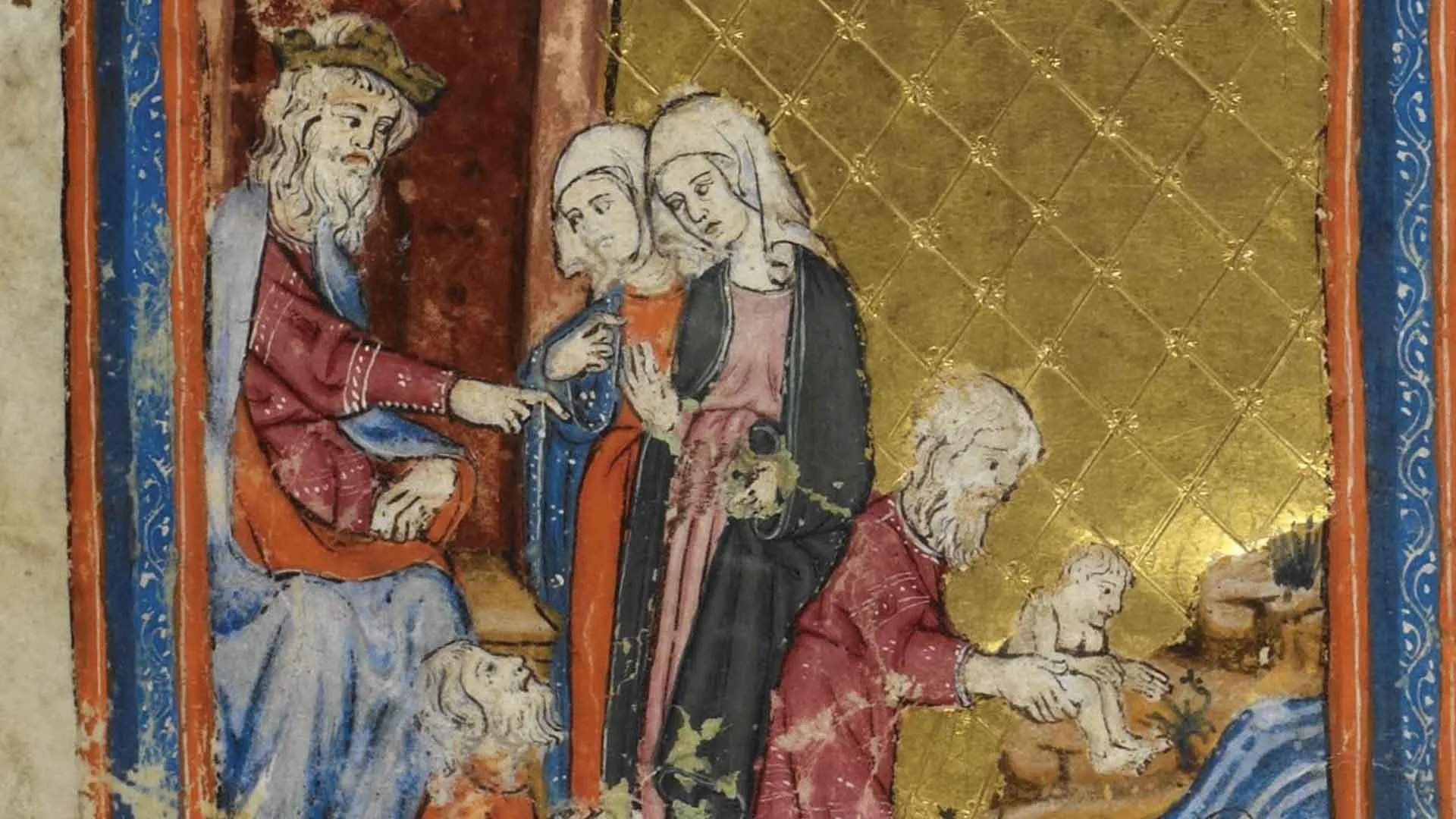
"Pharaoh and the Midwives," from the Golden Haggadah, Catalonia, early 14th century. (British Library)

Sotah 11: Egyptian Midwives

jyungar April 9, 2023

For the source text click/tap here: Sotah 11

To download, click/tap here: PDF

Continuing with the theme of reciprocity, where one's behaviour or words or thoughts leads to a complimentary consequence later in life, the rabbis examine some of the book of Exodus. In particular, they focus on the lives of Israelites while in Egypt, the Pharaoh, and the women mentioned in the story of the Exodus.

The Torah relates that Pharaoh, in his attempt to reduce the growth of the Jewish people and to eliminate the perceived threat of rebellion (Shemos 1:10), ordered the Jewish midwives (1:15) to kill every baby boy that was born (1:16). The Gemara relates that he taught them a way to discern when the expectant mothers were ready to give birth (so that they would not be able to give birth in secret and hide their babies; Rashi). Pharaoh also taught them how to discern whether the baby -- before it emerged from the womb -- was a boy or a girl. The Torah relates that the midwives "feared G-d" (1:17) and they did not kill the babies, but, on the contrary, they helped keep them alive.

Who were the midwives who risked their lives to save male Hebrew babies—Israelites or Egyptians? A text discovered at the Cairo Genizah sheds new light on this exegetical conundrum.

Tags 36th
Comment

Rembrandt

Sotah 10: Saul's Suicide

jyungar April 8, 2023

For the source text click/tap here: Sotah 10

To download, click/tap here: PDF

Continuing with the theme of middah ke-neged middah that was introduced by the Mishna (8b) that we studied earlier, our Gemara focuses on some of the characters who are presented by the Mishna (9b) as prime examples of people who suffered this fate.

The Sages taught in a baraita: Five individuals were created with a characteristic that is akin to a representation of the One on High, and they were all stricken by that characteristic.

Samson was glorified in his strength, Saul in his neck (see I Samuel 9:2), Absalom in his hair, Zedekiah in his eyes, and Asa in his feet.

Saul was smitten in his neck, as it is written:

“Then said Saul to his armor-bearer: Draw your sword and thrust me through with it; lest these uncircumcised come and thrust me through and make a mock of me. But his armor-bearer would not; for he was sore afraid. Therefore, Saul took his sword and fell upon it” ; he fell with his neck upon the sword.

We explore the story of death of Saul as it develops from the book of Samuel to Chronicles.

Tags 36th
Comment

Sotah 9: Comparisons

jyungar April 7, 2023

For the source text click/tap here: Sotah 9

To download, click/tap here: PDF

Much of our daf is a continuation of comparisons. The sota is thought to go through each step of her rituals because it directly correlates with an aspect of her alleged transgression. The rabbis share multiple comparisons in other circumstances. A new Mishna teaches us about many who were rewarded or punished for their acts in kind:

· Samson lusted after what he saw; later, his eyes were gouged out.

· Absalom:

o was proud of his hair; later was hanged by his hair.

o had intercourse with ten of his father's concubines; later ten of Joab's soldiers smote him.

o stole the hearts of his father, the court, the Jewish people; later, Joab stabbed his heart with three spears.

· Miriam waited for Moses at the water for one hour; later, the people waited seven days to mourn her death.

· Joseph alone merited burying his father; Moses himself helped to transport Joseph's coffin.

We continue our exploration of the ancient ritual with modern day commentators.

Tags 36th
Comment

Sotah 8: Humiliation

jyungar April 6, 2023

For the source text click/tap here: Sotah 8

To download, click/tap here: PDF

The Mishna on our daf describes what the Sages refer to as middah ke-neged middah: “measure for measure”, meaning that a person receives what he deserves.

The Mishna applies this specifically to the case of sota, indicating that the various punishments and degradation that the sota receives are all directly connected to her behavior and the activities in which she participated.

We continue our struggle with the notion of public humiliation affecting women not men.

Tags 36th
Comment

Nikanor Gate

Sotah 7: בַּעְלָהּ נֶאֱמָן מִקַּל וָחוֹמֶר

jyungar April 5, 2023

For the source text click/tap here: Sotah 7

To download, click/tap here: PDF

The Mishna on our daf describes how the woman who is accused of adultery and is brought to the Beit HaMikdash to drink the “bitter water” of the sota is first interrogated and encouraged to admit her sin in order to avoid the need to actually carry out the ritual.

This is done by assuring her that she should not be ashamed to admit her sin, which may have come under the influence of alcohol, levity, immaturity, or bad company.

We continue our overview of the Sotah Ritual and the relative weight given to the husband vs the suspected wife legally.

Tags 36th
Comment

Sotah 6: הַמַּיִם בּוֹדְקִין אוֹתָהּ

jyungar April 4, 2023

For the source text click/tap here: Sotah 6

To download, click/tap here: PDF

Our Daf notes that the test of the sota only takes place when there are no witnesses to the adulterous act.

If witnesses are present, the husband divorces his wife without paying her ketuba.

Drinking the bitter waters is required only if a woman denies adultery although she was warned and was then witnessed moving toward seclusion with a forbidden man with enough time passing for her to have had intercourse.

We continue our introductory exploration of the south ritual in its ancient near eastern context.

Tags 36th
Comment

Sotah 5: גַּסּוּת הָרוּחַ

jyungar April 3, 2023

For the source text click/tap here: Sotah 5

To download, click/tap here: PDF

Our daf focuses on the evils of gasei ha-rua’h: arrogance.

The Gemora offer proof of texts from Tanakh all of which clearly indicate that pride is a destructive force.

We explore the duality of arrogance vs humility and where in the spiritual refining process they meet.

Tags 36th
Comment

The whole Book of Proverbs in the Leningrad Codex (1008 C.E.) from an old fascimile edition.

Sotah 4: בְעַד־אִשָּׁ֥ה זוֹנָ֗ה עַֽד־כִּכַּ֫ר־לָ֥חֶם

jyungar April 2, 2023

For the source text click/tap here: Sotah 4

To download, click/tap here: PDF

In order for the laws of a sota to come into play, the husband must warn his wife that she should not be secluded with a certain man, and his warning notwithstanding, she does exactly that. In order for the seclusion to be considered significant, it must be long enough for the man and woman to have engaged in at least the beginning of an act of sexual intercourse.

Several suggestions are raised with regard to the definition of that length of time.

The Gemara continues with a profound insight explaining that adultery is much more than a sin of sexual lust.

Rather it often is the result of arrogance - of thinking one can basically do what one wants.

Even more difficult is the teaching equating neglect to wash one's hand before a meal to adultery itself. "Whoever eats bread without washing one's hands it is as if they had relations with a harlot" (Sotah 4b).

The Gemara actually brings scriptural support for such a position: "'For on account of a harlot [a man is brought to] a loaf of bread" (Mishlei 6:26).

We explore the notion of a dangerous woman in Mishlei as well as the way the scribes shaped our interpretations.

We end with an analysis of Bialik’s Megilas Eish/Scroll of Fire

Tags 35th
Comment

Sotah 3: קַרְיָא לְשׁוּמְשְׁמָא

jyungar April 1, 2023

For the source text click/tap here: Sotah 3

To download, click/tap here: PDF

Our Gemara brings a number of statements in the name of Rav Ḥisda, whose origins are found in the halakha of a sota:

“Adulterous behavior in the home is like a worm in the sesame,” i.e. just as the worm destroys the sesame, adultery destroys the fabric of the family.

“Anger in the home is like a worm in the sesame.”

Before the Jewish People sinned, the heavenly presence was manifest in every person, as the Torah teaches (Devarim 23:15) that God walks in the camp; once the Jewish People sinned, God’s presence was removed, as that pasuk concludes, that no promiscuity should be shown, or He will leave you.

We continue our introduction to the masechta with some scholarly reviews

Tags 35th
Comment
  • Daf Ditty
  • Older
  • Newer

Julian Ungar-Sargon

This is Julian Ungar-Sargon's personal website. It contains poems, essays, and podcasts for the spiritual seeker and interdisciplinary aficionado.​