Julian Ungar-Sargon

  • Home
  • Theological Essays
  • Healing Essays
  • Podcast
  • Poetry
  • Daf Ditty
  • Deep Dive Ditty
  • Videos
  • Publications
  • Military Service
  • Dominican University
  • Home
  • Theological Essays
  • Healing Essays
  • Podcast
  • Poetry
  • Daf Ditty
  • Deep Dive Ditty
  • Videos
  • Publications
  • Military Service
  • Dominican University
Julian Ungar-Sargon copy 3.jpg

Daf Ditty

A wide-ranging commentary on the daily page of Talmud.

Nedarim 52: מוּתָּר בַּקּוֹם

jyungar December 16, 2022

For the source text click/tap here: Nedarim 52

To download, click/tap here: PDF

MISHNA: One who vows that milk is forbidden to him is permitted to partake of whey [kum], the liquid that separates from milk when it is made into cheese. But Rabbi Yosei prohibits him from partaking of whey. If one vows that whey is forbidden to him, he is permitted to partake of milk.

What is the difference between milk and whey?

We explore the chemistry and antiquity of whey and whey products including the kashrus ramifications of lactose and whey products.

Tags 32nd
Comment

Remember, a dead fish can float downstream, but it takes a live one to swim upstream

Nedarim 51: Shibuta, Fishy Tale

jyungar December 15, 2022

For the source text click/tap here: Nedarim 51

To download, click/tap here: PDF

If one says: Fish or fishes are konam for me, and for that reason I will not taste them, he is prohibited from eating all of them, whether large fish or small, whether salted or unsalted, whether raw or cooked. But he is permitted to taste minced sardines and to taste fish brine, as these are not included in the common meaning of the word fish. One who vows that tzaḥana, a concoction of whole and chopped fish, is forbidden to him is prohibited from eating minced sardines as well, but he is permitted to eat fish brine and fish gravy [morays]. One who vows that minced sardinesare forbidden to him is prohibited from eating fish brine and from eating fish gravy.

We explore the cultural history of fish in talmud and the galactic grey areas around fins and scale...including the curious legends surrounding the shibuta….

Tags 32nd
Comment

Nedarim 50: זִיל הוֱיֵ בּיֵ רַב

jyungar December 14, 2022

For the source text click/tap here: Nedarim 50

To download, click/tap here: PDF

Our daf is the source for one of the greatest Talmudic love stories – Rabbi Akiva and Rachel.

Rachel was the daughter of Bar Kalba Savua, who came from one of the wealthiest and most politically powerful families in Israel during the time of the destruction of the Second Temple. Akiva, a 40-year-old shepherd who worked for Bar Kalba Savua, asked Rachel to marry him. She agreed to do so if he promised to devote himself to the study of Torah after their wedding. Akiva agreed to do so, and they secretly married.

Upon learning of this Bar Kalba Savua threw Rachel out of his house and disowned her, condemning her to a life of poverty while Akiva studied. The Talmud relates that Akiva returned after 12 years of study, but before entering his house he heard his wife say that she would be willing to have her husband continue to learn for another 12 years. Taking her on her word, he returned to the beit midrash for another 12 years, returning home with 24,000 pairs of students.

We explore the man and the legend.

Tags 32nd
Comment

Nedarim 49: מוֹרֶה וְרָוֵי

jyungar December 13, 2022

For the source text click/tap here: Nedarim 49

To download, click/tap here: PDF

A certain Roman noblewoman said to Rabbi Yehudah, “A teacher and a drunkard (she assumed he was intoxicated based upon his shiny face)!” He replied, “I do not taste any wine except for that of kiddush and havdalah and the four cups of Passover night. And because of those four cups, I am compelled to bind my temples from Passover until Shavuos. The Gemora notes that his face shone because it is written that a man’s wisdom brightens his face.

We explore the history of wine in the talmud and incidence of alcoholism in the clergy and among Jews.

Tags 32nd
Comment

Nedarim 48: בֵית חוֹרוֹן

jyungar December 12, 2022

For the source text click/tap here: Nedarim 48

To download, click/tap here: PDF

As we learned previously, someone who cannot derive benefit from another person because of a neder, cannot profit from anything that belongs to him, even if he is not the sole owner of the object.

The fifth chapter of Massekhet Nedarim which begins on our daf deals with a list of situations where the forbidden property is owned only in part by the person whose possessions are forbidden. Thus, the discussion revolves around what circumstances make a person considered to be the owner of an object (at least in part).

A related question is how public property should be treated. Do we consider public property to be owned in partnership by all members of the community?

We explore the history of oath taking in antiquity and on other faith traditions.

Tags 32nd
Comment

MEN OF GALILEE by SIMON DEWEY

Nedarim 47: אַנְשֵׁי גָלִיל קַנְטְרָנִין

jyungar December 11, 2022

For the source text click/tap here: Nedarim 47

To download, click/tap here: PDF

The mishna teaches: Rabbi Yehuda says: The people of Galilee do not have to confer possession of their portion to the Nasi because their forefathers already wrote it for them.

It is taught in a baraita that Rabbi Yehuda says: The people of Galilee were quarrelsome [kanteranin] and wouldoften take vows prohibiting benefit from one another.

So, their forefathers arose and wrote their portions of the public property over to the Nasi so that they would be able to use communal property.

Who were the men off Galilee and what differentiated them from others?

We explore the historical context of Galilee and the view of the disciples of Jesus in the talmud.

Tags 32nd
Comment

Nedarim 46: Oath Taking

jyungar December 10, 2022

For the source text click/tap here: Nedarim 46

To download, click/tap here: PDF

As we learned previously, someone who cannot derive benefit from another person because of a neder, cannot profit from anything that belongs to him, even if he is not the sole owner of the object. 

The fifth chapter of Massekhet Nedarim which begins on our daf deals with a list of situations where the forbidden property is owned only in part by the person whose possessions are forbidden. Thus, the discussion revolves around what circumstances make a person considered to be the owner of an object (at least in part). 

A related question is how public property should be treated. Do we consider public property to be owned in partnership by all members of the community?

We explore the history of oath taking in antiquity and on other faith traditions.

Tags 32nd
Comment

Nedarim 45: Angry Partners

jyungar December 9, 2022

For the source text click/tap here: Nedarim 45

To download, click/tap here: PDF

If two people jointly owned a courtyard - which was a very common situation - and then they had a falling out, so that each prohibited to himself, by a vow, to benefit from his fellow's property, they have a problem entering their own courtyard. Since the courtyard is not divided, then each portion of it is jointly owned by both of them. Thus, when one treads on the ground, he is partially transgressing the property of his fellow, which is prohibited to him by a vow.

However, Rabbi Elazar ben Yakov says that each one, when he enters the courtyard, enters his own property. When people buy property in common, they divide the ownership of it for use, by area and in time. Exactly which portion and at what time belongs to each is determined by the future event of him entering it.

We continue our exploration of when partners split up and the way the Talmud suggests constructive ways to disagree in business partnerships.

Tags 32nd
Comment

Nedarim 44: Ownership

jyungar December 8, 2022

For the source text click/tap here: Nedarim 44

To download, click/tap here: PDF

If a person vows that a field will be hefker, ownerless, for a day, a week, a month, a year, or a Sabbatical cycle (seven years), that decision is valid and cannot be retracted.

Or can it? It might depend on when one took possession of the field. If no-one took possession of the field, the decision can be retracted. The rabbis are concerned that people might forget their vows over time.

As well, they are aware that "swindlers" might declare a field ownerless to avoid tithing and then reclaim the field.

We continue our exploration of land ownership in antiquity as well as the status of Palestinian lands from different perspectives.

Tags 32nd
Comment

16th-century depiction of Rashi

Nedarim 43: Rashi

jyungar December 7, 2022

For the source text click/tap here: Nedarim 43

To download, click/tap here: PDF

A new Mishna teaches us about another ploy to get around one's vows. The rabbis offer three cases where a friend can do just that. In the first case, a person can say that his friend needs food and the storekeeper will use credit to provide that food. In the second case, a person can say that his friend needs help with physical labour (housebuilding, fence building, etc.) but that the vow is in effect. The work will be done and payment will go to the friend. In the third case, a person can give his friend food while travelling by giving the food to another person to pass on, or he can leave the food on a rock, etc., to be taken by his friend.

In all of these cases, he cannot directly tell the intermediary to pass along the food or to do the work for his friend, because that would create a situation of shelihut – effectively making that person his agent to carry out the transfer. Such an agreement would be forbidden because of the neder. 

We explore the scholarship on RASHI and his interpretive methods.

Tags 32nd
Comment

Nedarim 42: אַרְעָא נָמֵי אַפְקְרַהּ

jyungar December 6, 2022

For the source text click/tap here: Nedarim 42

To download, click/tap here: PDF

During the Sabbatical year, the produce that grows is considered ownerless and is readily available to all.

The Mishna on our daf teaches that a person who makes a vow prior to the Sabbatical year that he will not derive benefit from his friend, cannot enter onto his property or eat fruit from his trees even if they are growing on branches that grow outside of his property.

During the Sabbatical year itself, however, even though he cannot enter his friend’s property, he would be allowed to eat fruit from the trees since the fruits are hefker – they are considered ownerless.

We struggle with the issue as to whether Shmittah is a divine or human declaration and modern iterations of the biblical law.

Tags 32nd
Comment

‘The Doctor’ (Luke Fildes, 1891)

Nedarim 41: דִּמְשׁכַּחֵ תּלַמְוּדוֹ

jyungar December 5, 2022

For the source text click/tap here: Nedarim 41

To download, click/tap here: PDF

Still in the context of the discussion of bikur holim our daf mentions some of the repercussions of illness. 

Rav Yosef said: A person’s sickness may cause him to forget all of his learning. Rav Yosef fell ill and forgot his learning, but Abaye was able to restore it for him by reviewing all which Rav Yosef had taught him in front of him. This is why the Gemora frequently comments that Rav Yosef would say, “I have not heard this particular teaching,” and Abaye would remind him, “You yourself did teach it to us and you derived it from this particular braisa.” 

When Rebbe had studied the thirteen different versions of the Mishna (the Mishna, Tosefta and other Braisos), he taught Rabbi Chiya seven of them. Eventually, Rebbe fell sick and forgot his learning. Thereupon, Rabbi Chiya restored to him the seven versions which he had taught him, but the other six were gone. 

We explore current issues in memory loss as well as Rebbe Nachman’s prescriptions for healing.

Tags 31st
Comment

Nedarim 40: לֹא נִכְנְסוּ חֲכָמִים לְבַקְּרוֹ

jyungar December 4, 2022

For the source text click/tap here: Nedarim 40

To download, click/tap here: PDF

Continuing on the previous daf’s topic of visiting the sick we learn that although  one is forbidden to actively hasten the death of a dying person, 

it is nevertheless permissible to pray that he should die and be released from his suffering. The RAN takes this even further.

Thus writes Rabbenu Nissim:

"it is sometimes necessary to pray that a sick person should die, for example, where the sick person suffers greatly from his disease, and it is impossible that he will live,

( as we say in chapter Ha-Nose (Ketubot 104a) that when Rabbi Yehuda Ha-Nasi's maidservant saw that he was going many times to the bathroom, donning tefilin, and experiencing distress, she said: May it be His will that the heavenly forces compel the mundane, that is to say, that Rabbi Yehuda Ha-Nasi should die. Ran, Nedarim 40a, s.v. ein)

We explore the notion of Goses and terminal life support and what are the limits of aggressive medical care vs supportive nutritional and palliative strategies.

Tags 31st
Comment

Rembrandt, The Unconscious Patient

Nedarim 39: רֶמֶז לְבִיקּוּר חוֹלִין מִן הַתּוֹרָה

jyungar December 3, 2022

For the source text click/tap here: Nedarim 39

To download, click/tap here: PDF

The Mishna (38b) discusses whether a person who has taken a vow not to derive benefit from another can sit or stand in the other person’s presence if the other person is ill and he is fulfilling the mitzva of bikur holim. This leads our Gemara to discuss various aspects of this mitzva.


The baraita teaches that there is no limit to bikur holim. Although Rav Yosef suggests that this means that there is no limit to the reward that a person gets for fulfilling the mitzva of visiting the sick, Abaye counters that this is true of all mitzvot.

We explore the mitzvah of bikur cholim and its halachic ramifications in the modern era.

Tags 31st
Comment

Nedarim 38: The Qualifications for Prophecy

jyungar December 2, 2022

For the source text click/tap here: Nedarim 38

To download, click/tap here: PDF

Rabbi Yochanan said: The Holy One, Blessed be He, rests His presence (prophecy) only on someone who is strong, rich, wise and humble. 

These requirements are derived from Moshe. 

Moshe was rich, as it is written: Carve yourself: the chips from the carving will be yours. Moshe was wise, for Rav and Shmuel both said: Fifty gates of insight were created in the world, and all but one (the knowledge of God’s essence) were given to Moshe, for it is said: For you withheld him, by a little measure, from understanding God. 

Moshe was humble, for it is written: Now the man Moshe was very humble. Rabbi Yochanan said: All the prophets were wealthy. This is derived from Moshe, Shmuel, Amos and Yonah. The Gemora proceeds to cite verses which demonstrate that all these prophets were wealthy. 

Moshe (was wealthy), because it is written: I have not taken one donkey from them. Now, if he meant that he did not pay a fee - was he then merely excluding himself from those who take without paying a fee? Rather, he must therefore have meant (that he did not take any) - even with a fee.  

We explore these qualities and the comparison between Maimonides with the RAN on prophecy.

Tags 31st
Comment

Nedarim 37: פִּיסּוּק טעְמָיִם

jyungar December 1, 2022

For the source text click/tap here: Nedarim 37

To download, click/tap here: PDF 

Earlier we saw that one is not allowed to take money for teaching Torah. We also saw that when this teaching is for singing the notes of the Torah, as it is sung in the synagogue, or simply for watching the kids so that they don't run out during lessons, then getting paid for this is acceptable.

But which of these two reasons is the real one? Some say that the singing notes were actually given to Moses together with the rest of the Torah: when Ezra read Torah for the people, he made them "understand the reading" - which is achieved with proper notes; thus, no money can be earned for teaching that.

We explore the history and science behind cantillation and its relation to the masoretic text.

Tags 31st
Comment

Nedarim 36: Reward for Teaching

jyungar November 30, 2022

For the source text click/tap here: Nedarim 36

To download, click/tap here: PDF 

One who vowed not to provide any benefit to his fellow is not allowed to teach him Torah; however, he is allowed to teach him the moral lessons and stories about the Torah (Midrash), as well as teach Torah to his sons and daughters.

Basically, why should Torah be taught for free?

Moses said, "Look, I taught you the Torah, for free, just as God commanded me," - and you should also teach for free.

Then if so, why is teaching Torah considered a benefit, which one should not confer on his fellow if he vowed against him? -

We mean teaching the written Torah, and their one takes money for teaching the melody, not the words.

Alternatively, the art of reading the written Torah is usually taught to small children, and one receives money for being their babysitter rather than teacher. Moral lesson are for adults though, and there one cannot take the reward.

We explore the ramifications of teaching Torah and the need for supporting teachers.

Tags 31st
Comment

Art by Sefira Lightstone.

Nedarim 35: Whose Advocate? הָנֵי כָּהֲנֵי, שְׁלוּחֵי דִידַן הָווּ, אוֹ שְׁלוּחֵי דִשְׁמַיָּא?

jyungar November 29, 2022

For the source text click/tap here: Nedarim 35

To download, click/tap here: PDF 

The Gemara inquires whether the Kohanim who offer Korbanos on behalf of the people are considered the messengers of the people or the messengers of Hashem.

The Talmud in Nedarim 35b describes the kohanim as sheluchei didan, our agents. When they perform the Temple service, the kohanim act as our emissaries.

Yet this idea — that the kohanim act as agents for the Jewish people — appears to violate the legal definition of a shaliach. An agent acts on behalf of the one sending him (the principal), executing his wishes. The agent, however, can only do that which the principal himself is authorized to do.

So how can the kohanim perform the Temple service on our behalf, when we as non-kohanim are not permitted to serve there?

The Gemara in Yoma (19a) and Kidushin (23b) discusses the same issue and immediately proves that the Kohanim must be the messengers of Hashem, from the rule that one cannot make a Shali'ach for something which he cannot do himself. Since a non-Kohen cannot offer Korbanos in the Beis ha'Mikdash (a Yisrael is permitted to perform only the Shechitah of a Korban and nothing else), he cannot make the Kohen his messenger to do so. It must be that the Kohanim are messengers of Hashem.

We explore this dual function the role of the Kohen and how it impacts his role and disqualifications...

Tags 31st
Comment

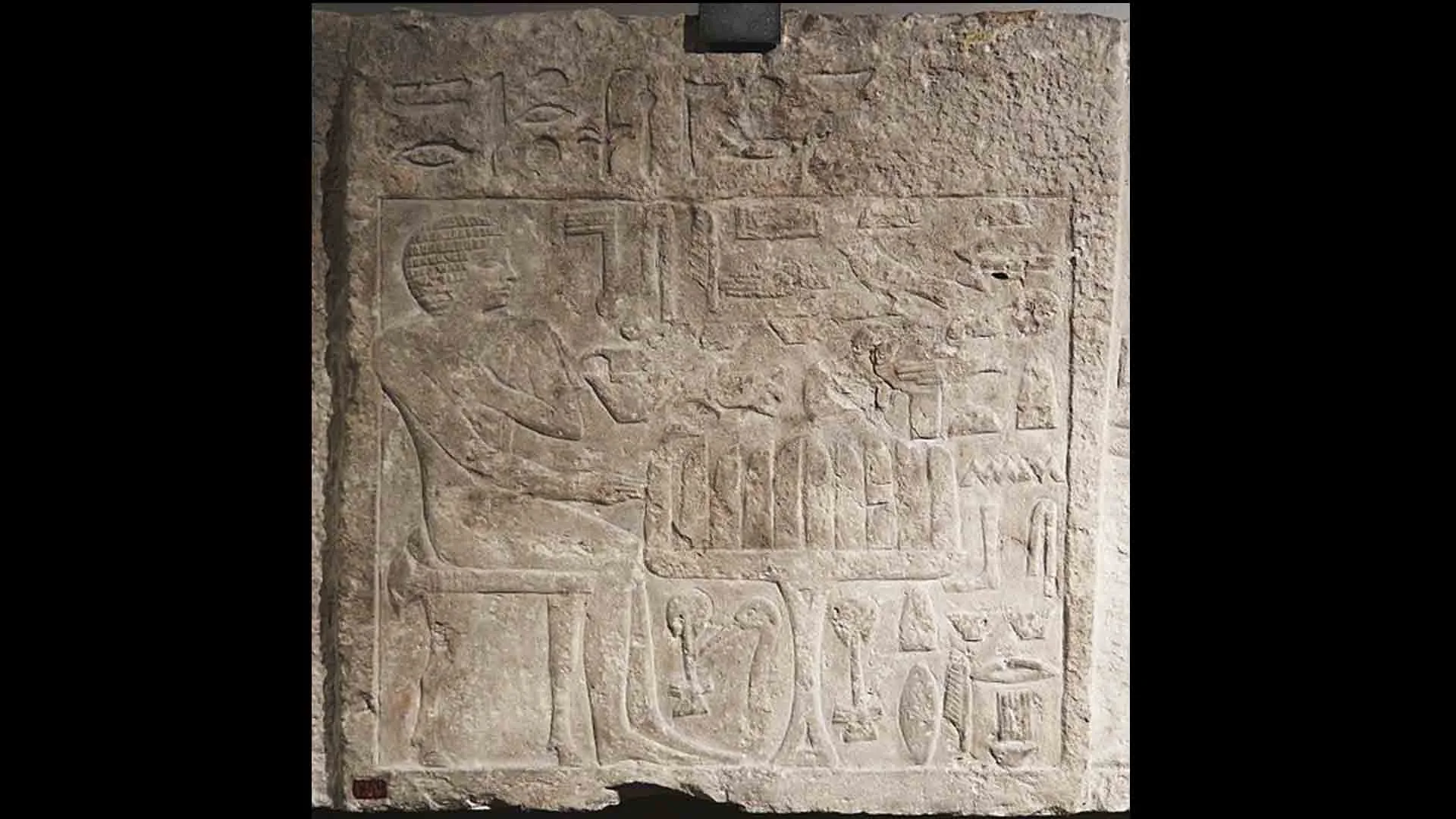
Slab stele from mastaba tomb of Itjer at Giza. 4th Dynasty, 2543-2435 BC. Itjer is seated at a table with slices of bread, shown vertical by convention. Egyptian Museum, Turin

Nedarim 34: כִּכַּר-לֶחֶם

jyungar November 28, 2022

For the source text click/tap here: Nedarim 34

To download, click/tap here: PDF 

Rav Chiya bar Avin inquired of Rava: What is the halachah if one said to his fellow, “My loaf is forbidden to you,” and then, he gave the loaf as a gift to that fellow? He explains: Do we say that since he said, “My loaf (is forbidden to you),” it is only when it is in the owner’s possession that the loaf is forbidden to the other fellow (however, when it is in the other fellow’s possession, it is not forbidden)? Or perhaps, since he said, “to you,” he has rendered the loaf hekdesh upon the other fellow (and it will remain forbidden to him even after it leaves the vower’s possession)?

Rava replied: It is obvious that the vower meant that the loaf should be forbidden even if he gives it to the fellow as a gift, for otherwise, what is the purpose of the neder?

We explore the history of bread and the use of a loaf of bread as a metaphor in Gimpel the Fool and other short stories.

Tags 31st
Comment

Nedarim 33: קֶרֶן הַצְּבִי

jyungar November 27, 2022

For the source text click/tap here: Nedarim 33

To download, click/tap here: PDF 

We learned in a mishna: (Ketubot 13:2) Where a husband who went to a country overseas, and another man supported his wife on his own initiative and then demanded to be reimbursed for that support when the husband returned, Ḥanan said: The one who took the initiative to support the wife lost his money, since the husband neither asked him to do so nor committed to compensate him.

The sons of High Priests disagreed with him and said: The one who took the initiative to support his wife will take an oath as to how much he spent and take repayment from the husband. 

 Rabbi Yoḥanan ben Zakkai agreed saying  any case of this type he placed his money on the antler of a deer, (i.e., a risky venture with no guaranteed return.

We examine the קֶרֶן הַצְּבִי with a light look at horns vs antlers and the Kaibab Deer experiment in the early 20th century.

Tags 31st
Comment
  • Daf Ditty
  • Older
  • Newer

Julian Ungar-Sargon

This is Julian Ungar-Sargon's personal website. It contains poems, essays, and podcasts for the spiritual seeker and interdisciplinary aficionado.​