Julian Ungar-Sargon

  • Home
  • Theological Essays
  • Healing Essays
  • Podcast
  • Poetry
  • Daf Ditty
  • Deep Dive Ditty
  • Videos
  • Publications
  • Military Service
  • Dominican University
  • Home
  • Theological Essays
  • Healing Essays
  • Podcast
  • Poetry
  • Daf Ditty
  • Deep Dive Ditty
  • Videos
  • Publications
  • Military Service
  • Dominican University
Julian Ungar-Sargon copy 3.jpg

Daf Ditty

A wide-ranging commentary on the daily page of Talmud.

Ketubah from Paris, France, 1970

Ketubot 108: בִּשְׁבִיל שֶׁאֲנִי זָכָר הִפְסַדְתִּי

jyungar October 22, 2022

For the source text click/tap here: Ketubot 108

To download, click/tap here: PDF 

The Judge Admon states a dissenting opinion to that of the Rabbis in seven cases.

The mishna elaborates: With regard to one who died and left behind both sons and daughters, when the estate is large the sons inherit the property, and the daughters are provided with sustenance from it.

The son objects "Because I am a male will I lose out?!!!”

the Gemara asks: What is he saying? What is the significance of the fact that one is male?

Abaye said that this is what he is saying: Because I am a male and, unlike women, I am fit to engage in Torah study, should I lose out?

We explore the religious perspective of the role of judges in Talmudic law (Prof Yuval Sina) and the sugya of inheritance (with the help of Prof Judith Hauptman)

ending with a delicious look at some old ketubot housed in the national Library in Jerusalem.

Tags 30th
Comment

Ketubot 107: מָאנֵי דְקוּנְיָא

jyungar October 21, 2022

For the source text click/tap here: Ketubot 107

To download, click/tap here: PDF

On our daf, the Gemara suggests we follow the ruling of Rav Zevid with regard to kunya – glazed pottery.

He ruled that glazed vessels are permitted, i.e. they are not absorbent and are thus permitted for use, even if non-kosher food was stored in them, if they are white or black, but are forbidden if they are green.


We review the history of glazing and modern techniques used in the window industry.

Tags 30th
Comment

Ketubot 106: מַגִּיהֵי סְפָרִים

jyungar October 20, 2022

For the source text click/tap here: Ketubot 106

To download, click/tap here: PDF 

Our daf records how Torah scholars who teach the halakhot of the removal of a handful to the priests would take their wages from the collection of the chamber. All these scholars were constantly engaged in work necessary for the functioning of the Temple, and therefore they would receive their wages from the Temple treasury.

Rabba bar bar Ḥana said that Rabbi Yoḥanan said: The proofreader of the Torah scrolls in Jerusalem would take their wages from the collection of the chamber.

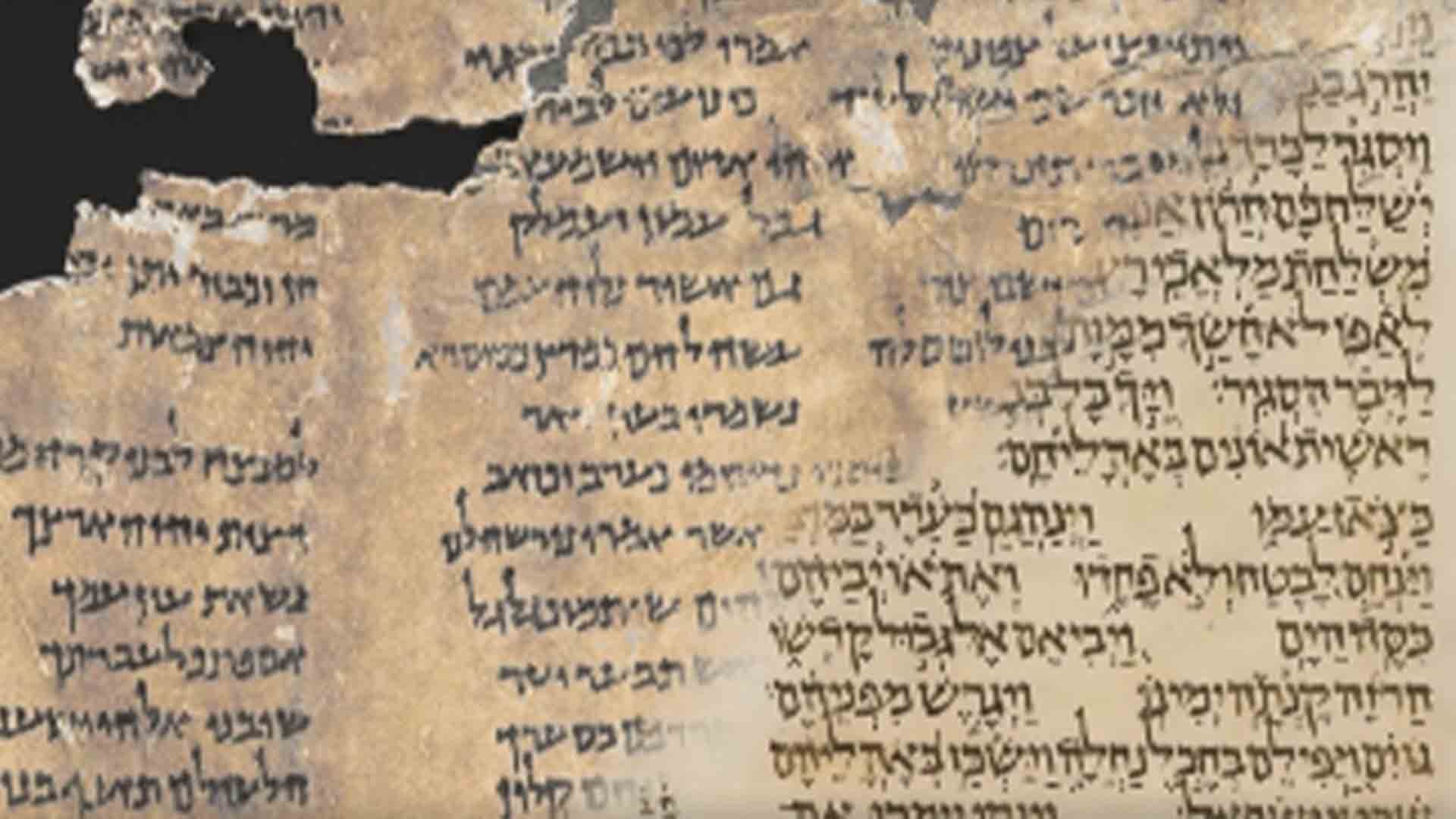
Who were these “proofreaders” and what texts did they preserve?

We examine the transmission of the masoretic text from traditional and scholarly perspectives.

Tags 30th
Comment

Ketubot 105: Shuda De-Dayyane

jyungar October 19, 2022

For the source text click/tap here: Ketubot 105

To download, click/tap here: PDF 

Chapter thirteen of Ketuboth is organized differently from the other chapters of Ketuboth, or for that matter, differently from most of the Mishnah. Instead of being organized topically, it is organized mostly according to the slayings of two judges who lived in Jerusalem during the Second Temple period: Admon and Hanan ben Avishalom.

There are a number of restrictions placed on judges - should their judgments be valid:

  • they cannot borrow from anyone whom they will judge

  • they cannot lend to anyone whom they will judge

  • they cannot judge those whom they love

  • they cannot judge those whom they hate

One of the cases involves a man who brings a basket of fish to Rav Anan. Upon learning that the man is requesting him to reside over a court case, Rav Anan refuses the basket and says that he is disqualified from residing over the man's case.

We explore judicial bribery as well as shura deyyane in Israeli law and the famous US Massey case…

Tags 30th
Comment

“While he is welcomed and greeted above, she has only limited time to state her case and claim what is hers to those below”

Jacqueline Nicholls

Ketubot 104: Rebbe's Maidservant

jyungar October 18, 2022

For the source text click/tap here: Ketubot 104

To download, click/tap here: PDF

We learn more about the death of Rabbi Yehuda HaNasi. It seems that no-one was permitted to say that he was to die lest he be stabbed with a sword, though HaNasi was suffering terribly, putting on and taking off his tefillin multiple times while going back and forth from the bed to the bathroom and back. The rabbis refused to stop begging G-d for Rabbi Yehuda HaNasi's recovery.

His maidservant, however, known to be a wise, pious and witty, went to the roof and prayed for G-d to help the upper world impose its will on the lower will. She then broke a jug. The crash startled the rabbis into silence for a moment, at which time the Rabbi died.

We explore the halachic ramifications of suffering and dying as well as recent approaches to physician aid in the dying process.

Tags 30th
Comment

Tomb of Rabbi Yehuda HaNasi (Judah the Prince), Beit Shearim

Ketubot 103: Rebbe's Will

jyungar October 17, 2022

For the source text click/tap here: Ketubot 103

To download, click/tap here: PDF

Our Mishna teaches that when a man dies, his children cannot insist that his widow move out of his house, even with a promise to support her. In fact, if she wants to remain, the orphans are obligated to give her a place in the house according to her needs (some say that she has full access to the house, as she did while her late husband was alive) and support her there.

In this context, our Gemara tells of various commands that Rabbi Yehuda HaNasi gave while on his deathbed. To his children his instructions were: “Take great care with regard to your mother’s honor, keep my candle burning and my table set, each in its proper place, and my servants, Josef Heifani and Shimon Efrati should serve me in my death as they did during my lifetime.”

We explore the medical causes of the patriarch’s death with modern medical speculation as well as various possible directives we might extrapolate from his last will.  

Tags 30th
Comment

Front page of the most popular issue ever of the Nazi publication, Der Stürmer, with a reprint of a medieval depiction of a purported ritual murder committed by Jews.

Ketubot 102: Blood Libel

jyungar October 16, 2022

For the source text click/tap here: Ketubot 102

To download, click/tap here: PDF

A story is told without much detail of a minor boy who was killed by the heirs he lived with on the eve of Pesach.    

 Another version of the story occurs on erev Rosh HaShana.  In both cases, the story demonstrates the heirs' lack of concern for their impurity and sin even before Pesach which requires purity and Rosh Hashana which will involve judgement.  

The story was likely moved to Rosh Hashana to avoid the effect of the anti-semitic blood libel lies.

We explore the history of blood libels down to the use by Russians  (Beilis case) and Der Sturmer (Nazis).

Tags 30th
Comment

Augustus (Gaius Julius Caesar Octavianus), Tiberius Julius Caesar, and Marcus Aurelius

Ketubot 101: Adoptees

jyungar October 15, 2022

For the source text click/tap here: Ketubot 101

To download, click/tap here: PDF

A new Mishna describes ancient child support.

If a woman remarries, her new husband should agree to support the woman's previously conceived/grown daughter for five years.

This does not cancel out the support provided by a previous husband; the ex-husband provides monetary support, and the current husband provides sustenance (food, etc.).

The husbands do not team up to provide less to the daughter. If the daughter is married, she is sustained by her new husband, but her father and step-father provide monetary support.

We explore adoption in antiquity as well as in halacha, with a review of its practice in the US and in modern Israeli law.

Tags 30th
Comment

The Celebration, Wlodzimierz Tetmajer (1861–1923)

Ketubot 100: Orphans

jyungar October 14, 2022

For the source text click/tap here: Ketubot 100

To download, click/tap here: PDF

In our MISHNA we learn : An orphan girl who was married off by her mother or brother before reaching the age of majority may refuse to continue living with her husband upon reaching the age of majority, thereby retroactively annulling their marriage.

We discuss who may not claim her ketuba. We learn that a minor married off by her mother or siblings who then refuses her husband is not entitled to her ketuba. As well, a woman in a secondary forbidden relationship and an aylonit are both not entitled to their ketubot.

However, the Mishna goes on to state that women in a number of different categories are indeed entitled to their ketubot.

We explore the plight of the orphan in talmud and antiquity.

Tags 30th
Comment

Ketubot 99: Beis Din Errors

jyungar October 13, 2022

For the source text click/tap here: Ketubot 99

To download, click/tap here: PDF

Steinsaltz (OBM) writes:

The Jewish court has the ability to sell properties owned by an estate in order to pay debts owed by the individual who passed away. 

This includes outstanding loans, payment of the ketuba, etc.

 Generally speaking this was done by means of an announcement that the court has properties for sale – effectively a public auction – which would invite people to come and view the properties, establishing their value.

The Mishna continues and teaches that if an announcement of the auction was made, then even a wide discrepancy would not cancel the deal – property worth 100 can be sold for 200 or property worth 200 can be sold for 100. 

According to the Ramban, the Mishna mentioned these specific numbers because even in the case of an auction there are limits to the error that is acceptable, and a larger discrepancy would cancel the sale.

We explore the the methods of collecting debts by law courts as well as review of when beis Din errs and when Beis Din and secular courts face off in arbitration.

Tags 30th
Comment

Ketubot 98: Fraudulent Conveyance

jyungar October 12, 2022

For the source text click/tap here: Ketubot 98

To download, click/tap here: PDF

A new Mishna teaches that the sale of property by a widow is considered void if that sale is founded on an inaccurate assessment. Even one dinar difference is is too much of a difference to allow the sale to be considered valid. If a woman sells the property in pieces, those sales can hold as long as she does not err in assessment of property value. If one of those transactions is off, only that particular sale is voided.

We explore the history of fraud as well as the church/state legal issues with recent fraud in the kashrut industry.

Tags 30th
Comment

Sarah Leading Hagar to Abraham Caspar Netscher(Prague or Heidelberg ca. 1639 – 1684 The Hague)

Ketubot 97: מִשּׁוּם חִינָּא

jyungar October 11, 2022

For the source text click/tap here: Ketubot 97

To download, click/tap here: PDF

Rabbi Shimon says: A widow from marriage sells when not in court, but a widow from betrothal may sell only in court, because she does not receive sustenance from her husband’s property. She receives only her marriage contract, and anyone who does not receive sustenance may sell only in court.

The Gemara elaborates: Granted, a widow from marriage may sell when not in court due to the fact that her sustenance is a pressing concern, so one does not make her wait until she finds a court that will oversee her sale.    

However, what is the reason that a widow from betrothal may sell property when not in court? Ulla said: Due to desirability. The Sages enacted several ordinances on behalf of women, so that men will want to marry them. Rabbi Yoḥanan said: Because a man does not want his wife to be disgraced by being involved in court proceedings.

We explore the notion of Chein….chinah….and what esthetics the Gemara seems to be applying…with a specific example of Sarah Imeinu….and the dazzling piece by the Noam Elimelech on the Rashi to Gen 23:1

Tags 30th
Comment

The Previous Lubavitcher Rebbe in a rare pose with the Rebbe Kehot Publication Society

Ketubot 96: כׇּל הַמּוֹנֵעַ תַּלְמִידוֹ מִלְּשַׁמְּשׁוֹ

jyungar October 10, 2022

For the source text click/tap here: Ketubot 96

To download, click/tap here: PDF

Rabbi Yehoshua ben Levi said: All tasks that a Canaanite slave performs for his master, a student performs for his teacher, except for untying his shoe, a demeaning act that was typically performed by slaves and would not be appropriate for a student to do.

Rava said: We said this only if the teacher and the student are in a place where people are not familiar with the student, and he could be mistaken for a slave. However, in a place where people are familiar with the student, we have no problem with it as everyone knows that he is not a slave. Rav Ashi said: And in a place where people are not familiar with the student, we said this halakha only if he is not donning phylacteries, but if he is donning phylacteries, we have no problem with it.

We explore current notions of “shimush talmidei chachamim”

Including anecdotes regarding Rav Aron Kotler, Rav Shlomo Freifeld and Reb Chaim Shmuelevitz…..

Tags 30th
Comment

The Widow Anders Zorn-1860 – 1920

Ketubot 95: Widows

jyungar October 9, 2022

For the source text click/tap here: Ketubot 95

To download, click/tap here: PDF

Our daf ends as we begin Perek X with another new Mishna. We learn that a widow is sustained by the property of orphans. They own any earnings that she receives, and they are not responsible for her burial. Her heirs inherit her ketuba and they look after the cost of her burial.

The Mishnah states that although the heirs of the husband (the Yesomim) must support their father's widow, they do not inherit her property and therefore they are not obligated to bury her.

Instead, after she dies, her own heirs (that is, those who inherit her Kesuvah) are obligated to bury her.

RASHI explains that the Gemara earlier (47b) teaches that a woman's husband is obligated to bury her only because he inherits her Kesuvah (the "Nichsei Tzon Barzel"). 

Now that the husband is dead, he is not going to inherit her and thus his heirs do not keep the Nichsei Tzon Barzel, and "she must bury herself.”

We explore the status of widowhood from talmudic sources down to status of sephardi women,  and Avraham Grossman’s analysis of the takanot of Rabbeinu Gershon.

Tags 30th
Comment

Ketubot 94: Repossession

jyungar October 8, 2022

For the source text click/tap here: Ketubot 94

To download, click/tap here: PDF

The Gemara for our last Mishna begins our daf. The Mishna speaks of a husband who marries four wives and then dies, leaving only 100 dinars to split among them according to past rules. However, each wife, from the first to the fourth, must take an oath to the next wife that she has not taken anything from the estate inappropriately. The fourth wife need not take an oath.

The Gemara begins with a discussion of that fourth wife. If a creditor returns and takes the land of the third wife, the fourth wife should relinquish some of her land in its place. Is the fourth wife going to care for her land well knowing that it might be taken from her? Shouldn't she take an oath regarding this? Ben Nanas disagrees, saying that she will take good care of the land. Abaye the Elder, noting that people to take oaths regarding transactions with orphans, wins this debate: the fourth wife must also take an oath.

Rav Naḥman said that Rabba bar Avuh said: Everyone agrees that what the later creditor has collected, he has not collected, i.e., it may be repossessed by the earlier creditor. Rather, they disagree here as to whether we are concerned that perhaps she will deplete the field and cause its value to depreciate.

We explore the history of repossession in antiquity and the very right to repossess in Moderna legal theory.

Tags 30th
Comment

Beth Din of Benghazi, 1930

Ketubot 93: Curse of מי שפרע

jyungar October 7, 2022

For the source text click/tap here: Ketubot 93

To download, click/tap here: PDF

Tosafos on our Gemara teaches that the issue of mi sheparah, a curse pronounced on a person who backs out on a deal after money was paid but the buyer did not yet take the property into his domain, applies to the purchase of land the same as it applies to the purchase of movable merchandise. Therefore, if the buyer backs out of the sale because of mere rumors he is subject to the curse since he is not authorized to back out of the agreement. 

On the other hand, if there was a well-founded claim to the land from the protesters the buyer is within his right to reverse the sale and will thus not be subject to the curse. 

We examine the notion of Beis Din cursing and the limits of Halachah and coercion. Yishai Kiel reviews how Applying Moral Standards in the Sphere of Private Law in the Jewish Babylonian, East Syrian Christian, and Iranian Legal Traditions reveals the moral limits to galactic decision making.

Tags 30th
Comment

A thinking girl by Jean-Baptiste-Camille Corot

Ketubot 92: (Spiritual) Debt Consolidation

jyungar October 6, 2022

For the source text click/tap here: Ketubot 92

To download, click/tap here: PDF

Steinsaltz records:

Jewish law recognizes that formal loans that are recorded in signed contracts create liens of the property of the borrower that effectively guarantee payment of the loan. Therefore, if a borrower cannot pay back his loan, the lender has the right to take possession of real estate that was owned by the borrower at the time of the loan – even if it had subsequently been sold to a third party. Clearly the borrower will have to make amends with the purchaser, given that the sale has effectively been nullified.


In our Gemara, Abaye teaches that in a case where “Reuven” sold property to “Shimon” – and guaranteed the sale – and Reuven’s creditor came and collected the property from Shimon as payment of Reuven’s outstanding loan, it would be appropriate for Reuven to enter negotiations with the creditor.

We examine the notion of debt consolidation and use the (timely) opportunity to discuss Spiritual debts and the history and literary analysis of the Unetaneh Tokef Prayer, whether its theology is possible today.

Tags 30th
Comment

Picture by AB Kravitz

Ketubot 91: Ketubath Benin Dichrin

jyungar October 5, 2022

For the source text click/tap here: Ketubot 91

To download, click/tap here: PDF

In the previous mishnah we began to learn some rules about the “ketubath benin dichrin” which is the clause in the ketubah which states that sons inherit their mother’s ketubah above and beyond their split in their father’s inheritance.

Our mishnah teaches that this is only so when there is enough for there to be an inheritance of at least one denar after all the “ketuboth benin dichrin” have been paid out. The reason is that “ketubath benin dichrin” is an enactment of the Sages whereas inheritance laws are mandated by the Torah.

We explore debt collection from descendants and the review of family ties in the Lithuanian shtetl by Eric Goldstein.

Tags 30th
Comment

Ketubot 90: נָשׂוּי שְׁתֵּי נָשִׁים

jyungar October 4, 2022

For the source text click/tap here: Ketubot 90

To download, click/tap here: PDF

The tenth perek, called Mi she-hayah nassuy, deals with an issue that first appeared in the last perek: How the estate should be divided in a case where a man was married to more than one woman and has children with each wife. Clearly, if the estate has enough money to pay all its obligations, there is no problem. What happens, however, when the ketubot of the women amount to more than the money that was left?

We explore the cultural history of two wives from a biblical perspective through the Aliyah of Yemenite Jewry.

Tags 29th
Comment

A defaced bronze coin of Nero

Ketubot 89: Damnatio Memoriae

jyungar October 3, 2022

For the source text click/tap here: Ketubot 89

To download, click/tap here: PDF

If a  woman comes to court and presents a Get with which her husband divorced her. Then she wants him to pay the amount of the Ketubah. However, she does not have the Ketubah document itself, claiming that it was lost. Normally, she should not be able to collect anybody who wants to collect a payment should present a loan document (in this case it is the Ketubah). If it is lost, his money is lost.
However, here - since the Ketubah is the enactment of the court - it has the same power as though the document was present, and so she can collect the money. Her former husband's claim that he paid the Ketubah is not believed. If he did, they should have torn the Get, given him her Ketubah or the payment receipt.

We explore the cancellation of debt in antiquity then examine the history of Damnatio memoriae and how we eradicate memory especially in monuments, coins and other art forms.

Tags 29th
Comment
  • Daf Ditty
  • Older
  • Newer

Julian Ungar-Sargon

This is Julian Ungar-Sargon's personal website. It contains poems, essays, and podcasts for the spiritual seeker and interdisciplinary aficionado.​