Julian Ungar-Sargon

  • Home
  • Theological Essays
  • Healing Essays
  • Podcast
  • Poetry
  • Daf Ditty
  • Deep Dive Ditty
  • Videos
  • Publications
  • Military Service
  • Dominican University
  • Home
  • Theological Essays
  • Healing Essays
  • Podcast
  • Poetry
  • Daf Ditty
  • Deep Dive Ditty
  • Videos
  • Publications
  • Military Service
  • Dominican University
Julian Ungar-Sargon copy 3.jpg

Daf Ditty

A wide-ranging commentary on the daily page of Talmud.

Gourds 瓢箪 Hyōtan Possession is 9/10ths of the Law – especially for gourds – and everything else

Ketubot 83: בּוּצִינָא טָב מִקָּרָא

jyungar September 27, 2022

For the source text click/tap here: Ketubot 83

To download, click/tap here: PDF

Steinsaltz tells us:

Aside from the personal relationship that is created between husband and wife at the time of their marriage, the marriage agreement involves agreement between them in other areas, as well. The economic union that the marriage creates is largely open to definition between the two parties. Thus, for example, the husband can choose to concede some of the obligations that his wife has towards him. Ha-kotev le-ishto, the ninth chapter in Massekhet Ketubot, which begins on our daf, deals primarily with two such concessions. The first is a situation where the husband agrees to concede – entirely or partially – his rights to derive benefit from his wife’s property. The second is when he agrees not to demand an oath from her should she demand payment of her ketubah.

We explore the Halachic and legal implications of joint ownership and its iteration in Roman law (the 12 Tables).

Tags 29th
Comment

Ketubot 82: Takkana

jyungar September 26, 2022

For the source text click/tap here: Ketubot 82

To download, click/tap here: PDF

The Gemara discusses the background for the rule that the husband’s property is mortgaged for the marriage contract.

“ Rav Yehuda said: At first they would write for a virgin two hundred dinars and for a widow one hundred dinars. They would then demand that this amount be available in cash, and then the men would grow old and would not marry women, as they did not all possess such large sums of money, until Shimon ben Shataḥ came and instituted an ordinance that a man need not place the money aside in practice. Rather, all of his property is guaranteed for her marriage contract. "
"Therefore, the Sages instituted an ordinance that they would place it in her father-in-law’s house, i.e., in her husband’s house. And wealthy women would craft their marriage contract money into baskets of silver and of gold, while poor ones would craft it into a large vessel for the collection of urine, as their marriage contract was large enough only for a small vessel.”We look at the history of Takanot and rabbinic authority as well as Hershey Friedman’s description of how the sages of the Talmud recognized the danger of making religion rule-based and therefore came up with several legal devices to improve the law and make it more ethical.
Indeed, the Talmud blamed the destruction of Jerusalem and the Second Temple by the Romans on the fact that people insisted on following the strict letter of Torah law and not doing more than the law required.

Tags 29th
Comment

Ketubot 81: Drink or Collect!

jyungar September 25, 2022

For the source text click/tap here: Ketubot 81

To download, click/tap here: PDF

The Torah uses the word “wife” (alternatively translated as woman) in summarizing the laws of the Sotah. From here the rabbis deduce that she must have the status of full wife in order to drink the bitter waters. A betrothed woman does not have such a status and hence, even if her fiancé forbids her from being secluded with a certain man and afterwards she is secluded with him, she does not undergo the sotah ordeal.

Similarly, a “shomeret yavam”, a woman whose husband died childless and is waiting for either levirate marriage (yibbum) or the release from levirate marriage (halitzah), does not drink the bitter waters. This refers to a case where the yavam, her brother-in-law, warned her not to be secluded with a certain man. Both of these women do lose their ketubah, since they were secluded after being warned; however, neither is allowed to undergo the sotah ordeal.

We explore the themes of adultery and passion in the English Patient  by Michael Ondaatje, 

Tags 29th
Comment

Amon Goeth's daughter Monika only learned the true extent of her father's war crimes when she watched the film Schindler's List

Ketubot 80: NAZI Loot

jyungar September 24, 2022

For the source text click/tap here: Ketubot 80

To download, click/tap here: PDF

Our daf focuses more deeply on the details of land brought into the marriage by the kalah. While the chatan is permitted to use the produce of her land, there are limitations on what he can do. The rabbis are concerned, for example, that a man might take care of the land carelessly because he assumes that he will be divorced.

When working with nikhsei melug – which remain the property of the wife even as her husband derives benefit from it – there is a need to protect the interests of the wife in making sure that the property will not be destroyed, as well as the interests of the husband so that he will take care of the property, even though it does not belong to him.

Our daf ends with a new Mishna that discusses how a woman's property might be inherited if that property belongs to a yevama who dies while waiting for her yavam. Does his family inherit the property? Do her heirs, i.e.. her father and his heirs inherit the property? Should it be split? The rabbis are clearly protective of a woman's property to some degree according to today's debate.

We explore the history of NAZI looted art and how cases brought by children of those murdered owners came to light and were litigated decades later.

Tags 29th
Comment

Ketubot 79: Fetal Abduction וְלַד הַגּוֹנֵב

jyungar September 23, 2022

For the source text click/tap here: Ketubot 79

To download, click/tap here: PDF

The general rule regarding nikhsei melug, or usufruct property (legal term meaning the right to the fruits of another’s property, without damage or destruction of that property), is that the property remains in the woman’s possession, but her husband is okhel peirot – literally, he “eats the fruit.” 

In other words, she owns the property, but as long as they are married the profits accrued by the property belong to the husband.    

The Gemara asks, if one steals the offspring of an animal of a woman’s usufruct property must pay payment of double the principal to the woman.

Apparently this ruling is based on the assumption that the offspring is not treated as the produce of her property but as the principal, which belongs to the woman.

We explore the history of fetal burial practices as well as modern versions of the status of children in the UK as well as state sponsored fetal abduction in China.

Tags 29th
Comment

Ketubot 78: Shame אָנוּ בּוֹשִׁים

jyungar September 22, 2022

For the source text click/tap here: Ketubot 78

To download, click/tap here: PDF

If a woman came into the possession of property before she was betrothed, Bet Shammai and Bet Hillel agree that she may sell it or give it away and her act is legally valid.

Rabbi Yehuda said that the Sages said before Rabban Gamliel: 

Since he acquired the woman herself through betrothal, will he not acquire the property from the moment of their betrothal? 

Why, then, is her transaction valid? 

Rabban Gamliel said to them: With regard to the new property that she inherited after marriage, we are ashamed, because it is unclear why she cannot sell it, as it is hers; and you also seek to impose upon us a prohibition with regard to the old property that she owned beforehand?
The Gemara wonders who has rights to this property.  Exactly when is she given the property?  Perhaps the timing of her acquisition will determine the status of his acquisition.  If they are betrothed, should he be allowed to access her property?   

We explore the notion of shame….both in historical terms and psychologically (freudian theory) and  in terms of toxic shame for those with addiction

ending with a Kabalistic essay on its usefulness in spiritual practice.  

Tags 29th
Comment

Ketubot 77: πολύποδας

jyungar September 21, 2022

For the source text click/tap here: Ketubot 77

To download, click/tap here: PDF

This mishnah lists defects in a husband (either physical defects or ones related to his profession) that allow the woman to demand a divorce and receive her ketubah. 

These are the ones who are forced to divorce [their wives]: one who is afflicted with boils, one who has a polypus, a gatherer [of dog feces for the treatment of hides], a coppersmith or a tanner whether they were [in such a condition] before they married or whether they arose after they had married.

The wife of any husband who has one of the below-listed defects can demand a divorce, whether or not he had them before he was married.

We explore the history of polyps in antiquity from Galen to the medieval period.

Tags 29th
Comment

A mold of the six-toed footprint found in the plaster wall

Ketubot 76: Polydactyly

jyungar September 20, 2022

For the source text click/tap here: Ketubot 76

To download, click/tap here: PDF

The rabbis discuss courses of action when a husband discovers this blemish. One example is a husband who finds that his wife has an extra toe. Should he not have examined her for such a blemish before engaging in intercourse with her?

And how could she have 'grown' an extra toe after the betrothal?

Does her father have proof that the groom accepted the extra toe?

Or was this part of the body hidden and not known or at least not discussed?

We explore the syndrome of polydactyly and its ancient description in culture and texts.

Tags 29th
Comment

Ketubot 75: Cosmetic Reasons for Divorce

jyungar September 19, 2022

For the source text click/tap here: Ketubot 75

To download, click/tap here: PDF

The rabbis are discussing blemishes: if a woman discloses that she has a blemish and the man accepts that blemish before the betrothal and/or before the marriage, he cannot claim later that the blemish is cause for divorce.  But what is a blemish?  

The rabbis discuss blemishes of women's bodies: moles on the face, moles with hairs, and low speaking voices. 

We explore moles and their consequences,  as well as the halachic controversy surrounding cosmetic surgery.

Tags 29th
Comment

Ketubot 74: אֵצֶל רוֹפֵא וְרִיפֵּא אוֹתָהּ

jyungar September 18, 2022

For the source text click/tap here: Ketubot 74

To download, click/tap here:  PDF

The Mishna (72b) offered two cases where a husband stipulates a condition before marriage. In one, he makes the marriage conditional on the fact that his wife has not taken vows upon herself; in the other his condition is that she does not have any blemishes.

The baraita brought by the Gemara on our daf discusses a woman who accepted these conditions and following the kiddushin goes to the Sage to have her vows rescinded or to a doctor to have her blemish healed. In such cases, the condition will be considered to have been fulfilled when the vows were removed by the Sage, but not when the blemish was healed by the doctor.

the Gemara explains that the Sage voids the vow retroactively, and we discover that at the moment of marriage the wife really was unburdened by vows. In the case of the doctor, however, the blemish was only healed from the time that the medical procedure was performed, so at the moment that the kiddushin was to take effect, the condition was not fulfilled.

we explore the status of physicians and healing and they relative weight in deciding halachic conflicts.

Tags 29th
Comment

Ketubot 73: בְּעִילָתוֹ בְּעִילַת זְנוּת Civil Marriage

jyungar September 17, 2022

For the source text click/tap here: Ketubot 73

To download, click/tap here: PDF

Today, conditional marriages are discouraged, if not entirely disallowed. The Mishna (72b), however, discusses cases where a person made the marriage conditional on the fact that his wife does not have vows that she has taken on herself or physical deformities. In such cases, if the woman is found to have such vows or physical deformities there is no need for a divorce, since the condition upon which the marriage was based was not fulfilled.

If, for example, the husband marries her with stipulations regarding preexisting vows, the couple can be divorced. Of course it is understood that a man would not engage in licentious sexual intercourse knowingly.

In other words, he would not engage in intercourse with his wife if he knew that she had made a vow that forbade their intimacy.

We explore the halacha of civil unions in galut and in Israel.

We also visit the history of civil unions following the French Revolution as well as the tragic consequences of the Nuremberg laws for civil unions.

Tags 29th
Comment

Ketubot 72: דָּת מֹשֶׁה vs וִיהוּדִית

jyungar September 16, 2022

For the source text click/tap here: Ketubot 72

To download, click/tap here: PDF

The Mishna on our daf lists situations where a woman can be divorced without receiving her ketuba.

These include a woman who transgresses “the law of Moses” or “Jewish practice.”

According to the Mishna, transgressing the “law of Moses” includes:

  • feeding her husband untithed food,

  • engaging in relations while she is a niddah (during the period of her menstruation)

  • not setting apart her dough offering,

  • making vows and not fulfilling them.

According to the Mishna, transgressing the “law of Moses” includes:

  • going out with an uncovered head,

  • spinning wool in the street,

  • conversing with every man.

We explore the history of women’s head covering form a halachic and cultural perspective.

Tags 29th
Comment

Ketubot 71: "Like Towers"

jyungar September 15, 2022

For the source text click/tap here: Ketubot 71

To download, click/tap here: PDF

A new Mishna looks at husbands who vow unreasonably, according to the rabbis.

If husbands vow that their wives cannot visit their families or that they cannot visit houses of mourning, they must divorce their wives within specific time frames.

Likewise, if they have their wives perform chores that are then ridiculed (filling a bucket of water and then throwing it into the garbage), they are to divorce.

Rabbi Yochanan comments on two verses (song 10:8 and Hosea 2:18) to underscore the motivation behind the wife’s eagerness to return to her home. His interpretation is in line with the long tradition of non-literal interpretation of the erotic love poetry in Song of Songs.

We explore the traditions of interpretation of the Song of Songs from the literal to the midrashic and literary.

Tags 29th
Comment

Ketubot 70: Power Boundaries

jyungar September 14, 2022

For the source text click/tap here: Ketubot 70

To download, click/tap here: PDF

The ketuba is a central part of the marriage agreement that exists between husband and wife. 

Thus, any agreement that the couple makes between themselves that does not contradict the Torah should be valid. 

Nevertheless, there are situations where either spouse may violate the marriage agreement to such an extent that the courts will insist that the marriage be undone.

 In such cases, it is the individual who is perceived to be at fault who is punished. 

We explore the quality of marriage in different traditions and power and boundaries in the haredi marriages.

Tags 29th
Comment

Ketubot 69: בְּאִיסְקַרְיָא דְּמָכוּתָא Tied To The Mast

jyungar September 13, 2022

For the source text click/tap here: Ketubot 69

To download, click/tap here: PDF

Our Gemara relates an unusual story about Ilfa, one of the first generation amoraim in the Land of Israel. Ilfa attached himself to a ship’s mast and announced that if anyone presented him with a teaching that appeared in the baraitot of Rabbi Ḥiyya and Rabbi Oshaya, he would show a source from the Mishna from which this teaching could be understood (i.e. that all of the traditions that appeared in the baraita were included in the Mishna). 

Furthermore, he said if he was unable to do so he would throw himself into the sea. 

The Gemara relates that there were those who took Ilfa up on his challenge, and that he was able to successfully respond to those challenges.

We examine the history of seafaring in antiquity and the interaction of the myth of Ulysses and the rabbinic tradition and its use in modern Hebrew literature.

Tags 29th
Comment

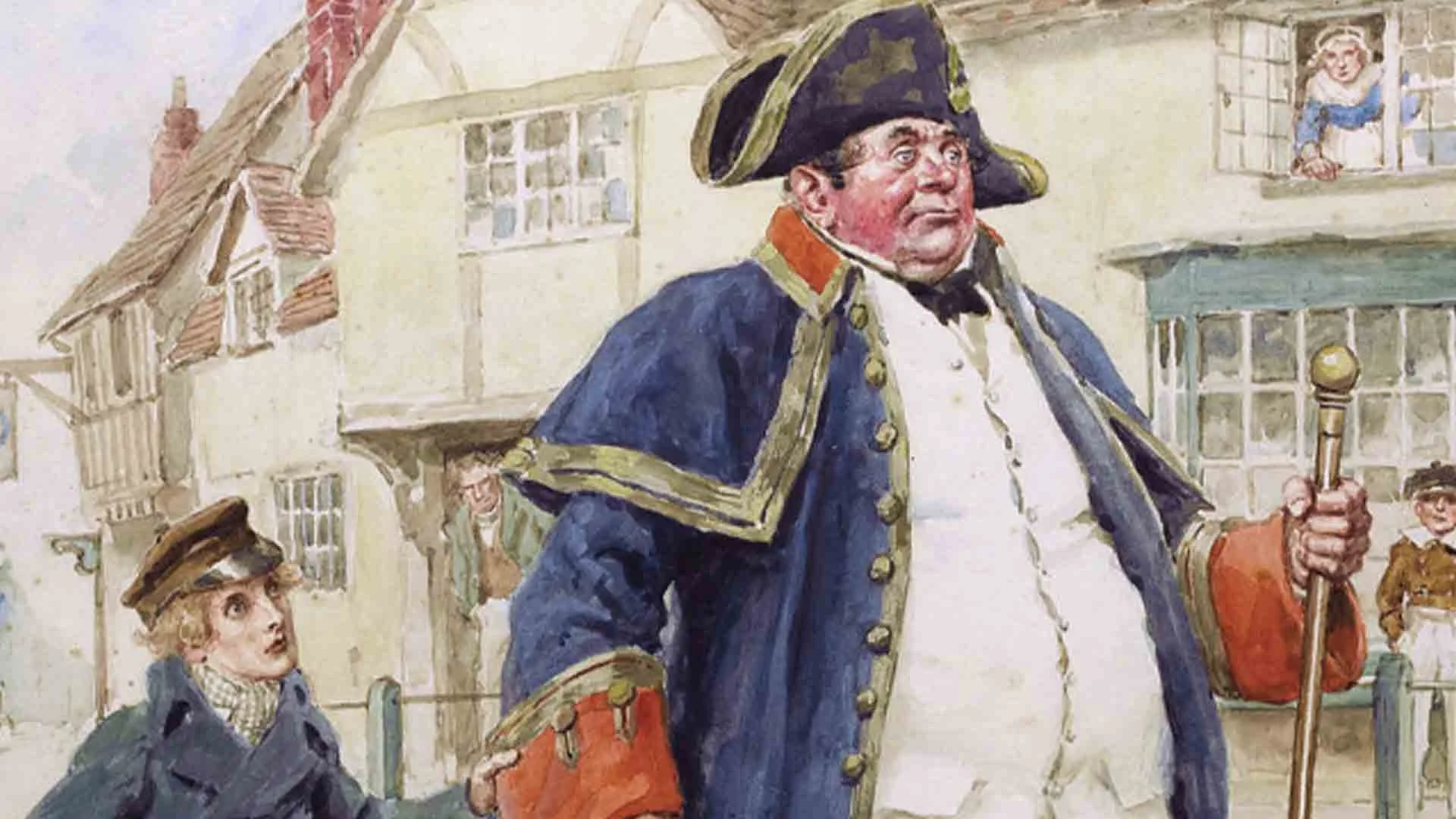
Mr Bumble, the beadle from the workhouse, leading Oliver Twist. The painting is based on the book Oliver Twist by Charles Dickens.

Ketubot 68: Dishonest Paupers

jyungar September 12, 2022

For the source text click/tap here: Ketubot 68

To download, click/tap here: PDF

On our daf  we are told that we really ought to appreciate false solicitors of charity. 

Were it not for them, we would be held accountable for turning away any person in serious need. 

Since there are some rogues who do prey on the well-intentioned, we are no longer duty-bound to assume that everyone we meet who asks for our assistance is actually in desperate need. 

We explore the limits of charitable giving , the halachic ramifications, and Greg Gardner's review of poverty in Early rabbinic Judaism.

Tags 29th
Comment

Ketubot 67: Giving Silently נוֹחַ לוֹ לָאָדָם שֶׁיִּמְסוֹר עַצְמוֹ לְתוֹךְ כִּבְשַׁן הָאֵשׁ, וְאַל יַלְבִּין פְּנֵי חֲבֵרוֹ בָּרַבִּים

jyungar September 11, 2022

For the source text click/tap here: Ketubot 67

To download, click/tap here: PDF

We all know that it is a mitzva to give charity. According to Jewish law, the ideal would be to offer support to others anonymously, particularly when it might be embarrassing to know who the giver is.

We learn about Mar Ukva, who gave money in many ways.  One of his recipients wanted to know who was leaving money by his door each day, and so he waited and watched.  

That day, Mar Ukva's wife accompanied him and gave the tzadaka.  As the recipient hear the door move, he jumped out to see who was there, but Mar Ukva and his wife ran into a furnace room where his legs were burned but hers were not.  He realized that she was more worthy and became upset.  She calmed him down by explaining that I usually give tzedaka from the home - food and useful items - and you give money, which is less immediately useful.  That is why my tzedaka is greater.  The rabbis teach that It is better to put oneself in a firey furnace than to whiten the face of a friend [to embarrass a friend].   Tamar taught us this when she stepped up to be burnt and she named her father-in-law without saying his actual name and embarrassing him.  

We explore the hierarchy of giving Tzedakah based on the RAMBAM as we struggle between the levels of giving and not embarrassing the poor.

We encounter the curious whitewashing of Jewish gangsters in the late 20th century US, because of their propensity for charity.

Tags 29th
Comment

Ketubot 66: בַּת נַקְדִּימוֹן בֶּן גּוּרְיוֹן

jyungar September 10, 2022

For the source text click/tap here: Ketubot 66

To download, click/tap here: PDF

Steinsaltz informs us that the sixth perek of Massekhet Ketubot focuses on the nedunya – the dowry that a woman brings into her marriage. This nedunya is not a biblical obligation and is not considered a required part of the marriage agreement. Nevertheless, over time traditions developed that were given legal sanction by the Sages of the Mishnah.

Rav Yehuda quotes Rav as telling the story of Nakdimon ben Guryon’s daughter, who was allotted 400 gold pieces for her daily perfumes.

Nakdimon ben Guryon was one of the wealthiest residents of Jerusalem during the period of the destruction of the Second Temple. The Gemara in Massekhet Ta’anit (20a) tells of his generosity and concern for the Jewish people, as well as the miracle that happened to him to repay his debts.

His great wealth is mentioned a number of times in the Talmud. The Gemara in Gittin relates that he and two other wealthy people accepted upon themselves the responsibility to support the city of Jerusalem for the duration of the Roman siege around the city, and that with his wealth could have succeeded in doing so for 20 years. 

Nevertheless it appears that during the civil war that broke out in the city, his storehouses were destroyed, and he was left destitute. This explains the continuation of our Gemara in which the daughter who mocked the allotment of perfume that she received eventually turns to Rabban Yohanan ben Zakkai to beg for support.

Tags 29th
Comment

Ketubot 65: מְצִיאַת הָאִשָּׁה וּמַעֲשֵׂה יָדֶיהָ

jyungar September 9, 2022

For the source text click/tap here: Ketubot 65

To download, click/tap here: PDF

Our Mishna discusses the case of someone who leaves his wife and appoints someone to make

sure that she has all of her needs as delineated by the ketuba.

The Mishna lists the basic

requirements that must be supplied in such a case: food, furnishings, clothing and so on.

The conclusion of both our Gemara and the Yerushalmi appears to be that wealthy women were given an allotment of wine for both drinking and cooking, if that was their common practice.

We explore the history of entrepreneur Jewish women from antiquity to the present, including how Jewish widows controlled their assets, how they negotiated both their contractual relationship to their husbands as well as the outside prejudicial men’s world of commerce.

Tags 29th
Comment

Ketubot 64: הַמּוֹרֶדֶת עַל בַּעְלָהּ

jyungar September 8, 2022

For the source text click/tap here: Ketubot 64

To download, click/tap here: PDF

The Mishnah on 63b states:  A woman who rebels against her husband (moredes) is fined; her marriage contract is reduced by seven dinars each week. Rabbi Yehuda says: Seven half-dinars [terapa’ikin] each week. Until when does he reduce her marriage contract? Until the reductions are equivalent to her marriage contract, i.e., until he no longer owes her any money, at which point he divorces her without any payment. 

The Gemara first considers rebellion as a refusal to participate in conjugal relations.  For men who refuse their wives, that woman is permitted to divorce him, for he has not met the requirements of their marriage contract.  When a woman refuses intercourse, she may lose her ketubah.  The rabbis discuss the significance of conjugal relations compared with the ability to perform tasks.  A woman might be ill or menstruating.  When is she deemed a rebellious woman?   a “moredet”

We explore the (asymmetric) legal status of the moredet as well as early talmudic roots for the halachah, ending with a comparison with Qumran laws of the rebellious wife.

Tags 29th
Comment
  • Daf Ditty
  • Older
  • Newer

Julian Ungar-Sargon

This is Julian Ungar-Sargon's personal website. It contains poems, essays, and podcasts for the spiritual seeker and interdisciplinary aficionado.​