Julian Ungar-Sargon

  • Home
  • Theological Essays
  • Healing Essays
  • Podcast
  • Poetry
  • Daf Ditty
  • Deep Dive Ditty
  • Videos
  • Publications
  • Military Service
  • Dominican University
  • Home
  • Theological Essays
  • Healing Essays
  • Podcast
  • Poetry
  • Daf Ditty
  • Deep Dive Ditty
  • Videos
  • Publications
  • Military Service
  • Dominican University
Julian Ungar-Sargon copy 3.jpg

Daf Ditty

A wide-ranging commentary on the daily page of Talmud.

Yevamot 36: Fetal Viability

jyungar April 12, 2022

For the source text click/tap here: Yevamot 36

To download, click/tap here: PDF

All of our discussions in Masechet Yevamot open with the premise that the brother who passed away had no children; if he did have children, the mitzva of yibum would never come into effect. The first Mishnah in the fourth perek (35b) presents a situation where the widow is left pregnant. In such a case, we must wait and see whether the unborn child is viable. If she gives birth to a child who lives, there is no need for yibum; if the child does not survive, then the normal rule of yibum will apply.

We explore posthumous paternity in halacha (R. David Bleich) as well as Schenker’s article on the status of an embryo in halacha.

as well as a legal analysis of the notion of viability:Viability is an incoherent legal concept as it is currently featured in US law and in the legal framework in England and Wales.

Viability is frequently ill-defined and presumed from a point in gestation before the fetus has a reasonable chance of survival, thus undermining the (limited) logic behind the use of viability in determining the protection afforded to unborn entities.
Tags 24th
Comment

Yevamot 35:Defining Paternity

jyungar April 11, 2022

For the source text click/tap here: Yevamot 35

To download, click/tap here: PDF

The new Perek begins with the following Mishnah: If a man dies and leaves a pregnant wife, the yet-to-be born fetus is still the seed of the father.

And if such a fetus survives thirty days, the woman is free to marry whomever she pleases, without the need for chalitzah; and the brother of the deceased is forbidden to marry her on the penalty of karet.

If the brother marries his pregnant sister-in-law--deliberately or unknowingly--whether such is a grievous sin, or the retroactive performance of a "mitzvah" will not be known for many months.

While our rabbis forbade such a marriage, the Sages of the Mishnah would allow the marriage to continue if and when the woman either miscarries or gives birth to a baby who dies within thirty days.

We explore the notion of paternity and the new technologies such as DNA and HLA testing and how the Israeli courts struggle with the halacha vs science when applying this to paternity.

How the World Trade Disaster and search for DNA remains (and developments in the science) to free women from being agunot has influenced the rabbinic t’shuvot.

Tags 24th
Comment

Yevamot 34: Conception in Antiquity

jyungar April 10, 2022

For the source text click/tap here: Yevamot 34

To download, click/tap here: PDF

Our Gemara questions why a period of three months (havchanah) would be considered necessary before remarriage, since it is known that a woman will not become pregnant the first time she engages in sexual relations.

Rav Nachman suggests that the couples engaged in more than one act of relations and that the suspicion is that conception took place in a later act of relations.

Rava questions the very basis of the question, pointing out that there are known cases of virgins who had become pregnant the first time they engaged in sexual relations.

Rav Nahman responded with the explanation that these women prepared themselves in advance by removing their hymen, which allowed them to become pregnant the first time they engaged in relations.

The example of Tamar is brought to disprove the notion of the impossibility of pregnancy after a single act of cohabitation, which allows us to explore further the concepts of conception in antiquity.

The Noda B’Yehudah writes in his responsa נודע יהודה קמא אה"ע סימן כ"ב that nowadays it is possible for women to become pregnant the first time they have relations.

Furthermore, even in the time of Chazal the principle did not indicate that it was impossible for a woman to become pregnant the first time she had relations, rather the principle was stated with regards to the majority.

Tags 24th
Comment

Yevamot 33: Epikleros

jyungar April 9, 2022

For the source text click/tap here: Yevamot 33

To download, click/tap here: PDF

Our Mishna presents a uniquely disturbing case that stems from the following situation.

Two men offer kiddushin to two women, but at the time of the nesu’im the women are switched and each ends up sleeping with the wrong spouse.

In such a case, they would all need to bring a korban chatat – a sin-offering.

We continue our exploration of marriage in the late antique period with a comparison with cases in Attic law, where there were sons in the family, the daughter exhausted her rights, including those of inheritance, with the dowry, and was then known as epiproikos.

But in a case where there was no son, she was known as epikleros and had the right to the whole estate, as sole descendant of an oikos with no males.

City law did not however allow the wife to be the possessor of the kleros. She therefore functioned as conveyor of the kleros, and it was via her that it was passed on to her sons.

But so that the kleros should not disappear from the family, the law laid it down that the epikleros, along with the kleros, should pass over to the male relative nearest in the lateral branch.

Should he refuse her, she came to the immediately next, and so on.

This nearest blood relative (anchisteas) could marry her, provided she was unmarried; or could proceed to aphaeresis epiklerou, if she was already married.

Tags 24th
Comment

Yevamot 32: Ain Issur Chal al Issur

jyungar April 8, 2022

For the source text click/tap here: Yevamot 32

To download, click/tap here: PDF

Rebbi Shimon maintains "Ein Isur Chal Al Isur" -- once an object is prohibited with one Isur, it cannot become prohibited again with another Isur.

Accordingly, when two brothers were married to two sisters and one brother died, if the surviving brother does Yibum with his brother's wife (to whom he is prohibited because of "Achos Ishto"), he is liable for transgressing only one Isur: If the first brother was married first the Isur of "Eshes Ach" took effect, and when the second brother marries the sister of his brother's wife the Isur of "Achos Ishto" cannot take effect.

If, however, the second brother married first and his wife's sister became forbidden to him as "Achos Ishto," when his brother marries the second sister the Isur of "Eshes Ach" cannot take effect.

Do we say issur ḥal al issur – that one prohibition can be added to another prohibition – or not?– it is not clear how far this idea applies.

Thus we find that Rabbi Yosei understands ein issur ḥal al issur to mean that there is no punishment for the second prohibition, but it still exists and the perpetrator of such a crime would be deemed a rasha – an evil person – who would not be buried in the Jewish cemetery.

Rabbi Shimon takes a simpler view of the ruling and argues that ein issur ḥal al issur means that there is no place for the second prohibition to be applied and it does not exist at all.

The Gemara in Yevamot adds that even Rabbi Shimon agrees that if the first prohibition no longer exists, the second one would take its place.

We explore the notion of levirate marriage in the late antique period.

What happened to biblical law when it was transferred into the new world of late antiquity? How was it understood, and what were the reasons for this particular interpretation? Answering these questions can provide a paradigm to help explain the development of late antique Christian legal traditions and discourse in their Greco-Roman and Jewish contexts.

Tags 24th
Comment

Yevamot 31: Levirate v Agnate Marriages

jyungar April 7, 2022

For the source text click/tap here: Yevamot 31

To download, click/tap here: PDF

When a bet din – a Jewish court – needs to establish facts in order to make a decision, the preferred method is to listen to the testimony of eyewitnesses and rule according to the statement that they make. The principle taught by the Torah is that testimony of two witnesses is accepted as definitive (see Devarim 19:15), and in the words of the Talmud, trei ke-me’ah – if two witnesses testify, it is as though one hundred did.

What if two pair of witnesses come into court and each tells a different, conflicting story?

In such a case the Gemara rules that we must use other methods in order to reach a conclusion on how to decide the case.

The Gemara’s suggestion is to rely on chazaka – we accept the status quo ante, i.e. that the situation has not changed – until we find compelling evidence that suggests otherwise.

We continue to explore the difference between Levirate and Agnate marriages with the work of Dr Samuel Belkin.

Tags 23rd
Comment

Yevamot 30: Conversos

jyungar April 6, 2022

For the source text click/tap here: Yevamot 30

To download, click/tap here: PDF

There are two Mishnayot on today’s daf that are almost identical. In both of them, the scenario opens with three brothers, two of whom are married to sisters, while the third brother is married to an unrelated woman.

The Gemara asks the obvious question – why do we need both of these Mishnayot? Aren’t the cases so similar that there is no need to repeat the rule a second time?

The Gemara’s response is that we really do not need both, and that the rule of the second Mishna can be understood from the first.

Nevertheless, once it was taught, Mishna lo zaza mimkoma – the Mishna is not moved from its place.

We continue our exploration of levirate marriage, today regarding the conversos especially the work of the history Yosef Hayim Yerushalmi.

Tags 23rd
Comment

Yevamot 29: Ruth and Boaz

jyungar April 5, 2022

For the source text click/tap here: Yevamot 29

To download, click/tap here: PDF

The commandment of yibum that we have been discussing throughout Massekhet Yevamot is carried out by an act of sexual relations between the brother (the yavam) and the widow (the yevama). According to the Torah, there is no need to first offer a ring or a marriage contract, as in a regular wedding, since this is effectively a continuation of the first brother’s marriage. Nevertheless, if one of the surviving brothers offers a betrothal ring to the widow – an act referred to in the Mishna as ma’amar – at least on a Rabbinic level, the yibum process is considered to have begun.

The Mishna on our daf offers a scenario in which there are three brothers, two of whom are married to sisters, while the third one is single. One of the married brothers dies, and the brother who is single offers ma’amar to the widow. Then the second married brother dies, as well.

We explore the levirate marriage of Ruth in our tradition and from the scholarly perspectives.

Tags 23rd
Comment

Yevamot 28: Marrying Two sisters...Yaakov a Model for Polygamy

jyungar April 4, 2022

For the source text click/tap here: Yevamot 28

To download, click/tap here: PDF

The Mishna on our daf teaches that although the Tanna Kamma requires that both widows receive halitza, there is an opinion – Rabbi Shimon – that rules that these two sisters are permitted to marry whoever they want without a need for halitza (the brother certainly cannot marry both sisters, a relationship that is forbidden by the Torah).

The Gemara  suggests that Rabbi Shimon does not require halitza for these sisters because of his reading of the passage in Vayikra (18:18) that forbids marrying two sisters. He understands that the pasuk teaches that when sisters somehow gain the status of tzarot (rival wives), as they do in our case, neither of them will be permitted. 

We explore the biblical origin of polygamy and the way chazal explain Yaakov Avinu’s marrying two sisters. from a halachic standpoint.We then examine a modern society (Mormons) who used the biblical narrative of Jacob to rationalize their practice.

Tags 23rd
Comment

Yevamot 27: Divorce or Levirate betrothal?

jyungar April 3, 2022

For the source text click/tap here: Yevamot 27

To download, click/tap here:  PDF

The concept of zika – the almost marital relationship that exists between the yavam and the yevama before they have had the opportunity to fulfill the mitzva of yibum or halitza (see Yevamot 18).

The discussion of zika is revived on our daf in the context of the following case:

There were three brothers and two of them were married to two sisters. The married brothers died, and both widows become potential yevamot to the surviving brother. In this case he certainly cannot marry (i.e. perform yibum with) both sisters, a relationship that is forbidden by the Torah. Can he marry one of them?

The rabbis also turn their attention to which should be considered first, a woman who holds a get, a divorce certificate, or a woman who has been betrothed in levirate marriage.

We explore further examples of Chalitzah as practiced in the Sephardic community as well as a famous responsa of the RADVAZ in the 16th century concerning an Agunah in Jerusalem.

Tags 23rd
Comment

Yevamot 26: Karaite Halacha

jyungar April 2, 2022

For the source text click/tap here: Yevamot 26

To download, click/tap here: PDF

We begin Perek III with another new Mishna. It teaches about the case of four brothers, two of whom married two sisters and then died, leaving them childless. The levirate bond that exists between each brother and sister precludes them from marrying, due to the forbidden sexual relationships between brothers and their wives' sisters (the levirate bond serves as a reminder of the sexual bond between the brothers and both women). Thus the women must perform chalitza; if they married before consulting the court, they must divorce.

Rav rules that when three sisters fall to Yibum to two brothers, one brother does Chalitzah with one sister, the other brother does Chalitzah with the second sister, and then both brothers must do Chalitzah with the third sister.

Our Daf infers from this ruling that Chalitzah with one's "Achos Chalutzaso" (the sister of a woman with whom he did Chalitzah) is considered a "Chalitzah Pesulah," and whenever a Chalitzah Pesulah is performed it must be done by all of the brothers in order to take effect and release the woman from the requirement of Yibum (because the bond of Zikah is too strong to be broken by a Chalitzah Pesulah).

A "Chalitzah Pesulah" is defined as a Chalitzah done by a brother who was not permitted to do Yibum.

The Rambam (Yibum 7:10) describes another case of chalitza pesulah. A man dies and leaves two wives, and one is forbidden to his brother with the strength of a lav. If he does chalitza to that wife, it is not good enough to work for the wife who was permitted to him, and he has to do chalitza to her as well.

We explore Karate traditions and levirate marriage and the remarkable fact that marriages between Karaites and Rabbinates continued as late as the RAMBAM who paskened their marriages were kosher but their gitten were not.

How does their exegesis regarding yibum differ from the rabbinic tradition and how much closer were they to the pshat?

Tags 23rd
Comment

Yevamot 25: Self Incrimination

jyungar April 1, 2022

For the source text click/tap here: Yevamot 25

To download, click/tap here: PDF 

If a man reports to the beit din (the Jewish court) that a certain man has died, based on that testimony the beit din will act to allow the dead man’s wife to marry.

The Mishna on our daf teaches that if the man testified that a man had died, or if he said that he had killed a certain person, or that he was involved in the murder, the beit din will accept his testimony and permit the wife to marry. Nevertheless, the witness (or, perhaps, the murderer) will not be allowed to marry the widow himself.

Rabbi Yehuda disagrees in the case where the man testifies that he was the murderer and says that in such a case we cannot accept his testimony at all, since we do not allow a person to incriminate himself.

Therefore the woman cannot marry him or anyone else, since we must assume that her husband is still alive

By dint of the fifth amendment to the Constitution, US citizens are protected from being forced to give self-incriminating testimony; pleading the fifth is a common refrain in many a courtroom.

Jewish law goes one step further; it forbids the giving of self-incriminating evidence. Ein adam masshem aztmo rasha, a person cannot turn himself into an evil person.

Thus, one who admits to having killed someone cannot be convicted based on his own testimony.

While we cannot convict based on self-incriminating evidence, may we accept his testimony regarding others?

We explore the legal/halachic notion o self incrimination auth how it compares with American Law.

Tags 23rd
Comment

Yevamot 24: Legislating Motive

jyungar March 31, 2022

For the source text click/tap here: Yevamot 24

To download, click/tap here: PDF

Prospective converts are first discouraged from converting. Only after being told of the difficulties of life as a member of the Jewish community will the convert be accepted, once they have convinced the Beis Din of their sincerity.

Our daf teaches that someone who has a relationship with a non-Jewish woman should not marry her after she converts.

Nevertheless, if he does marry her, we do not obligate him to divorce her.

We explore the possible scenarios where motives are impugned and some historical examples (Spain 1391) of forced conversions.

And the halachic ramifications of a conversion obtained through deceit.

Tags 23rd
Comment

Yevamot 23: גֵר שֶׁנִּתְגַּיֵּיר כְּקָטָן שֶׁנּוֹלַד דָּמֵי

jyungar March 30, 2022

For the source text click/tap here: Yevamot 23

To download, click/tap here: PDF

Rav Naḥman said: Since the issue of converts and their relatives has come to hand and is the topic of discussion, let us say a matter of halakha: Maternal half-brothers who both convert may not testify together as a pair of witnesses before the court, but if they did testify, their testimony is valid. Although blood relatives are invalid as witnesses, converts are considered as though they have no relations. Paternal half-brothers who both convert may testify together ab initio, since the halakha does not consider paternal half-brothers of gentiles to be true relatives. Ameimar said: Even maternal half-brothers may also testify together ab initio.

In what way is this case different from forbidden relations, where a convert may not marry his maternal sister due to rabbinic decree? The halakhot of forbidden relations are handed over to all, and every individual chooses his own wife. Therefore, the Sages issued a decree to prevent confusion between the status of a convert and that of a born Jew. However, testimony is handed over to the court, and the court knows to distinguish between the status of a born Jew and that of a convert. And the legal status of a convert who just converted is like that of a child just born, and all previous family ties become irrelevant.

We explore the notion of being born again and how this notion affects halachic practice and how ambivalent Halacha is regarding attraction of converts.

Tags 23rd
Comment

Yevamot 22: The Curse That Keeps On Giving

jyungar March 29, 2022

For the source text click/tap here: Yevamot 22

To download, click/tap here: PDF

The two components are for a married man to die with no offspring, and to have a living brother who can marry his widow, thus fulfilling the mitzva of Yibum.

The Mishna on our daf teaches that having any brother will allow the commandment to take effect, except for a brother that was born to a non-Jewish woman or slave;

similarly, having any child will keep the commandment from taking effect, except for a child that was born from a non-Jewish woman or slave.

Our daf interprets the use of the expression “any brother” and “any child” to include even the case of a brother or child who was a mamzer– who ordinarily is not allowed to marry into the Jewish community

We explore the cultural history of mamzerut with Professor Meir bar Ilan’s paper on Attitudes in Late Antiquity,

and a review of recent Israeli court struggles with the rights of citizens labeled mamzerim with human rights.

Tags 23rd
Comment

Yevamot 21: Shlomo תִּקֵּן מְשָׁלִים הַרְבֵּה

jyungar March 28, 2022

For the source text click/tap here: Yevamot 21

To download, click/tap here: PDF

Our daf explains how we learn the law of secondary relationships from the Torah as follows:

Rav Yehuda said from here: with regard to King Solomon:

ט וְיֹתֵר, שֶׁהָיָה קֹהֶלֶת חָכָם: עוֹד, לִמַּד-דַּעַת אֶת-הָעָם, וְאִזֵּן וְחִקֵּר, תִּקֵּן מְשָׁלִים הַרְבֵּה.

9 And besides that Koheleth was wise, he also taught the people knowledge; yea, he pondered, and sought out, and set in order many proverbs.

Eccl 12:9

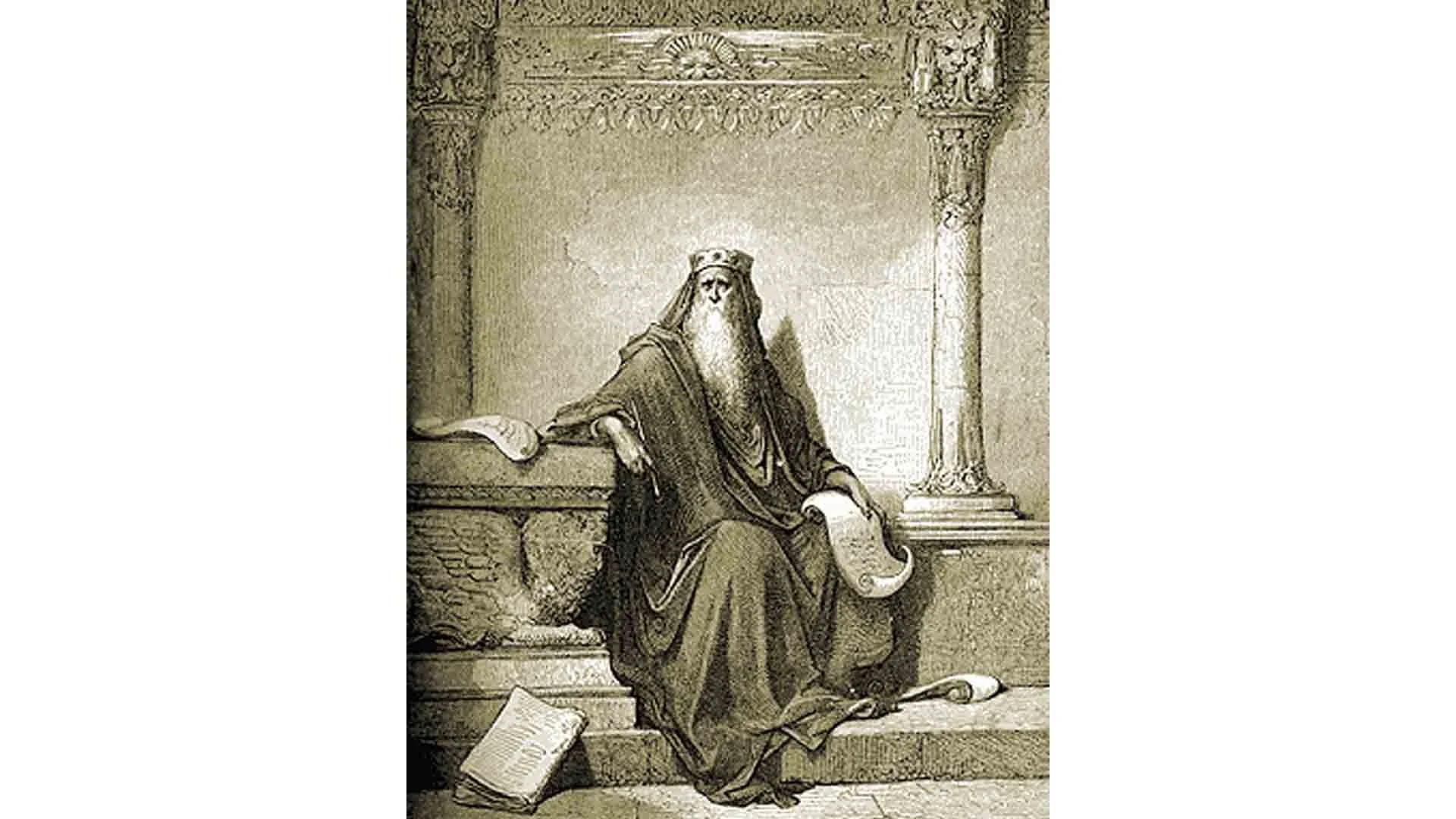
“He weighed [izzen] and sought out, and set in order many proverbs” and Ulla said that Rabbi Elazar said: Before Solomon came, the Torah was like a basket [kefifa] without handles [oznayim], until Solomon came and made handles for it.

By means of his explanation and proverbs he enabled each person to understand and take hold of the Torah, fulfill its mitzvot, and distance himself from transgressions.

We examine the traditional midrashic material concerning Shlomo Hamelech’s wisdom and use of the parable as a tool to make lofty spiritual concepts accessible.

Tags 23rd
Comment

Yevamot 20: קַדֵּשׁ עַצְמְךָ בַּמּוּתָּר לָךְ

jyungar March 27, 2022

For the source text click/tap here: Yevamot 20

To download, click/tap here: PDF

A prohibition stemming from sanctity is referring to secondary relationships forbidden by rabbinic law. And why is this called a prohibition stemming from sanctity? Abaye said: Whoever fulfills the words of the Sages is called sacred. Rava said to him: The language you use is not precise, since if so, whoever does not fulfill the words of the Sages is not called sacred, which implies that he is also not called wicked. However, anyone who transgresses the words of the Sages is in fact referred to as wicked.

Rather, Rava said that the reason why this is called a prohibition stemming from sanctity is that the term sanctity indicates differentiation or separation, and there is a principle קַדֵּשׁ עַצְמְךָ בַּמּוּתָּר לָךְ

you must sanctify yourself by refraining from that which is permitted to you by Torah law. The Sages decreed against secondary forbidden relations so that one would not eventually come to transgress Torah law.

Tags 23rd
Comment

Yevamot 19: Where Is The Consent?

jyungar March 26, 2022

For the source text click/tap here: Yevamot 19

To download, click/tap here:  PDF

Is yibum, levirate marriage, the same as any other marriage, or not? If the zika is substantial, how can we easily exempt a woman from yibum, regardless of the situation? If marriage is assumed and almost automatic for a yevama and her yibum, shouldn't chalitza or intercourse always be necessary to affirm or finalize the status of the relationship?

Rebbi and the Chachomim argue if maamar is comparable to kiddushin or not; all agree that kiddushin can be performed only with the consent of the woman.

Mention is made on our daf, of a yevama who is raped by her yivam. Because yibum is considered to be the same as marriage, most rules apply:

But in 'regular' marriage, the woman must consent to her betrothal, if not the marriage. So why not in this situation?

We explore the notion of consent in Halacha and modern iterations of forced betrothals and marriages in our community.

Tags 23rd
Comment

Portrait Of The Artists Mother by Franz Marc

Yevamot 18: Power of Zikah

jyungar March 25, 2022

For the source text click/tap here: Yevamot 18

To download, click/tap here: PDF

Our Daf deals with the relationship between the yavam (the brother upon whom the commandment of yibum falls) and the yevama (the widow) prior to their fulfilling the commandment of yibum or, alternatively, their decision to perform halitza, which will effectively end their familial connection?

Could the brother choose to marry one of the yevama’s immediate relatives (e.g. her mother or her sister), or would that be tantamount to marrying a forbidden woman to whom he is related through marriage?

To deal with this question, the Gemara introduces the concept of zika and teaches that there is an argument whether zika exists between the yavam and the yevama.

Our daf records a dispute with regard to whether "Yesh Zikah" or "Ein Zikah" -- is the bond of Zikah between the Yevamah and the Yavam comparable to the bond of marriage?

Rav Huna in the name of Rav maintains "Ein Zikah," and Rav Yehudah maintains "Yesh Zikah.”

How strong is it? Do we say that it is almost like marriage that already exists?

In a related t'shuvah regarding zikuk, the Chasam Sofer, cites the Zohar which emphasizes that the niftar suffers until yibum or chalizah is performed…

which leads us to explore the relative weight the zohar plays in halachic decision making and instances where halacha differs from the zohar.

Tags 23rd
Comment

Yevamot 17: "When Brothers Live Together"

jyungar March 24, 2022

For the source text click/tap here: Yevamot 17

To download, click/tap here: PDF

One of the women about whom the first Mishna (2a) taught that there is no mitzva of yibum is the case of eishet ahiv she-lo hayah be-olamo – when there is a brother who was not born until after the woman became a widow. In such a case, the severe prohibition of a person marrying his brother’s wife remains in effect, and the woman does not have to wait until the newborn child is old enough to perform yibum or halitza; she can get married immediately.

This halakha is mentioned as one of 15 cases in the first Mishna in the massekhet; the first Mishna of the second perek- which begins on our daf– deals with it in some detail. The Gemara suggests that the source for this halakha is the passage that opens the rules of yibum (see Devarim 25:5), beginning with the condition “when brothers live together,” which implies that this is a law that applies only when the brothers were alive at the same time.

We explore the notion of the brothers in Debt 25:5 and the commentators to that verse then go on to look at Levirate marriage by the Ethiopian Beta Yisrael as a witness to post biblical pre rabbinic interrelations.and their refusal to perform levirate marriage.

Tags 23rd
Comment
  • Daf Ditty
  • Older
  • Newer

Julian Ungar-Sargon

This is Julian Ungar-Sargon's personal website. It contains poems, essays, and podcasts for the spiritual seeker and interdisciplinary aficionado.​