Julian Ungar-Sargon

  • Home
  • Theological Essays
  • Healing Essays
  • Podcast
  • Poetry
  • Daf Ditty
  • Deep Dive Ditty
  • Videos
  • Publications
  • Military Service
  • Dominican University
  • Home
  • Theological Essays
  • Healing Essays
  • Podcast
  • Poetry
  • Daf Ditty
  • Deep Dive Ditty
  • Videos
  • Publications
  • Military Service
  • Dominican University
Julian Ungar-Sargon copy 3.jpg

Daf Ditty

A wide-ranging commentary on the daily page of Talmud.

Rosh Hashanah 20: Dark Side of the Moon

jyungar October 29, 2021

For the source text click/tap here: Rosh Hashanah 20

To download, click/tap here: PDF

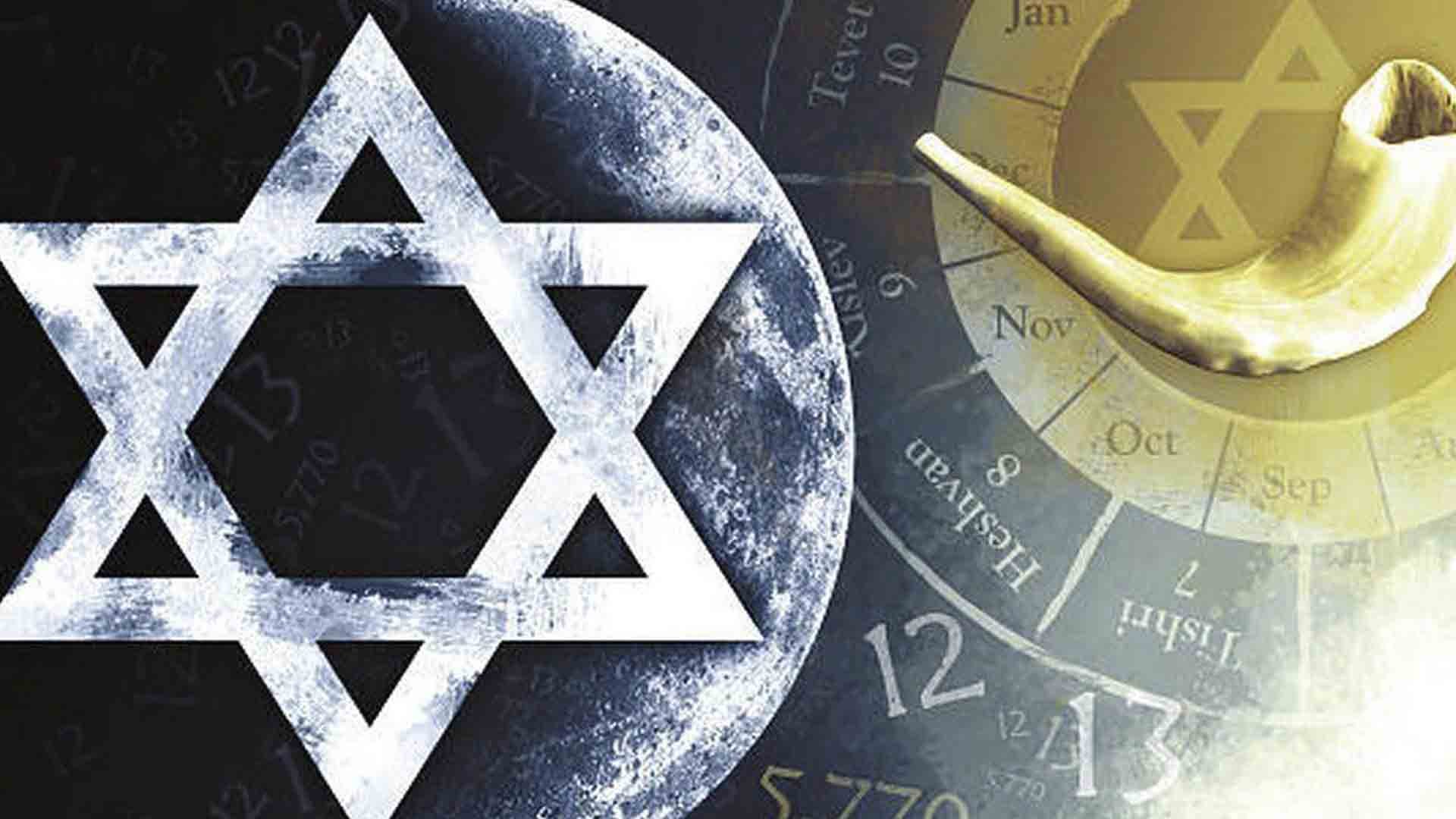
The Jewish calendar today is set based on calculations made by Hillel II in the time of the Gemara. Each month has either 29 or 30 days, so that over time, the months will stay in sync with the moon. As we have learned, during Talmudic times, the new month was based on testimony received from witnesses who saw the new moon, although the Sages who declared the new month had a fair amount of latitude to choose to postpone the announcement if they felt it necessary for one reason or another.

Rabbeinu Chananel and the Geonim point out that a decision on establishing the new month was dependent on a number of issues, some of which were well known, but others were known only to a small group of Sages who participated in sod ha-ibur – the closed assembly that actually made the final decision on this matter.

We explore the history of the lunar calendar from inner biblical analysis with Prof Sacha Stern to an astronomical historical comparison with other intercalating traditions by Prof Ari Belenkiy.

Tags 18th
Comment

Rosh Hashanah 19: Megillat Ta'anit

jyungar October 28, 2021

For the source text click/tap here: Rosh Hashanah 19

To download, click/tap here: PDF

Megilat Ta’anit is a little known collection of statements about minor holidays and fasts that commemorate events which took place during the Second Temple period. On the minor holidays, fasting and eulogies were forbidden. Most of the events that are commemorated are from the period of the Hasmonean monarchy – a prime example being the story of Hanukkah – although there are also events from earlier and later periods included, as well.

The discussion in our daf revolves around the question of whether the commemorative days that appear in Megillat Ta’anit are still significant, or whether batlah Megilat Ta’anit – it has become null and void.

We explore the scholarly works investigating this ancient text first published in Mantua 1514.

Tags 18th
Comment

Interior With A Family Feasting And Dancing by Willem van, the Elder Herp

Rosh Hashanah 18: Judging The Tzibur (Covid)

jyungar October 27, 2021

For the source text click/tap here: Rosh Hashanah 18

To download, click/tap here: PDF

In answer to the question posed by our daf as to how the same day can be both a day of fasting and a day of joy, Rav Papa explains that there are three possible scenarios that exist, which depend on the situation of the Jewish people in the world.

If there is shalom – peace – then these are days of celebration and happiness

If there is shemad (or, according to some readings gezerat malkhut) – oppression – then these are days of fasting

If there is neither shalom nor shemad, then it is up to the people to decide whether or not they will fast.

There is discussion about private vs communal judgment which leads us to examine the theological ramifications of communal suffering such as in a pandemic.

Tags 18th
Comment

Rosh Hashanah 17: The Sinners of Israel

jyungar October 26, 2021

For the source text click/tap here: Rosh Hashanah 17

To download, click/tap here: PDF

Most of our daf deals with issues of teshuva (repentance) and kappara (forgiveness). We find Rabbi Yochanan introducing the 13 attributes of mercy presented by God to Moshe on Mount Sinai following the sin of the Golden Calf (Ex 34:6) as a formula taught by God that guarantees forgiveness.

A braisa is cited regarding the judgments of two different types of sinful people. Those that sin with their body will go down to Gehinom and will be punished there for twelve months. After twelve months, their body is destroyed, their souls get burned and a wind scatters their remains under the feet of the righteous.

One who has more transgressions than mitzvos and has committed a sin that is in the category of the rebellious sins will not have any cure. One who has precisely the same amount of transgressions as mitzvos, and included in his transgressions is a sin that is in the category of the rebellious sins, must be judged in Gehinom for a short time.

We explore sin and forgiveness from theological, psychological and hassidic perspectives.

Tags 18th
Comment

Rosh Hashanah 16: Confusing The Satan

jyungar October 25, 2021

For the source text click/tap here: Rosh Hashanah 16

To download, click/tap here: PDF

The Gemara earlier (10b) quotes the dispute between Rebbi Eliezer and Rebbi Yehoshua with regard to whether the world was created on the first of Tishrei (the day on which Adam ha'Rishon was created) or whether it was created on the first of Nisan. If the world was created (and Adam ha'Rishon was granted atonement for his sin) on the first of Tishrei as Rebbi Eliezer maintains, it is clear why the inhabitants of the world are called to task on that day every year (see Vayikra Rabah 29:1). However, if the world was created in Nisan as Rebbi Yehoshua maintains, then why was the first of Tishrei designated as the Day of Judgment for the year's deeds?

One of the most enigmatic reasons given for blowing the shofar is to confuse the Satan. How foolish can Soton benot to realize after thousands of years that the preliminary sounding of the shofar is only a ruse?

We struggle with a number of interpretations.

Tags 18th
Comment

Rosh Hashanah 15: RH For Etrogim

jyungar October 24, 2021

For the source text click/tap here: Rosh Hashanah 15

To download, click/tap here: PDF

As we have learned on the previous dapim, there are several different dates on the calendar that distinguish one agricultural year from another. This is significant in establishing when tithes are taken, since every individual year’s harvest must have terumot and ma’asrot taken separately.

We have seen that the Mishnah (2a) teaches that the first day of Tishrei is the date of the new year for vegetables, while the new year for fruits begins in Shevat when most of the year’s rains have already fallen.

Our daf ends the rabbis' debates regarding our last Mishna on the many different New Years. Their discussions have allowed us to better understand halachot surrounding planting ,harvesting, tithing, and how we work with anomalies like the Sabbatical year and plants that take three years to produce ripe fruit.

The etrog continues to be used to elucidate our rabbis' arguments.

As it produces valuable fruit and it is a short tree; because it grows a fruit used for ritual purposes, the rabbis use this tree to explain their dilemmas. One of these regards tithing: if a fruit is planted or begins to grow in the sixth year of the sabbatical cycle and then it is ripe in the seventh year, can it be used and tithed in the seventh year? What if it grows through the seventh year but ripens in the eighth? These questions allow our rrabbis to discuss some of the particularities of the Sabbatical year and of tithing.

Rav Yannaii's inquiry as to whether Tu Bishvat occurs during the (season) lunar or (month) solar cycle allows us to explore further a fundamental cosmic difference and ambiguity of this festival and its halachic impact.

Tags 18th
Comment

Rosh Hashanah 14: Arbor Day

jyungar October 23, 2021

For the source text click/tap here: Rosh Hashanah 14

To download, click/tap here: PDF

The Mishnah (2a) states that the Rosh Hashanah for trees is the first of Shevat according to Beis Shamai, and the fifteenth of Shevat according to Beis Hillel. The Gemara seeks a source for Shevat as the new year for trees, and it answers that since most of the rain of the year has already fallen by this time it is considered the end of the year for trees. Even though the winter season is not yet over and more rain may still fall, since a majority of the winter season has passed this date is considered the end of the year for trees.

The Gemara's intention is unclear. It is true that once most of the year's rain has fallen the trees begin to blossom. Why, though, does that render Shevat the Rosh Hashanah for trees? Why does the time of blossoming determine the date of the new year for trees?

The Gemora cites an incident with Rabbi Akiva that he picked esrogim from a tree on the first of Shevat. He separated ma’aser sheini as if it was the second year of the Shemitah cycle and he also separated ma’aser oni as if it was the third year of the Shemitah cycle. Rabbi Akiva was being strict regarding the halachos of separating ma’aser from the fruits of the tree. The commentators ask that separating ma’aser from fruits is only Rabbinic and the principle is that when there is a doubt on a Rabbinic law, one has a right to be lenient. Why did Rabbi Akiva choose to be strict?

We continue our exploration into the ecological implications of tree preservation.

Tags 18th
Comment

Rosh Hashanah 13: The First Omer Offering

jyungar October 22, 2021

For the source text click/tap here: Rosh Hashanah 13

To download, click/tap here: PDF

Our Daf states that the Jewish people brought the Korban ha'Omer as soon as they entered Eretz Yisrael. The Gemara questions how they were able to grow grain for the Korban in such a short amount of time. From the time they entered the land until the time of the Korban ha'Omer was a period of just five days.

They could not have bought the barley from the inhabitants of the land, because the Korban ha'Omer must be brought from barley that ripened in the possession of Jews.

The Gemara proves from here that barley is able to ripen within a very short amount of time, the amount of time that passed from when the Jews entered Eretz Yisrael and became field-owners until the time they harvested the barley for the Omer five days later.

We explore the Mitzvah of Omer offering and its relationship to Sefiras Ha'Omer.

Tags 18th
Comment

The Flood of Noah and Companions (c. 1911) by Léon Comerre. Musée d'Arts de Nantes.

Rosh Hashanah 12: Boiling Waters

jyungar October 21, 2021

For the source text click/tap here: Rosh Hashanah 12

To download, click/tap here: PDF

The Gemara asks further: Granted, according to Rabbi Yehoshua, who holds that the flood began in the month of Iyyar, this is what it means that He changed the acts of Creation with a flood, as rain does not usually fall in Iyyar. But according to Rabbi Eliezer, who holds that the flood began in Marḥeshvan, what did He change?

Rav Ḥisda said: They sinned with boiling heat, and they were punished with boiling heat; they sinned with the boiling heat of the sin of forbidden sexual relations, and they were punished with the boiling heat of scalding waters. This is derived from a verbal analogy. It is written here, with regard to the flood: “And the waters abated” (Genesis 8:1), and it is written elsewhere, with regard to King Ahasuerus: “And the heated anger of the king abated” (Esther 7:10), which implies that the word “abated” means cooled. This indicates that at first the waters of the flood had been scalding hot.

We explore the traditions surrounding the flood and the boiling waters...

Tags 18th
Comment

Rosh Hashanah 11: Auspicious Nissan

jyungar October 20, 2021

For the source text click/tap here: Rosh Hashanah 11

To download, click/tap here: PDF

Rav Yehudah says that one who sees blossoming fruit trees during the month of Nisan recites a special blessing. What conditions are necessary in order to recite this blessing?

(a) The HILCHOS KETANOS (2:28), cited by the BE'ER HEITEV (OC 226:1), rules that one recites this blessing only for a tree that bears edible fruit.

(b) Although the Gemara says that one recites the blessing when he sees the tree during the month of Nisan, the RITVA writes that the blessing is not limited specifically to Nisan. One may recite a blessing when he sees a blossoming fruit tree at the beginning of the season in which trees blossom in that particular region, such as in the month of Tishrei in the southern hemisphere.

(c) The Acharonim accept this ruling (MACHATZIS HA'SHEKEL). (However, the BIRKEI YOSEF writes that based on Kabalistic reasons one should recite the blessing specifically during the month of Nisan.) Why does the Gemara say that the blessing should be recited during the month of Nisan? Perhaps the Gemara means that one should not recite the blessing for trees that blossom early, but only for trees that blossom in the season in which most trees blossom.

We explore those "kabbalistic reasons"...

Tags 18th
Comment

Rosh Hashanah 10: Tu Bishvat

jyungar October 19, 2021

For the source text click/tap here: Rosh Hashanah 10

To download, click/tap here: PDF

The years of a tree are also counted from the first of Tishrei. Why is it important to know how old a tree is? - Because for the first three years the fruit of the tree are called "orlah" and cannot be eaten, so we need to know when to count the first year. As it turns out, if the tree is planted at least 30 days before Rosh Hashanah, this is already considered the first full year of its life. Even so, after the the third Rosh Hashanah, the fruit are not permitted immediately, but only after the fifteenth of Shvat, also known as "Tu B'Shvat."

We explore this unusual festival and its sources.

Tags 18th
Comment

Rosh Hashanah 9: Eating on 9th Tishrei

jyungar October 18, 2021

For the source text click/tap here: Rosh Hashanah 9

To download, click/tap here: PDF

The Gemara records a Beraisa in which Rebbi Akiva derives the requirement of Tosefes Kedushah (the requirement to refrain from plowing and harvesting, Charishah and Ketzirah, before the Shemitah year begins) from the verse, "b'Charish uv'Katzir Tishbos" -- "You shall rest from plowing and harvesting" (Shemos 34:21).

Rebbi Yishmael disagrees with Rebbi Akiva and derives the requirement to add to a sanctified time from the verse which teaches the Mitzvah to fast on Yom Kippur: "You shall afflict yourselves on the ninth of the month in the evening, from evening to evening, you shall rest on your day of rest" (Vayikra 23:32). Rebbi Yishmael points out that the verse first says to fast "on the ninth of the month," and then it says "in the evening," which means the tenth.

Rebbi Yishmael understands that the verse means that one must add some time to the sanctity of Yom Kippur from the preceding day. Similarly, the other apparently extra phrases ("you shall rest" and "on your day of rest") teach that one must add to Shabbos and to other sanctified times, such as Yom Tov and the Shemitah year.

Another teaching that is derived from this pasuk is presented by Hiyya bar Rav mi-Difti, who interprets the passage as teaching that someone who eats and drinks on erev Yom Kippur is credited as though he had fasted on both the ninth and the tenth days of Tishrei. This is generally understood to mean that there is a special mitzvah to eat on the day before Yom Kippur.

Several explanations are given for this law. Rashi and the Me’iri suggest that since there is a mitzvah to fast on the tenth, someone who spends the day before preparing for that mitzvah is given credit for the preparation. The Eliya Rabbah (Rav Eliyahu Shapira’s gloss on the Shulchan Arukh) suggests otherwise.

We explore the idea of eating on the 9th as a mitzvah in itself.

Tags 18th
Comment

Rosh Hashanah 8: Yovel vs Sh'mitta

jyungar October 17, 2021

For the source text click/tap here: Rosh Hashanah 8

To download, click/tap here: PDF

One would expect that the yovel year, much like the seven shemitta cycles that precede it, would begin on Rosh Hashana, the first of Tishrei. However, the Torah clearly tells us that the unique laws of yovel begin on the tenth of that month, on Yom Kippur. The shofar is ordinarily associated with Rosh Hashana, and the unique prayers of the day are arranged around it. However, when it comes to yovel, the shofar blast proclaiming a return of man to his estate and to his family is sounded on Yom Kippur. Why?

The Rambam (Hilkhot Shemitta Ve-yovel 10:14) explains:

From Rosh Hashana until Yom Kippur servants were not sent to their homes nor were they subjugated to their masters, and fields did not return to their owners. Rather, the servants would eat, drink and celebrate, with crowns upon their heads. When Yom Kippur came the Court would sound the shofar, the servants were sent to their houses and the fields returned to their owners.

We explore multiple voices in this discrepancy between the onset of shmitta vs yovel.

Tags 18th
Comment

Illustration by Aaron Thorup

Rosh Hashanah 7: Nissan or Tishrei?

jyungar October 16, 2021

For the source text click/tap here: Rosh Hashanah 7

To download, click/tap here: PDF

In the Torah , the beginning of the year was clearly set at the first of Nisan, in the context of a description of the first Passover. “The Lord said to Moses and Aaron in the land of Egypt: This month shall mark for you the beginning of the months; it shall be the first of the months of the year for you” (Exodus 12:1-2). This new year celebrated the creation of the Jewish nation through the redemption of the Israelites from Egypt. Nisan, as the first of the months, coincided with the beginning of Jewish national history.

But it is surprising that the Torah made no mention of a new year at 1 Tishrei, which today is so central to the Jewish religious experience. The Torah’s reference to 1 Tishrei is sparse altogether, describing a holiday characterized primarily by the blowing of a shofar . “In the seventh month, on the first day of the month, you shall observe complete rest, a sacred occasion commemorated with loud blasts. You shall not work at your occupations, and you shall bring an offering by fire to the Lord.” The name “Rosh Hashanah” is not mentioned, nor is there a reference to its function as a day of judgment and anniversary of the world’s creation.

Yet by the period of the Mishnah at the beginning of the second century, the outlines of today’s Rosh Hashanah holiday are clear; and discussions about the prayers of Rosh Hashanah appear as early as the teachings of the schools of Hillel and Shammai, which date to the first century CE.

We explore the historical textual and (Rav Kook) mystical implications of 2 rosh hashana's.

Tags 18th
Comment

Rosh Hashanah 6: Halachik Coercion

jyungar October 15, 2021

For the source text click/tap here: Rosh Hashanah 6

To download, click/tap here: PDF

Our Daf cited a Baraisa in which the word ועשית was expounded to teach that the Beis Din is empowered to force a person to carry through and honor his verbal commitment to bring an offering.

The Gemara challenged this insight by showing that this same lesson is apparently learned from a different verse altogether. יקריב teaches that a person can be compelled to fulfill his responsibilities. The Gemara resolves this problem by demonstrating that the two verses actually teach two distinct cases of Beis Din intervening to compel a person to fulfill his pledge.

We explore the notion of Halachic coercion and an analysis of vaccine mandates from such a perspective.

Tags 18th
Comment

Rosh Hashanah 5: Don't Delay!

jyungar October 14, 2021

For the source text click/tap here: Rosh Hashanah 5

To download, click/tap here: PDF

The Gemora cites several sources to teach us that even if one delays on the bringing of a korban, the korban is still valid. The commentators all ask as to what would be the logic of invalidating the korban? While it is true that the owner committed a transgression by not bringing the korban in the proper time but why would the korban become unfit to be brought?

The Torah said, " When you make a pledge to God your Lord, do not be late in paying it, since God will then demand it, and you will have committed a sin ." Every additional word teaches an additional thought.

We explore the permutations of delay and its halachic ramifications (Rav Taragin) ending with Prof Himmelfarb's analysis of how The biblical priestly text is unique in the ancient Near East, in that it utilizes scribal features such as colophons, cross references, and casuistic laws (when... then...), aimed at making the text accessible to the public. This preserved Israelite priestly writing past the destruction of the Jerusalem Temple.

Tags 18th
Comment

Rosh Hashanah 4: Cyrus, Good King/Bad King?

jyungar October 13, 2021

For the source text click/tap here: Rosh Hashanah 4

To download, click/tap here: PDF

The defeat of Babylonians by Cyrus the Great in 539 BCE led to a (temporary) golden age of Jewish life under Persian rule. Cyrus allowed the Jewish people to return to the land of Israel and build the Temple. "And the elders of the Jews build and prospered, through the prophesying of Haggai the Prophet and Zechariah, the son of Iddo. And they built and finished it, according to the commandment of the God of Israel, and according to the decree of Cyrus, and Darius, and Artaxerxes king of Persia" (Ezra 6:14).

No wonder the Gemara tells us that "Koresh (Cyrus) was a kosher (very good) king and therefore, they counted for him like they did for the kings of Israel" (Rosh Hashanah 3b). As mentioned in our last piece ancient documents were dated according to the year of the king, with the New Year for kings beginning on the first of Nissan for non-Jewish kings, and on the first of Tishrei for Jewish kings. Cyrus, however, was given the honour of being treated like a Jewish king.

We explore this historical figure and the ongoing saga of the Cyrus cylinder.

Tags 18th
Comment

The relief stone of Darius the Great in the Behistun Inscription

Rosh Hashanah 3: Divine Rights

jyungar October 12, 2021

For the source text click/tap here: Rosh Hashanah 3

To download, click/tap here: PDF

Our Daf (Rosh Hashanah 3) struggles between the month of Nissan or Tishri for reckoning regnal dating and cites numerous biblical references which only causes more problems and differences between the Talmud Bavli and Yerushalmi. Do these rules apply to gentile kings as well? Maybe this proves there is no chronological order to the bible? Was Darius Jewish?

The daf endswith another reference to names. Artachshast may have also been calledDarius and Cyrus. Cyrus refers to his virtuousness. We learn thatkings who are virtuous might follow Israel's dates... but what makes a kingvirtuous? If one is a Gentile, is it necessary to be like a Jew to bevirtuous? What if one follows the Noahide laws and also follows his orher own religious rules? How do we measure virtuousness in one who is notobligated to follow known guidelines?

We explore how the Divine right of kings emerged from the ancient near East into Europe and also Prof Marc Brettler's recent essay on the Rosh Hashanah Mussaf and its antecedents.

Tags 18th
Comment

Rosh Hashanah 2: Fit For Kings

jyungar October 11, 2021

For the source text click/tap here: Rosh Hashanah 2

To download, click/tap here: PDF

Theoretically, a king's reign should begin whenever he took office. Rav Hisda explains that "for kings" means for dating contracts. It was common practice under a given monarchy that the year that would appear in a contract was not the number of years since creation or from an arbitrary point in history, but how many years into the current king's reign. Rashi explains that this was done for reasons of shalom malkhut-- to stay on good terms with the king by honoring him in every matter.

As we begin the new masechta and the new Mishnah I was haunted by the notion that kings not only began their reign on the same day of the year but just how we manipulated our calendrical cycle so as to fit their reign dates. It is as if the earthly king paralleled the divine king. As we internalize the mythic structures as archetypes of the inner soul we come to the greatest psychologist and how he dealt with kingship and maturing using Jungian analytic techniques.

Tags 18th
Comment

As we leave our beloved Masechta let us look at the most erudite talmid of Prof Shaul Lieberman, Prof Dovid Weiss Halivni who revolutionized the way we look at Talmudic texts seeing the geological strata underneath the surface.

Beitzah 40: Hadran

jyungar October 10, 2021

For the source text click/tap here: Beitzah 40

To download, click/tap here: PDF 

The Mishnah on our daf teaches that a person who has guests come and visit on Yom Tov from the next city(i.e. they created an eruv techumim that allowed them to travel to him; he did not create such an eruv so neither he nor his possession can go to their city), cannot give them food to take back home with them, since the food belongs to him and is there for limited to areas that he is allowed to go to.

The convention of shlichut (halakhic agency) is a familiar and widespread concept in Halakha. Many halakhic activities such as kinyan, kiddushin, gittin, and hekdesh can be performed indirectly through an agent (shaliach).

As we leave our beloved Masechta let us look at the most erudite talmid of Prof Shaul Lieberman, Prof Dovid Weiss Halivni who revolutionized the way we look at Talmudic texts seeing the geological strata underneath the surface.

Tags 17th
Comment
  • Daf Ditty
  • Older
  • Newer

Julian Ungar-Sargon

This is Julian Ungar-Sargon's personal website. It contains poems, essays, and podcasts for the spiritual seeker and interdisciplinary aficionado.​