Julian Ungar-Sargon

  • Home
  • Theological Essays
  • Healing Essays
  • Podcast
  • Poetry
  • Daf Ditty
  • Deep Dive Ditty
  • Videos
  • Publications
  • Military Service
  • Dominican University
  • Home
  • Theological Essays
  • Healing Essays
  • Podcast
  • Poetry
  • Daf Ditty
  • Deep Dive Ditty
  • Videos
  • Publications
  • Military Service
  • Dominican University
Julian Ungar-Sargon copy 3.jpg

Daf Ditty

A wide-ranging commentary on the daily page of Talmud.

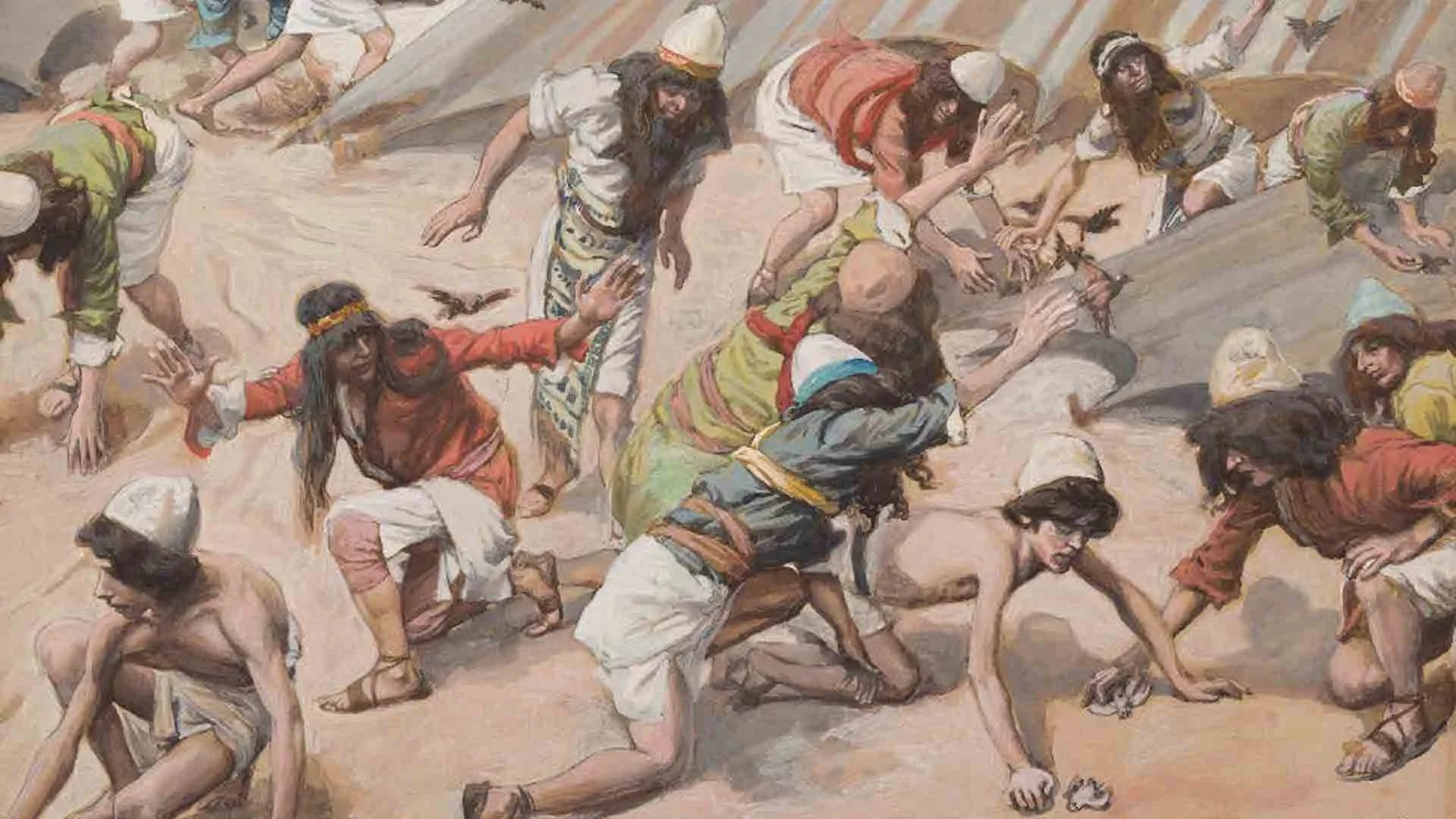
Quails Are Sent to the Israelites, James Tissot, c. 1896-1902. Jewish Museum

Yoma 75: Quail, Craving or Starving?

jyungar June 26, 2021

For the source text click/tap here: Yoma 75

To download, click/tap here: PDF

We explore the episode of the Quail in the wilderness and the aggadic interpretations.

Rav Chanin bar Rava teaches that there are four separate birds called slav.We cannot identify each of these birds with certainty, but it appears that they are all members of the pheasant family of birds, which are similar to chickens.The birds mentioned in the Gemara are variously identified as Alectoris, Francolinus, Ammoperdix and Phasianus, all of which have similar body structures and make up a natural family. The pheasant (Phasianus) is raised as poultry in many places. Standard quail – Coturnix coturnix – is the smallest of the birds related to the chicken.

"It is well known that the quail, known to ornithologists as Coturnix coturnix, migrates in huge flocks from Europe to CentralAfrica in the autumn and returns in the spring. A short-tailed game bird of the pheasant family, it flies rapidly at very low altitudes. Due to the long distance involved, the migration is carried out in stages.

The small quails twice each year land exhausted on the Mediterranean shore, where they can easily be captured by hand and by nets in great quantity.

Their flesh and eggs are said to be delicious, and to this day they are a prized food among the local population and are exported as a delicacy to Europe.

The season of the year in which the Israelites encountered the quails fits in precisely with the bird's migratory pattern." (Nahum Sarna, Exploring Exodus pg. 119)

Tags 14th
Comment

Yoma 74: The Koy, Tragelaphus?

jyungar June 25, 2021

For the source text click/tap here: Yoma 74

To download, click/tap here: PDF 

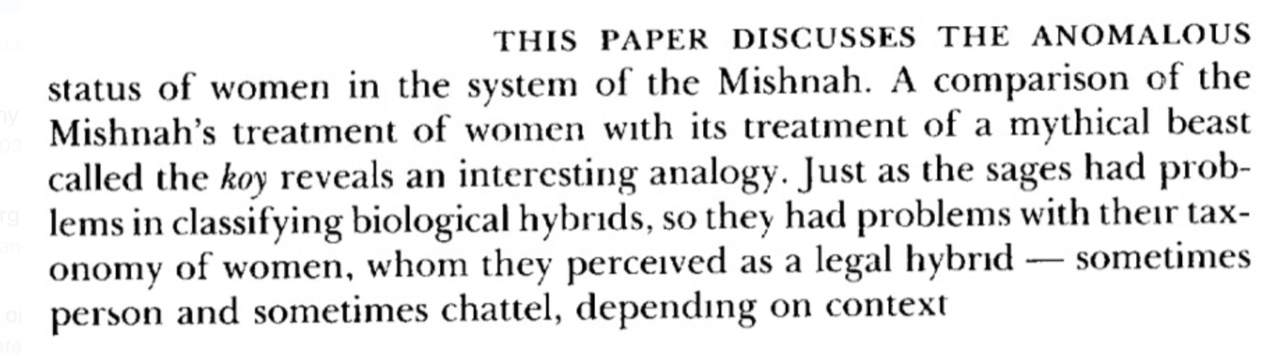
Our daf refers to an animal called a koy which is halfway between domesticated and wild species of quadruped, and debates how far it is subject to the laws governing each category. Scholars are divided on whether the rabbis believed the koy to be a real creature or an imaginary example used for a hypothetical discussion.

Judith Romney Wegner discusses how the koy represents a hybrid:

by default 2021-06-24 at 5.33.32 AM.png
Tags 14th
Comment

Yoma 73: “Inuy”

jyungar June 24, 2021

For the source text click/tap here: Yoma 73

To download, click/tap here: PDF 

The Gemara teaches us that the rabbis argued about what of this Mishna is based on Torah law and what is based on rabbinic law. Does it matter what a person eats? Can the food be treiefot? At what point did we make an oath that we would not eat such food - on Mount Sinai? or simply before Yom Kippur? How do we define “inuy” affliction? According to Rashi, the Rabbis set aside certain rabbinic prohibitions in order to increase a person’s mental anguish and thus allow him to better fulfill the mitzva of affliction on Yom Kippur. According to Rashi’s understanding, this talmudic passage contradicts our proposal, for it follows from what he says that the Yom Kippur prohibitions are intended to cause pain and anguish. Most Rishonim, however, understand the passage differently.

Tags 14th
Comment

Red chest from the tomb of Tutankhamun, equipped with carrying poles, shown with poles extended. Burton photograph 1557. From Malek, Tutankhamun.

Yoma 72: Poles of the Aron

jyungar June 23, 2021

For the source text click/tap here: Yoma 72

To download, click/tap here: PDF 

It is prohibited to remove the poles from the holy ark, and anyone who does so is subject to lashes. What is the reason that the Torah requires that the poles for carrying the Ark always remain in their rings, whereas the poles for carrying the Altar and the table are only required to remain in their places when their respective utensils are actually being moved?

Meshech Chochmah explains that the poles for carrying the Aron represent the segment of Klal Yisroel which supports and upholds Torah scholars who are immersed in the study and dissemination of Torah, just as the poles served to carry the ark and the Torah contained in it. It is only fitting that these supporters be totally and constantly associated with their Torah partners.

We examine the issue of removing the poles for transport by R Yitzchak Levy then compare the poles of Tutenkhamun's tomb by Prof Raanan Eichler.

Tags 14th
Comment

Flax tissues, Tacuinum sanitatis, 14th century

Yoma 71: Linum Usitatissimum

jyungar June 22, 2021

For the source text click/tap here: Yoma 71

To download, click/tap here: PDF

The Mishnah on our daf teaches about the bigdei kehunah – the special clothing worn by the kohanim and the kohen gadol. The kohen gadol wears eight special garments, of which four of them were the standard attire of a regular kohen.

The Gemara derives from passages in Shemot 39 that the basic material used in the fabric for the bigdei kehunah was linen, derived from flax – Linum usitatissimum.It is an erect annual plant growing between 30 and 100 cm tall, with slender stems.

The Hebrew language has several words torefer to “linen”: pishtah/pishtan/pishtim (“flax”), butz, sheish (Yoma 71b), and bahd (Zevachim 18b). In fact, the Talmud explicitly defines the last two words as “linen” — which is known in the Talmud as kitna .

We find an aggada about a Kohen Gadol who encounters Shemaya and Avtalyon at the conclusion ofYom Kippur seemingly revealing its proper attitude towards proselytes, and the message that great sensitivity should be shown towards them, including refraining from mentioning their background.

Tags 14th
Comment

The blind and the lame, by Johann Theodor de Bry, 1596. Rijksmuseum

Yoma 70: Two Goats for Two Types of Sin

jyungar June 21, 2021

For the source text click/tap here: Yoma 70

To download, click/tap here: PDF

Our Mishnah specifically lays out the order of the service. According to this Mishna, Yom Kippur seems like one long day of disrobing, immersing, drying, dressing in gold or linen robes, doing a ritual, and then repeating the process. At the end of this incredibly long day, this Mishna tells us that he is surrounded by people as he walks home. At home, the High Priest prepares a feast. It is tough to imagine the High Priest preparing a feast at that point. Others must have been home preparing while he was leading prayers. But the Talmud tells us that he was the one who makes the feast - an interesting description.

The Zohar notes that the name “Yom HaKippurim” is plural. What can we learn from the fact that the Torah does not refer to this day as “Yom Kippur - The Day of Atonement”?

We can identify two categories of improper actions. One is simply when a person neglects to do that which is incumbent upon him. The other is when a person performs the actions that are expected from him but does them improperly.

To illustrate the body and soul’s responsibility for sin, an early midrash presents the parable of the blind and lame watchmen. Curiously, this parable later shows up in Piyyut and in a Christian text.

What might this teach us about the spread of rabbinic texts and ideas in late antiquity?

Tags 14th
Comment

Alexander on a mosaic from Pompeii, an alleged imitation of a Philoxenus of Eretria or Apelles' painting, 4th century BC.

Yoma 69: Alexander Macedon

jyungar June 20, 2021

For the source text click/tap here: Yoma 69

To download, click/tap here: PDF

Our daf includes one of the most famous stories in the Gemara, when the kohen gadol, Shimon HaTzaddik met Alexander Mokdon (the Macedonian). The story is taken from Megillat Ta’anit (where the baraita explains why during the second Temple period the 25th day of Tevet was celebrated as a minor holiday, which was called “the day of Mount Gerizim.”

The Samaritans approached Alexander Mokdon and requested permission from him to be permitted to destroy the Temple in Jerusalem. Alexander agreed. When word of this got to Jerusalem, the kohen gadol, Shimon HaTzaddik dressed in his priestly garments and headed north together with an entourage to greet Alexander.

These stories have some parallels in Josephus but further exploration reveals little historticity. The only historical event connecting Alexander the Great with the Jews is his visit to Jerusalem, which is recorded by Josephus in a somewhat fantastic manner. According to "Ant." xi. 8, §§ 4-6, Alexander went to Jerusalem after having taken Gaza.

Tags 14th
Comment

By illustrators of the 1890 Holman Bible

Yoma 68: Torah Reading of KG

jyungar June 19, 2021

For the source text click/tap here: Yoma 68

To download, click/tap here: PDF

The seventh perek of Massekhet Yoma, which begins on today’s daf, opens with a description of the kohen gadol reading the command of the Yom Kippur service as it appears in the Torah (Vayikra 16:1-34; 23:26-32). The Jerusalem Talmud derives the need for this public reading from the passage “…and he did as God commanded Moshe,” which is understood to obligate not only performance of the avoda (Temple service), but also teaching about it.

The Mishna notes that the people who came to watch the Yom Kippur service needed to choose whether to attend the Torah reading or to go to see the burning of the sacrifices (the par and se’ir), which were done outside of Jerusalem, as was taught in the previous perek.

We present a few meditations on the Yom Kippur liturgy as it applies to the KG then to our spiritual worship ending with the famous transgressive poem by Yehuda Amichai.

Tags 14th
Comment

Yoma 67: The Crimson Thread

jyungar June 18, 2021

For the source text click/tap here: Yoma 67

To download, click/tap here: PDF

The focus of the sixth perek of Massekhet Yoma has been the se’ir ha-mishtale’ah – the scapegoat – which is not sacrificed in the Temple like a regular korban but is taken to the desert where it metaphorically takes the sins of the Jewish people with it to its death. This process, which is a central part of the Yom Kippur service, is not explained by the Torah.

"At one point in the procedure, the red thread tied to the Azazel goat was removed from its head, torn in half, and one part tied again onto its horns. At the exact moment that the Jews were forgiven, both halves of the thread turned white. (Yoma 67a)"

We explore the poetry of Michael O'Siadhail who appropriates the image of the crimson thread as one of his love for his Parkinsonian wife.

“As I remain your lover come what may— / One crimson thread until the crimson end.”

The image of the “crimson thread” derives from the Song of Songs (4:3), the poet for example, uses it in his epigraph to Love Life:

“Your lips are like a crimson thread / and your mouth is lovely….”

ג כְּחוּט הַשָּׁנִי שִׂפְתוֹתַיִךְ, וּמִדְבָּרֵךְ נָאוֶה; כְּפֶלַח הָרִמּוֹן רַקָּתֵךְ, מִבַּעַד לְצַמָּתֵךְ.

3 Thy lips are like a thread of scarlet, and thy mouth is comely; thy temples are like a pomegranate split open behind thy veil.

In One Crimson Thread, the poet portrays her states of mind and feeling, his adjustments to her changing personality, and his brokenness at her death. At the heart of this sequence, the poems courageously show how the couple’s deep-rooted love searches to overcome her illness, their fear and dread, and their eventual loss. As in its incarnations in Love Life, the image of the sonnet sequence’s title demonstrates that love will connect these lovers by an unbreakable “crimson thread.” The poet writes: “I hush you in my arms to tell you how / This suffering still sounds our depths of love.”

Tags 14th
Comment

Yoma 66: איש עתי, a “Man for the Hour”

jyungar June 17, 2021

For the source text click/tap here: Yoma 66

To download, click/tap here: PDF

The High Priest would then go to the goat sent to Azazel, lean on it with both his hands, and say another confession, similar to the one above "Please, God, forgive your nation.

He handed the Azazel goat to the person appointed to lead it to the cliff. Anyone could lead it, but the custom was that only a Kohen did it. They have built a ramp that led from the Temple Courtyard to outside the city of Jerusalem, for leading the goat. It was constructed because of the Babylonians who would pull his hair and say to him, "Take our sins and go!"

Tags 14th
Comment

Yoma 65: Fallen Angels

jyungar June 16, 2021

For the source text click/tap here: Yoma 65

To download, click/tap here: PDF

Our daf looks at the rabbis' considerations around this circumstance with particular attention given to the pair of goats consecrated on Yom Kippur - one to Azazel and the other as sacrifice. How might one of those goats become lost? Should one goat or both goats be replaced? Should there be a new lottery for this new pair of goats? When should that lottery happen? What if one of the first pair of goats has already been sent off to Azazel when the other is lost?

Rashi states that according to both of them, the sending of the goat does not withhold the atonement. The Gachalei Aish is bewildered as to how this can be. Klal Yisroel's atonement seems to be dependent on the sending of the goat off the cliff?

This leads us to an exploration of fallen angels such as Aza’el and Aza (also known as Shemhazai) who saw the terrible sins of the people in the pre-Flood generation and scoffed at the pathetic humans. God told them that if they had been on Earth and given free will, they would succumb to their evil inclination far worse than people do. The angels wanted to prove God wrong, and asked Him to send them down to Earth into a physical body. God complied, and just as He had said, the angels quickly fell into all forms of evil.

We then examine the work of Andre Orlov as he follows these myths into intertestamental literature.

Tags 14th
Comment

Mount Azazel in the Judean Desert, from which the goat was pushed to its death

Yoma 64: Atonement, Then and Now

jyungar June 15, 2021

For the source text click/tap here: Yoma 64

To download, click/tap here: PDF

The Mishnah ruled that when the goat for Azazel dies another pair of goats is brought and a second lottery is cast. The Mishnah, however, was unclear which of the two “Hashem goats” will be offered and which will be sent to graze until it develops a blemish.

Rav maintains that the one from the first pair is offered and the one from the second pair is sent to graze, whereas R’ Yochanan holds that a goat from the first pair is sent to graze and a goat from the second pair is offered as the korban.

We examine chap 16 of Lev. and its textual reworking by Dr David Frankel followed by Rav Moshe Lichtenstein's analysis of the spiritual implication of the two goats and the goral, for our inner lives.

Tags 14th
Comment

Yoma 63: Azazel

jyungar June 14, 2021

For the source text click/tap here: Yoma 63

To download, click/tap here: PDF

Once the se’ir ha-mishtale’ach – the scapegoat – is chosen by means of the lottery, its status as a sacrifice is unclear.

On the one hand, it is still an integral part of the Yom Kippur Temple service.

On the other hand, it is not a korban la-Shem – a sacrifice to God – as it is to be sent to Azazel.

Do the regular rules and regulations that apply to other korbanot apply here, or not?

The Gemara on our daf examines pesukim and comes to conclusions that seem to distinguish between different laws.

We examine the history and etymology of the term Azazel with Dr Ayali-Darshan's near eastern parallels

and Rabbi Jonathan Sacks' (OBM) eloquent exposition of of the ritual of the Sai'ir as atonement and purification.

Tags 14th
Comment

Yoma 62: A Tale of Two Goats

jyungar June 13, 2021

For the source text click/tap here: Yoma 62

To download, click/tap here: PDF

Tags 13th
Comment

Yoma 61: No Room for Error

jyungar June 12, 2021

For the source text click/tap here: Yoma 61

To download, click/tap here: PDF

Our Daf allows us to watch the rabbis deal with the real possibility of error. When the High Priest offers/sprinkles/pours the blood of the bull and the goat, he is actively atoning for the sins of the Jewish people. This is not a metaphor. Atonement only happens when these rituals are completed properly. Thus errors are considered to be potentially fatal for huge numbers of people. From a more modern perspective, errors without the subsequent wrath of G-d might cause the community to question the efficacy of these rituals.

The rabbis re able to create contingency plans for a host of potential errors. They look to related protocols (ex. when lepers are returned to the community) and they create new rules to manage errors. Most of the discussions revolve round whether or not rites should be/can be repeated following an error. Some rabbis believe that in different cases, it is inappropriate to repeat a ritual and thus sacrifice twice, for example, when we are told specifically to sacrifice once. Others argue that since the first ritual was improper, it was not in fact the required ritual act at all.

This leads us to explore how the sa’ir atones and Reb Yoel Bin Nun’s insightful analysis.

Tags 13th
Comment

High Priest of King Solomon’s Temple” by an unknown artist. Oil on Canvas

Yoma 60: Tzorech Penim Ki-Penim Dami

jyungar June 11, 2021

For the source text click/tap here: Yoma 60

To download, click/tap here: PDF

The mishna in Yoma (60a) demands that the proper sequence of ceremonies be maintained during the avodat Yom Ha-kippurim (Yom Kippur service in the Temple). The subsequent gemara records a dispute between Rabbi Nechemia and Rabbi Yehuda surrounding the scope of this requirement. Was it stated regarding the unique Yom Kippur ceremonies performed with the bigdei lavan (special linen clothing worn on Yom Kippur in place of the standard gold clothing), or does it apply only to those unique avodot (services) performed in the kodesh ha-kodashim (holy of holies)? For example, would the sequence requirement apply to the lottery process, viduy (confession) recitation, or blood-sprinkling on the parokhet (curtain) - ceremonies performed outside the kodesh ha-kodashim but with linen clothing?

The gemara applies the sequence requirement to collecting ketoret (incense) and sacrificing the par (the bull brouht as the kohen gadol’s sin-offering), even though these ceremonies were performed outside the kodesh ha-kodashim, since they serve as preludes to avodot performed inside(“tzorech penim ki-penim dami”).

Tags 13th
Comment

Yoma 59: Fingers וְהִזּהָ בְאֶצְבּעָוֹ and Other BodyParts

jyungar June 10, 2021

For the source text click/tap here: Yoma 59

To download, click/tap here: PDF

The Mishnah on the previous daf taught that the remnants of the blood from the sacrifices were poured down a drain on the altar, from where they emptied into the Kidron and were sold as fertilizer. Our daf quotes a baraita that teaches a difference of opinion between the sages with regard to the status of this blood – specifically, whether the rules of me’ilah would apply to it. Rabbi Meir and Rabbi Shimon believe that me’ilah applies, while the Chachamim argue that it does not.

We explore the notion of the fingers וְהִזָּה בְאֶצְבָּעוֹ as described by the gemorro and Philo, (including other body parts such as ear and toe) and how the changes that took place in the observance of Yom Kippur during the Second Temple period were significant.

Philo describes the day as one in which it was customary to spend the entire time, from morning to evening, in prayer. Regarding the ritual of the Temple itself, the descriptions that we have in the Mishnah and Tosefta were not edited in their present form until a century or more after the destruction of the Temple in 70 C.E.

There is little doubt, however, that these texts reflect an authentic tradition dedicated to preserving the Avodah of the Temple in the hope that they would one day be restored.

Tags 13th
Comment

Yoma 58: The Role of Collective Memory

jyungar June 8, 2021

For the source text click/tap here: Yoma 58

To download, click/tap here: PDF

The Mishna on our daf describes how the kohen gadol, having completed the zerikat ha-dam - the sprinkling of the blood - on the parokhet of the Holy of Holies, now turns his attention to the zerikat ha-dam that he is obligated to do on the golden altar in the heikhal (see Vayikra 16:18).

As the Torah commands, the kohen gadol takes the blood of the par (bull) and of the se'ir (goat), mixes them together, and places blood from the mixture on each of the four karnot ha-mizbe'ah ("horns" of the altar). According to the Tanna Kamma, the kohen gadol walks around the altar, sprinkling blood on each corner.

Rabbi Eliezer disagrees, arguing that the kohen gadol stood in one spot and simply reached over the altar, sprinkling blood as necessary. To understand Rabbi Eliezer's position, it is important to remember that the mizbe'ah ha-zahav - the golden altar - was only two cubits tall and one cubit in length and width, which allowed him to easily reach over it.

This leads us to Naftali Cohn's thesis regarding the THE RITUAL NARRATIVE GENRE IN THE MISHNAH: THE INVENTION OF THE RABBINIC PAST IN THE REPRESENTATION OF TEMPLE RITUAL and his exhaustive bibliography of recent scholarship on Mishnah.

Tags 13th
Comment

A lutin (French pronunciation: [lytɛ̃]) is a type of hobgoblin (an amusing goblin) in French folklore and fairy tales.

Yoma 57: Ben Temalyon

jyungar June 7, 2021

For the source text click/tap here: Yoma 57

To download, click/tap here: PDF

When the High Priest sprinkles the blood, he does not actually sprinkle on the curtain but opposite the curtain. Rabbi Elazar, son of Rabbi Yosei, said: I saw the curtain in Rome.

After a miracle was performed on his behalf and he healed the daughter of the Roman emperor, Rabbi Elazar was permitted to view the ruler’s treasures and take whatever he wanted.

He saw the Temple vessels that the Romans captured, including the curtain. Rabbi Elazar continued: And on the curtain were several drops of blood from the bull and the goat of Yom Kippur.

This shows that the blood was actually sprinkled on the curtain.

How did the Rabbi arrive in Rome and how come he saw the vessels of the Temple is the topic of our exploration with the help of a lutin called Ben Tamalyon.

Tags 13th
Comment

Yoma 56: השוכן אתם בתוך טומאתם

jyungar June 6, 2021

For the source text click/tap here: Yoma 56

To download, click/tap here: PDF

A certain Sadducee said to R. Chanina "you people are impure as it states " “Her impurity was in her skirts” and the Divine Presence does not dwell upon the Jews when they are impure.

Rabbi Ḥanina replied to him: Come and see what is written about the Jewish people: “That dwells with them in the midst of their impurity” (Leviticus 16:16).

This indicates that even when they are impure, the Divine Presence dwells among them.

This idea of the divine indwelling even when we are impure leads us to an exploration of the notion of living in our humanity in the presence of the Divine and the demand for humility above all despite sin. And Reb Moshe of Coucy's dream.

Tags 13th
Comment
  • Daf Ditty
  • Older
  • Newer

Julian Ungar-Sargon

This is Julian Ungar-Sargon's personal website. It contains poems, essays, and podcasts for the spiritual seeker and interdisciplinary aficionado.​