Julian Ungar-Sargon

  • Home
  • Theological Essays
  • Healing Essays
  • Podcast
  • Poetry
  • Daf Ditty
  • Deep Dive Ditty
  • Videos
  • Publications
  • Military Service
  • Dominican University
  • Home
  • Theological Essays
  • Healing Essays
  • Podcast
  • Poetry
  • Daf Ditty
  • Deep Dive Ditty
  • Videos
  • Publications
  • Military Service
  • Dominican University
Julian Ungar-Sargon copy 3.jpg

Daf Ditty

A wide-ranging commentary on the daily page of Talmud.

Embroidered Parokhet from the Altneushul in Prague, Czech Republic. Patchwork embroidery depicting an Ark of the Law with a Torah curtain.

Yoma 51: The Dual Nature of the Parochet

jyungar June 1, 2021

For the source text click/tap here: Yoma 51

To download, click/tap here: PDF

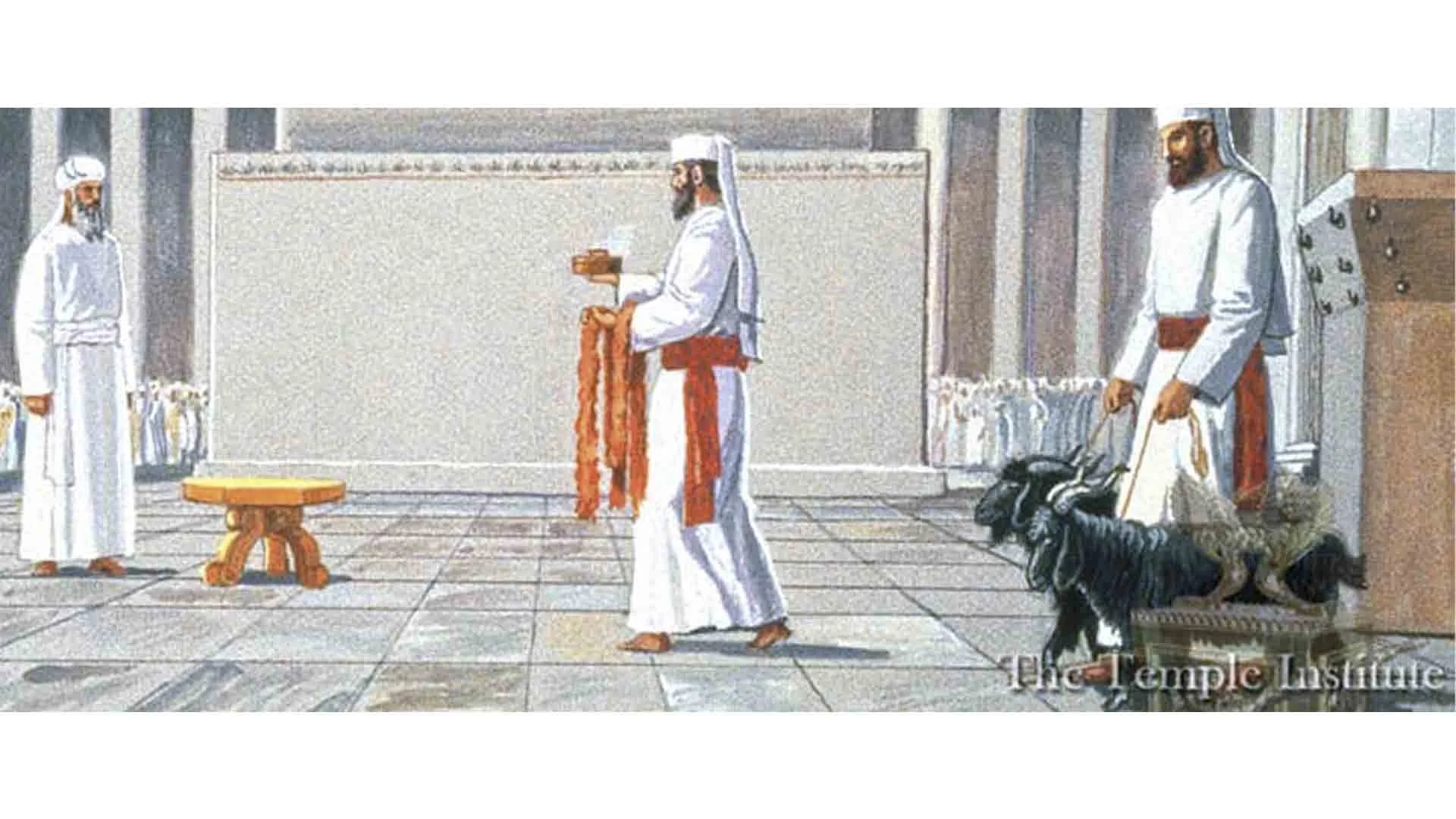
An interesting possibility regarding the expression of the dual role of the parokhet in reality arises from a mishna in Massekhet Yoma (5:1) that describes the manner in which the Kohen Gadol would enter the Kodesh Kodashim on Yom Kippur:

He walked through the Sanctuary until he reached the place between the two parokhets which separated between the Kodesh and the Kodesh Kodashim, with one cubit separating them. [But] R. Yossi said: There was only one parokhet, as it is written, “And the parokhet shall separate for you between the Kodesh and the Kodesh Kodashim."

The mishna records a disagreement among the Tannaim as to whether there was just one parokhet in the Temple, as R. Yossi deduces from the specifications concerning the Mishkan, or whether there were in fact two.

This leads us to an examination of the function of the Parochet and its dual role in creating sacred spaces.

Tags 13th
Comment

‘JOSHUA FIGHTING Amalek,’ print from the Phillip Medhurst Collection of Bible illustrations at St. George’s Court.

Yoma 50: Timnah as Typology

jyungar May 31, 2021

For the source text click/tap here: Yoma 50

To download, click/tap here: PDF

Is a dead bull called a bull? (No..not a Parrot!)

Rabbi Yitzchak Nafcha challenges Rabbi Ami, who says that the word “bull” doesn't include a dead one, from the verse which says that “he must remove the whole bull [brought on a kohen gadol's error] outside of the camp,” even though the bull is dead at that point. The Gemora answers that the verse is only teaching that everything left from the bull (i.e., the whole body) must be taken out.

Rashi observes there are 5 korban Chato'os that have a din of Misa on them.

In an intriguing anecdote the RITVA cites a Pesikta that uses the name VA-TIMNA as an acronym for them.

This leads us to an exploration of her character in Genesis and the use of her (and her sibling Lotan) as a typology for repentance and in the critique of Menasseh and the Sadducees.

Tags 13th
Comment

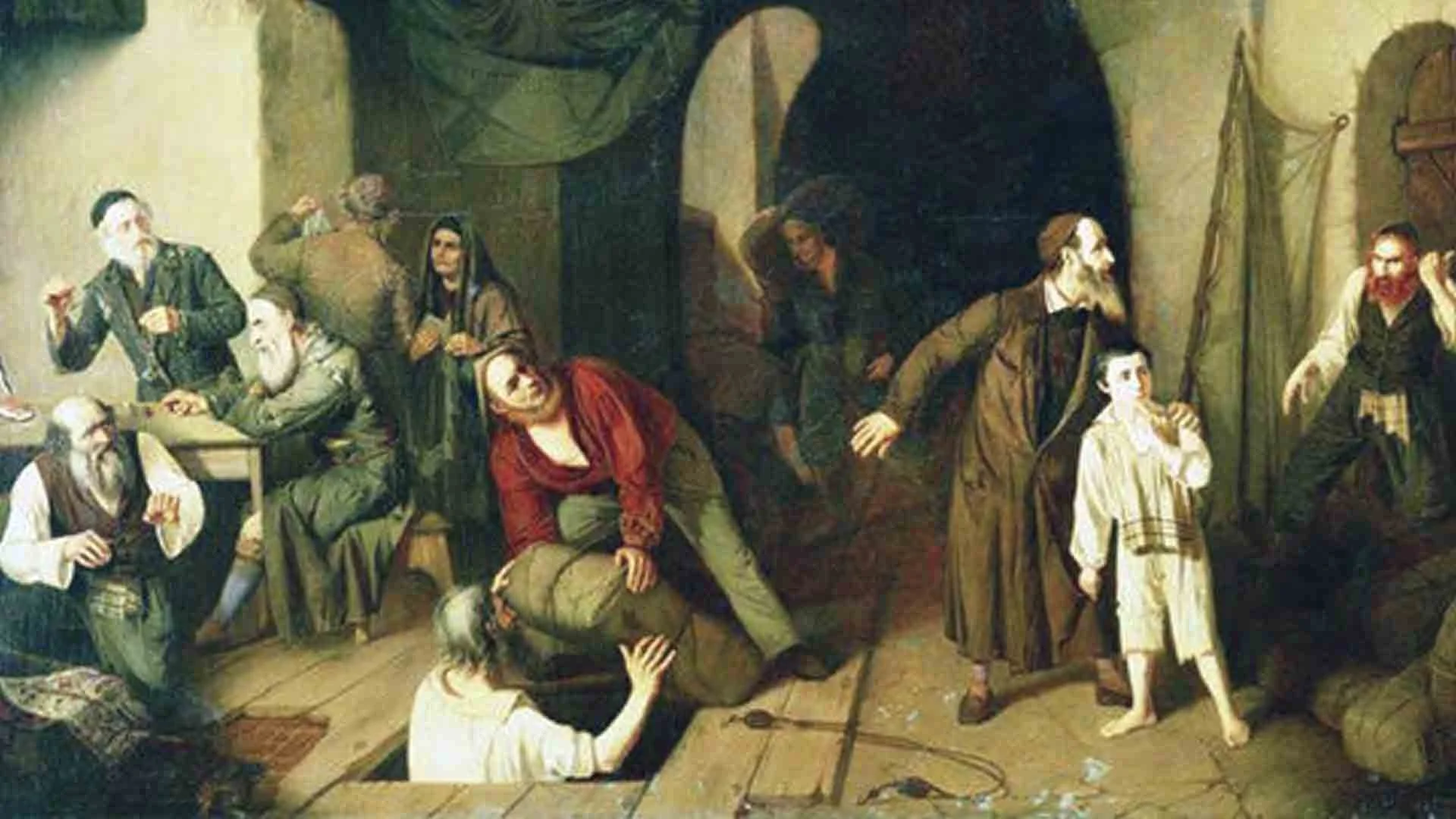
Jewish Smugglers by Alexander Rizzoni, 1860. (Courtesy of the State Russian Museum.)

Yoma 49: Drunken Kohanim

jyungar May 30, 2021

For the source text click/tap here: Yoma 49

To download, click/tap here: PDF

Wine and spirits you shall not drink, neither you nor your descendants, when you come into the Tent of Meeting… (Leviticus 10:9)

Kohanim were prohibited from entering the Temple after drinking a revi’is of an alcoholic beverage (about 4.5 ounces, plus or minus an ounce). Additionally, a rabbi – even a non-kohein – may not render a legal decision after drinking (see Talmud Eiruvin 64a).

Our Daf quotes a braisa that a drunkard is unfit to do the avodah in the Temple. Tosfos discusses the various opinions as to which beverages will one who consumes them be liable for death, and to which will there be only a transgression. He also discusses when the service is valid, and when it is not.

This leads us to a review by Alan Nadler of Yankel’s Tavern: Jews, Liquor, & Life in the Kingdom of Poland by Glenn Dynner

and the Lubavitcher Rebbe's decree regarding liquor at fabrengens.

Tags 13th
Comment

Yoma 48: A Handful of Stillness

jyungar May 29, 2021

For the source text click/tap here: Yoma 48

To download, click/tap here: PDF

In our daf we discuss the role of chafina, the scooping of ketoret (incense) on Yom Kippur, performed immediately by the kohen gadol before he entered the inner sanctum to burn these spices upon the aron ha-kodesh.

The prooftext is Lev

יב וְלָקַח מְלֹא-הַמַּחְתָּה גַּחֲלֵי-אֵשׁ מֵעַל הַמִּזְבֵּחַ, מִלִּפְנֵי יְהוָה, וּמְלֹא חָפְנָיו, קְטֹרֶת סַמִּים דַּקָּה; וְהֵבִיא, מִבֵּית לַפָּרֹכֶת.

LEV 16:12

this leads us to a midrashic musing on the "full hand" in

Vayikra Rabba 3:1, a petichta which offers multiple explanations of Kohelet 4:6,

ו טוֹב, מְלֹא כַף נָחַת--מִמְּלֹא חָפְנַיִם עָמָל, וּרְעוּת רוּחַ.

6 Better is a handful of quietness, than both the hands full of labour and striving after wind.

the petichta verse contrasts two different sacrifices. One sacrifice is brought on behalf of all of Israel by the High Priest himself in the Holy of Holies on the holiest day of the year. The other is brought by a pauper who has no resources to bring an animal sacrifice.

One would think that the incense of Yom Kippur would be considered among the most sublime of sacrifices while the poor man’s meal offering would be considered a common sacrifice of little stature. However, the midrash insists that it precisely the poor man’s sacrifice which is of the greater significance.

Tags 13th
Comment

Yoma 47: Kimchis as Exemplar

jyungar May 28, 2021

For the source text click/tap here: Yoma 47

To download, click/tap here: PDF

The Sages taught in a baraita: Kimḥit had seven sons, and they all served in the office of the High Priesthood, as High Priests or as his substitute. The Sages said to her: What good deeds did you perform to merit this?

She said to them: In all my days, the beams of my house never saw the braids of my hair, as she was extremely modest and was strict about covering her hair even inside her own house.

It appears from the Gemora that this was not the halachah, but an act of piety beyond the letter of the law.

This is the opinion of many poskim including Rav Moshe Feinstein. He was asked if a woman is required to cover her hair in front of her family, and he responded by saying that according to the law, it is not required citing our Gemora.

The Chasam Sofer, however, quotes the Zohar which says that a woman’s hair, no matter how small, much never show. He says that the community has accepted the ruling of the Zohar and therefore it becomes halachah. This is also the opinion of Rav Moshe Sternbuch.

We trace the evolution of these halachot through the eyes of a Guided, source-based study of halachot pertaining to women, from a woman's perspective. This series is presented in conjunction with Deracheha: Women and Mitzvot, a halachic education website sponsored by Yeshivat Har Etzion in partnership with the VBM and Beit Midrash Migdal Oz.

Tags 13th
Comment

Yoma 46: שבת דהותרה היא בציבור

jyungar May 27, 2021

For the source text click/tap here: Yoma 46

To download, click/tap here: PDF

Rabbi Meir rules that on Yom Kippur there are five times when the sacrifices are arranged on the altar, including one for burning the left-over parts of the sacrifices that had not been burned up prior to the beginning of Yom Kippur. Clearly Rabbi Meir permits burning these innards on Yom Kippur, which has the same level of prohibition as Shabbat.

Previously, the Gemara assumed that Rav Huna was discussing the possibility that the sacrifice of the daily offering overrides Shabbat. The Gemara now clarifies if this was his intention: What is meant by saying that the end of its service does not override the halakha?

The question of whether Shabbos is הותרה - permitted in order to save a life, or whether Shabbos is merely דחויה— pushed off, has many important consequences.

An application of this question relates to a dispute between Rashi and Maggid Mishnah concerning performing a procedure for a dangerously ill patient when refraining from this procedure would not pose a danger to the patient.

This leads us to the practical application and our review of an important paper regarding mental illness and Shabbat Halacha.

Tags 13th
Comment

Yoma 45: Perpetual Fire

jyungar May 26, 2021

For the source text click/tap here: Yoma 45

To download, click/tap here: PDF

There is a disagreement as to how many fires were kept burning on the Altar every day. There is a braisa that lists three different opinions of the Tannaim in regards to the amount of “fires” that were on the altar on Yom Kippur. Each Tanna holds that there was one additional ma’arachah more than a regular day.

This was a special fire lit on Yom Kippur where the Kohen Gadol would take coals for the incense which was offered in the Kodesh Hakodashim (Holy of Holies).

The Gemara discusses the verses from which the requirement for the various Ma'arachos on the Mizbe'ach are derived, according to the different opinions (Rebbi Yehudah, Rebbi Yosi, and Rebbi Meir).

This leads us to the interpretation of the prooftext Lev 62:2

image.png

and a further metaphorical interpretation based on the hassidic demand to keep the fire of our spiritual path burning at all times:

Shem MiShmuel: We are not allowed to permit ourselves to “cool off” in our avodas Hashem. The commandment to keep the Altar’s fire burning highlights the individual’s duty to arouse an inner fervor every single day, and not to rely on the natural warmth that remained from before. 

Tags 13th
Comment

Iron pyrite or "fool's gold"

Yoma 44: The Seven Types of Gold

jyungar May 25, 2021

For the source text click/tap here: Yoma 44

To download, click/tap here: PDF

In the Bible, gold is the most frequently mentioned of all metals but almost no gold objects have been found from the Israeli period of Palestine (1200 to 587 B.C.). Nevertheless, crucibles have been unearthed in Gezer and in Akko so that there is no doubt that the goldsmith's craft was practised by the Hebrews.

Our Mishna states: On every other day, it was of greenish gold but on this day it was of a red gold. Rav Ḥisda said: There are seven types of gold mentioned in the Bible: Gold, and good gold, and gold of Ophir (I Kings 10:11), and glistering gold (I Kings 10:18), and shaḥut gold (I Kings 10:17), and closed gold (I Kings 10:21), and parvayim gold (II Chronicles 3:6).

Some idea of the size of the golden table and the shape of the golden candelabra in the Second Temple is given by Josephus Flavius in `The Jewish War', where he describes the triumphal procession of Titus in Rome (70 A.D.):

`It is impossible to give a satisfactory account of the innumerable spectacles, so magnificent in every way one could think of, whether as works of art or varieties of wealth or rarities of nature; almost all the treasures that have ever come one at a time into the hands of fortune's favorites — the priceless marvels of many different peoples — were brought together on that day ... Masses of silver and gold and ivory in every shape known to the craftsman's art could be seen, not as if carried in procession but like a flowing river . . Most of the spoils were heaped up indiscriminately, but more prominent than all the rest were those captured in the Temple at Jerusalem — a golden table weighing several hundredweight, and a lampstand similarly made of gold but differently constructed from those we normally use.

Tags 13th
Comment

Bronze censers from the Holy Land Photo © Israel Museum, Jerusalem, by Avraham Hay

Yoma 43: Censers

jyungar May 24, 2021

For the source text click/tap here: Yoma 43

To download, click/tap here: PDF

The Mishna says that the kohen gadol slaughtered his bull, received its blood in a utensil, and then gave it to someone who would stir it on the fourth row in the sanctuary, to keep it from congealing. He then took the pan, went to the top of the altar, moved the coals aside, and filled the pan from the consumed coals further inside. He went down and placed the pan on the fourth row in the courtyard. The Mishna lists the differences between the service on Yom Kippur and every other day's service:

We examine the use of the censers and the ketoret s part of the ritual.

Finally we examine how the avodah translated into liturgy.

Tags 13th
Comment

Yoma 42: Aaron’s Bull vs Para Aduma

jyungar May 23, 2021

For the source text click/tap here: Yoma 42

To download, click/tap here: PDF

Although we know that the entire Yom Kippur service is performed by the Kohen Gadol, nevertheless, Rav believes that he need not be the one who slaughters his par (the bull that is brought as a sacrifice by the kohen gadol).

Rav explains that shehitah is not actually considered avodah (service), thus it can be done by anyone, even someone who is not a kohen. At the same time, Rav rules that a para aduma that is burned and whose ashes are used as part of the purification process for someone who came into contact with a dead body (see Bamidbar19) – can only be slaughtered by a kohen. This is true, even though a parah adumah is not considered to be a korban at all. It is not slaughtered in the precincts of the Temple, rather on the Mount of Olives, and is considered kodshei bedek ha-bayit – holiness that stems from its use for the Temple, not an actual sacrifice.

We examine the context of the law of the red heifer and its midrashic referents.

Tags 13th
Comment

Wool dyed with the scale insect Kermes echinatus. The wool was dyed by the ancient traditional method, boiling the dried insects and using alum as a mordant.

Yoma 41: לשון של זהירות

jyungar May 22, 2021

For the source text click/tap here: Yoma 41

To download, click/tap here: PDF

The Mishna on our daf describes how the lashon shel zehorit was placed on the two animals. In the Gemara, Rav Dimi quotes Rabbi Yohanan as teaching that there were two other occasions where a lashon shel zehorit was used, in the case of a metzorah (someone suffering from Biblical leprosy), where it was used as part of the purification process (see Vayikra 14:4), and in the case of a parah adumah (the red heifer) where it was used as one of the ingredients for making ashes that would be used in the purification process (see Bamidbar 19:6).

In both of those cases, the Biblical sheni tola'at is identified with the lashon shel zehorit. This lashon shel zehorit (literally "a tongue [strip] of crimson") was a bundle of combed wool that was rolled into the shape of a tongue and dyed red (carmine) with a crimson pigment derived from cochineal insect. These insects are found infesting various types of wood, and its blood is the source of this dye.

Tags 13th
Comment

Yoma 40: Controversies Over the Temple Rites

jyungar May 21, 2021

For the source text click/tap here: Yoma 40

To download, click/tap here: PDF

The students asked Rebbe Akiva if the lot (goral) for the korbon laHashem came out in the kohen gadol's left hand, can he return it to his right. This question was based on it being a good omen for the goat which will be used for the chatas to emerge in his right hand. Rabbi Akiva answered that we should not leave room for the tzidukkim to ridicule us.

We explore the relationship between the two communities as applied to controversies over the Temple cult.

Tags 13th
Comment

Yoma 39: Lottery for Life

jyungar May 20, 2021

For the source text click/tap here: Yoma 39

To download, click/tap here: PDF

Having finished describing the preparations for the avodah…

The fourth perek of Masechet Yoma begins on our daf with a portrayal of the service itself, beginning with the lottery where the kohen gadol drew lots to determine which of the goats would be sacrificed on the mizbe’ach and which would be the scapegoat, which would be sent to Azazel.

The kohen gadol stood with his assistant to his right and the head of the family of kohanim who were serving in the Temple to his left. If the lot indicating that the animal was to be sacrificed to God appeared in his right hand, the assistant would call out “raise your right hand.”

If it appeared in his left hand, the head of the family of kohanim would say “raise your left hand.”

The Gemara quotes a baraita that teaches that for the forty years that Shimon ha-Tzaddik served as the kohen gadol, the lottery always came out with the animal to be sacrificed in his right hand. After his death, it occasionally came out in the right hand and occasionally in the left.

The baraita continues with a list of other miraculous events that took place during Shimon ha-Tzaddik’s tenure and stopped after his passing.

Tags 13th
Comment

Leptadenia pyrotechnica (Hindi: खींप; Punjabi: ਿਖੱਪ) is the botanical name of a desert herb of the family Apocynaceae.

Yoma 38: Leptinemia Pyrotechnica

jyungar May 19, 2021

For the source text click/tap here: Yoma 38

To download, click/tap here: PDF

The Mishna on our daf lists individuals whose behavior was criticized by the Sages.

Among them are two families of kohanim – Bet Garmu, who were responsible for baking the lehem ha-panim (shewbread) and Bet Avtinas, who were responsible for the ketoret and succeed in creating an incense whose smoke would rise in a straight line to the heavens

The plant seen by the descendant of Bet Avtinas is referred to as ma’aleh ashan.

Although the tradition identifying this plant has apparently been lost over the centuries, the generally accepted identification is with a weed called leptadenia pyrotechnica, a plant that grows in the southern part of the Jordan Valley and in the northern Sinai.

Tags 13th
Comment

Yoma 37: Queen Helena

jyungar May 18, 2021

For the source text click/tap here: Yoma 37

To download, click/tap here: PDF

The Mishnah (late 2nd century C.E.) describes the donations of Helena and her son Munbaz (=Monbazus II), "King Monobaz had all the handles of all the vessels used on Yom Kippur made of gold. His mother Helena had a golden candlestick made over the door of the Hechal. She also had a golden tablet made, on which the portion about the Sotah was inscribed. "

Josephus in his Antiquities of the Jews, tells the story of Queen Helena of Adiabene and her sons Kings Izates II and Monobazus II, and how they converted to Judaism in the mid-first century C.E. Rabbinic literature preserves several anecdotes about this family. However, the rabbis knew little about them, and grappled with their insider/outsider status.

Her tomb was discovered by the French archaeologist Louis Félicien Caignart de Saulcy (1807–1880), who conducted the first systematic archaeological dig in Jerusalem in the middle of the nineteenth century.

Tags 13th
Comment

Nate Dendy (Ariel), Joby Earle (Ferdinand), Tom Nelis (Prospero), and Charlotte Graham (Miranda). Directed by Aaron Posner and Teller. 2014.

Yoma 36: Confessional Priorities

jyungar May 17, 2021

For the source text click/tap here: Yoma 36

To download, click/tap here: PDF

The KG leans his hands between the animal's horns, ensuring that nothing is separating between his hands and the animal, and confesses the sin for which he is bringing the sacrifice.

The Sages say that avon is intentional transgressions, as the verse says that one who transgresses will be cut off, since its avon is in it, indicating that they are intentional. Pesha is rebellious transgressions, as the verses refer to rebellions of Moav and Levana with this verb. Chata'im refer to unintentional transgressions, as indicated in the verse which refers to someone who secheta – does a chait unintentionally.

Given these definitions, how can he confess on the less severe unintentional sins, after he confessed on the intentional and rebellious ones?

Rather, he confesses chatasi, avisi, and pashati, going in ascending order of severity.

We explore the confessional and cite the majestic sicha of Rav Aharon Lichtenstein who cites Shakspeare, the greatest psychologist of the western canon: "Every time a person is confronted by God's will, Prospero's question arises: "My foot, my tutor?" (The Tempest, Act 1, Scene 2) - will he be led by his head or by his foot?

Tags 13th
Comment

The Egyptian archeological mission working in Tel al-Farma (ancient Pelusium) in North Sinai have uncovered part of a huge building dating to the Graeco-Roman Period, used as a seat for the ancient Senate.

Yoma 35: Pelusian vs Indian Linen

jyungar May 16, 2021

For the source text click/tap here: Yoma 35

To download, click/tap here: PDF

They brought the High Priest to immerse a second time in the Hall of Parva, which was in the sacred area, the Temple courtyard.

In the morning he would wear linen garments from the Egyptian city of Pelusium worth twelve maneh, 1,200 dinars or zuz. These garments were very expensive due to their high quality. And in the afternoon he wore linen garments from India, which were slightly less expensive, worth eight hundred zuz.

We will try to identify the function of the special "bigdei lavan," the white linen garments donned by the kohen gadol on this special day, referred to by the verse as "bigdei habad" - "linen clothing."

Why must the kohen change out of his standard clothing? Does this change mark a heightened spiritual quality or perhaps a lower status?

We explore the linens and their possible midrashic meaning as well as the history of Indian linen.

Tags 13th
Comment

Yoma 34: Quenching and Tempering

jyungar May 15, 2021

For the source text click/tap here: Yoma 34

To download, click/tap here: PDF

The Mishna (31b) describes the tevilah (ritual bath immersion) that is done by the kohen gadol on Yom Kippur, and closes with the comment that if the kohen gadol was elderly or particularly sensitive, they would add heated water to the water in the mikveh so that he could immerse himself more comfortably.

It was taught in a baraita that Rabbi Yehuda said: They would heat blocks of iron on Yom Kippur eve and cast them into the cold water of the ritual bath to temper its chill.

Quenching and tempering are processes that strengthen and harden materials like steel and other iron-based alloys. The process of quenching or quench hardening involves heating the material and then rapidly cooling it to set the components into place as quickly as possible. The process is tightly controlled, with the heating temperature, cooling method, cooling substance and cooling speed all dependent upon the type of material being quenched and the desired hardness.

We explore the science of quenching but also the metaphor as applied to Isa 1:25 in our YK confession.

Tags 13th
Comment

Yoma 33: Priority of Heart over Head

jyungar May 14, 2021

For the source text click/tap here: Yoma 33

To download, click/tap here: PDF

The Gemora cites Rish Lakish that one is not permitted to pass over a mitzvah and that is why the Kohen cleans the Altar before the preparation of the menorah for the Altar is closer to the entrance of the heichal. Rava (33b) states that we can learn from here regarding tefillin that the shel yad should be before the shel rosh. Rashi says that this is referring to the putting on of the tefillin for the arm comes before the head.

Rabbeinu Tam disagrees and says that it is referring to the removing and placing in the bag, that the shel rosh should be placed first in order that the next day, one should come into contact with the shel yad first. Rabeinu Eliyohu learns that it is referring to the touching of the tefillin during davening.

I cite those who see this as a conflict between the head and the heart.

Tags 13th
Comment

The prayer ʾAtah konanta ʿolam me-rosh said on Yom Kipur. Or 10476, Date of origin: 1800-1899 CE. The British Library

Yoma 32: Sequences

jyungar May 13, 2021

For the source text click/tap here: Yoma 32

To download, click/tap here: PDF

Our Daf (Yoma 32a) points out a lacuna in the Mishnah. In Mishnah 6, there is a sanctification “sandwich.” The Kohen Gadol sanctifies his hands and feet both before and after the immersion. In Mishnah 4, however, for the first immersion of the day, there is only one hand and feet sanctification. If this is the case, the math simply does not add up. At the outset, the Mishnah calls for five immersions and ten sanctifications, but in reality the total in only nine!

The Rabbanan of the gemara reply: the final sanctification takes place when he removes the sacred garments and wears his daily clothing. The long day of avodat Hashem is over and the exhausted Kohen Gadol dresses in his own regular clothing, leaving the Mikdash behind and heading home. Before that final change he sanctifies his hands and feet for the tenth time that day.

The gemara has not only resolved the mathematical “error,” but has also, in its inimitable subtle way, taught us something critical about the nature of avodat Yom HaKippurim. Sanctification of hands and feet always precedes avodat Hashem.

We examine the connection between creation and the avoda on YK with the brilliant analysis by Prof Dalia Marx.

Tags 12th
Comment
  • Daf Ditty
  • Older
  • Newer

Julian Ungar-Sargon

This is Julian Ungar-Sargon's personal website. It contains poems, essays, and podcasts for the spiritual seeker and interdisciplinary aficionado.​