Julian Ungar-Sargon

  • Home
  • Theological Essays
  • Healing Essays
  • Podcast
  • Poetry
  • Daf Ditty
  • Deep Dive Ditty
  • Videos
  • Publications
  • Military Service
  • Dominican University
  • Home
  • Theological Essays
  • Healing Essays
  • Podcast
  • Poetry
  • Daf Ditty
  • Deep Dive Ditty
  • Videos
  • Publications
  • Military Service
  • Dominican University
Julian Ungar-Sargon copy 3.jpg

Daf Ditty

A wide-ranging commentary on the daily page of Talmud.

Pouring Oil on an Egyptian King.(From Wilkinson.)

Shekalim 16: Anointing Oil

jyungar April 6, 2021

For the source text click/tap here: Shekalim 16

To download, click/tap here: PDF

The shemen ha-mish’ha was used to anoint kings and high priests. The Rosh points out that the need to anoint the high priest is from a clear passage in the Torah (see Ex 30:30), but there appears to be a prohibition to use the oil on any other person (see Ex 30:32). How was the decision made to use this oil on kings, as well?

According to the Gemara in Horayot (12a), kings were anointed by putting the oil around their head like a crown. The kohanim had the oil put on them ke-min key, or, as the Gemara explains, ke-min kaf yevani – like a Greek chi – what we would call the shape of the letter “X”. Since there is no Hebrew letter that is similar in shape to an “X,” many suggestions were made by the commentaries over the years about its appearance, given that Greek was no longer commonly used, and people did not know what the letter looked like.

This leads us to Reb Shaul Lieberman's thesis regarding the letter chi in greek and its appropriation by Christianity.
Tags 11th
Comment

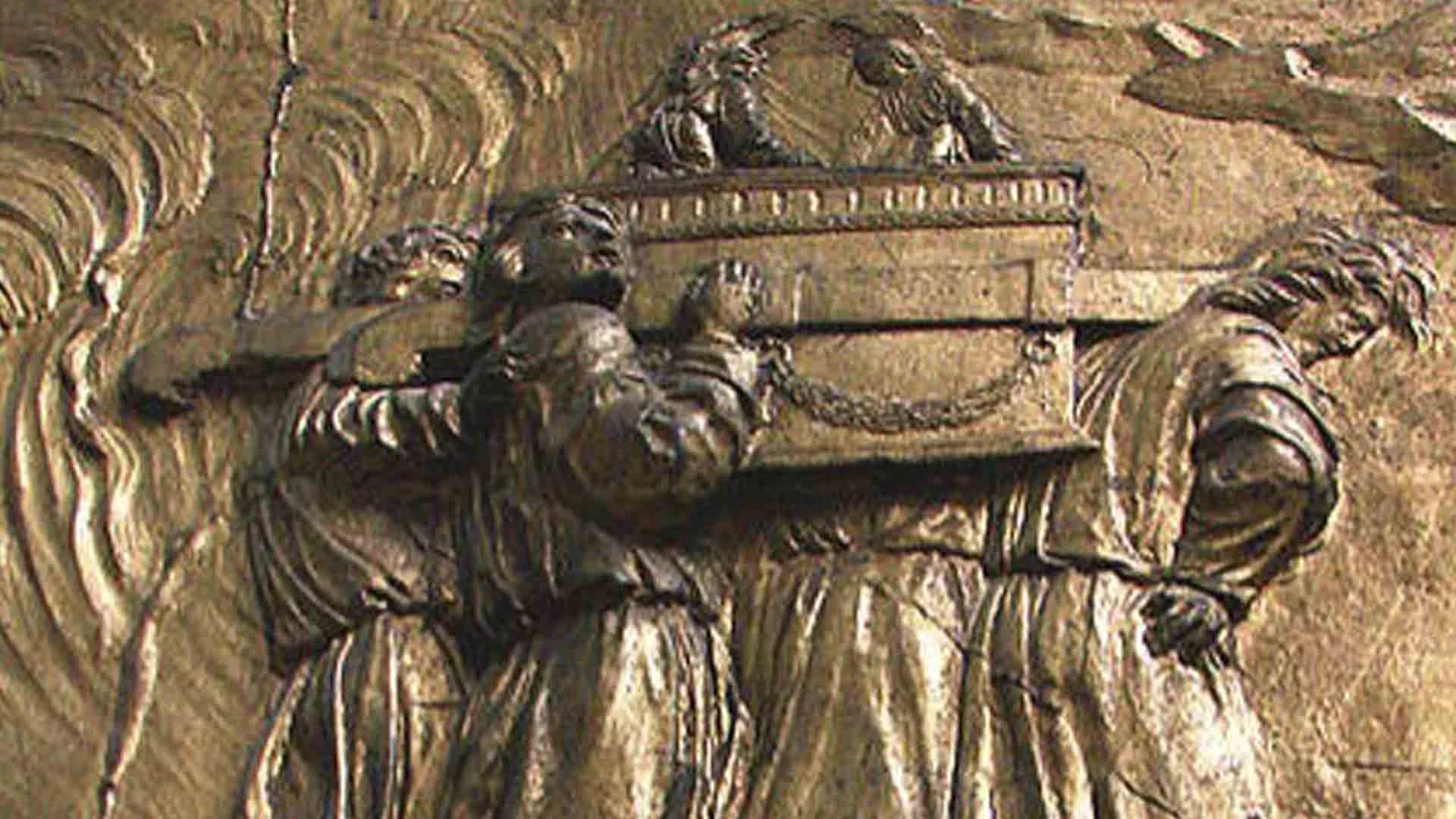
Transporting the Ark of the Covenant: gilded bas-relief at the Auch Cathedral

Shekalim 15: The Lost Ark

jyungar April 5, 2021

For the source text click/tap here: Shekalim 15

To download, click/tap here: PDF

According to one opinion the Ark was taken to Babylonia at the time Nebuchadnezzar conquered Jerusalem and exiled King Jeconiah and the upper classes. (He then placed Jeconiah’s uncle Zedekiah on the throne for another eleven years, until the final invasion and the Temple’s destruction.) This is implied by II Chronicles 36:10 which states that King Nebuchadnezzar exiled Jeconiah to Babylonia “with the precious utensils of House of God.” (See also Isaiah 39:6.)

According to a second opinion, the righteous King Josiah, knowing that the Temple would shortly be destroyed, had the Ark hidden away. (Some of the other special items which had been kept with the Ark were also hidden – such as the jar of Manna (Exodus 16:32-34), the anointing oil (Exodus 30:22-33), and Aaron’s staff which had blossomed (Numbers 17:25).)

Where was the Ark hidden? We have no tradition that it ended up in Ethiopia (as is claimed by the Ethiopian Orthodox Tewahedo Church), and it certainly wasn’t placed in a warehouse in Washington D.C. Rather,our daf records the following incident:

A Priest was once in one of the side chambers of the Temple, designated for the storage of wood. He noticed a stone which had clearly been tampered with (and wasn’t aligned with the others). He suspected that the Ark had been hidden there. He ran over to tell his fellow but died suddenly before he could complete his account. (Thus, it became known roughly where the Ark was hidden but not precisely, and the people understood that its whereabouts was intended to remain secret.)

Another opinion in the Talmud states that the Ark was hidden in its place in the Holy of Holies, in the ground underneath it.

Tags 11th
Comment

The Death of Prince Leopold of Brunswick James Northcote (1746–1831) Hunterian Art Gallery, University of Glasgow

Shekalim 14: Swept Away

jyungar April 4, 2021

For the source text click/tap here: Shekalim 14

To download, click/tap here: PDF

Nechunia, the appointed well-digger in the Beis Hamikdosh, was an expert in determining which underground areas contained the most cold and warm water. However, since this was his specialty, and one time he wasn't so careful in his job, Hashem judged him strictly, and his son died of thirst. A similar story happened where the well-digger's daughter was swept by the river currents. Many people tried comforting the father – who was known to be a chossid – but he wouldn't accept their consolation. Which brings us to analyze the welldigger and how well were his intentions!

This leads us to Jeremy Brown's intriguing piece on Prince Leopold of Brunswick's inspiration for Sefer HaBrit

Tags 11th
Comment

Shekalim 13: Pinchas Ben Yair’s Donkey

jyungar April 3, 2021

For the source text click/tap here: Shekalim 13

To download, click/tap here: PDF

Tags 11th
Comment

Shekalim 12: Divine vs Human Ownership

jyungar April 2, 2021

For the source text click/tap here: Shekalim 12

To download, click/tap here: PDF

The Mishna on our daf discusses a case where someone announces that he is donating all of his possessions to the Mikdash. In such a case, the property is usually given to the Temple treasurer for general upkeep – bedek ha-bayit. But what if some of his possessions can be brought as sacrifices?

If some of the possessions are animals that can be brought as sacrifices, there is general agreement that such an animal should be sacrificed, as that was most probably the intent of the donor.

This leads us to an examination of the relative sacred spaces between divine and human and how they get blurred at times.

Tags 11th
Comment

James Tissot, Reconstruction of Jerusalem and the Temple of Herod, 1886-1894. (Brooklyn Museum)

Shekalim 11: Leftover Ketores and the Trigger For Sectarian Schism

jyungar April 1, 2021

For the source text click/tap here: Shekalim 11

To download, click/tap here: PDF

The Mishnah describes what is done with leftover Ketores from theprevious year. Since the Ketores that is offered on the Mizbe'ach must bebought from the present year's collection of Shekalim, the leftover Ketoresfrom the previous year may not be offered on the Mizbe'ach. What is done withthe leftover Ketores? The Mishnah describes the procedure through which theKedushah is removed from the old Ketores and transferred to money of theTerumas ha'Lishkah in such a way that the money is then used to buy back theKetores with money from the new year's Terumas ha'Lishkah.

The Tziddukim and the Perushim weredivided as to how the incense is offered on Yom Kippur (Yoma 53a): "Heshall place the incense upon the burning coals before God – he should notarrange them in place outside [of the Holy of Holies] and then enter, exceptthe Tziddukim who say that he should arrange it outside and then bring itin." In other words, the view of the Tziddukim is that the Kohen Gadoloffers the incense while he is still outside of the Holy of Holies, and onlythen does he enter with the censer. Unquestionably, this view regards theincense as a sort of screen that protects the Kohen and separates between himand the Divine Presence (as Rashbam explains). The halakha, on the other hand,stipulates that the Kohen offers the incense only after he enters. Clearly,then, the function of the incense is not to create a barrier.

This invites a scholarly intriguing theory regarding "The Tale of the Sadducee who Incorrectly Prepared the Yom Kippur Ketoret". by Dr Yonatan Feintuch

Tags 11th
Comment

Shekalim 10: Temple Tax

jyungar March 31, 2021

For the source text click/tap here: Shekalim 10

To download, click/tap here: PDF

The fourth perek of Massekhet Shekalim, which begins on our daf opens with the question of how the shekalim are spent. We have already noted that the communal sacrifices were purchased with this money, but there were other needs in the Temple and in Jerusalem that were paid for with these donations.

After the return under Nehemiah, Jews in the Diaspora continued to pay the Temple tax. Josephus reported that at the end of the 30s CE "many tens of thousands" of Babylonian Jews guarded the convoy taking the tax to Jerusalem (Ant. 18.313).

This leads us to the historical evidence regarding Pointius Pilate's looting of the temple treasury from the perspective of Josephus vs the NT.

Tags 11th
Comment

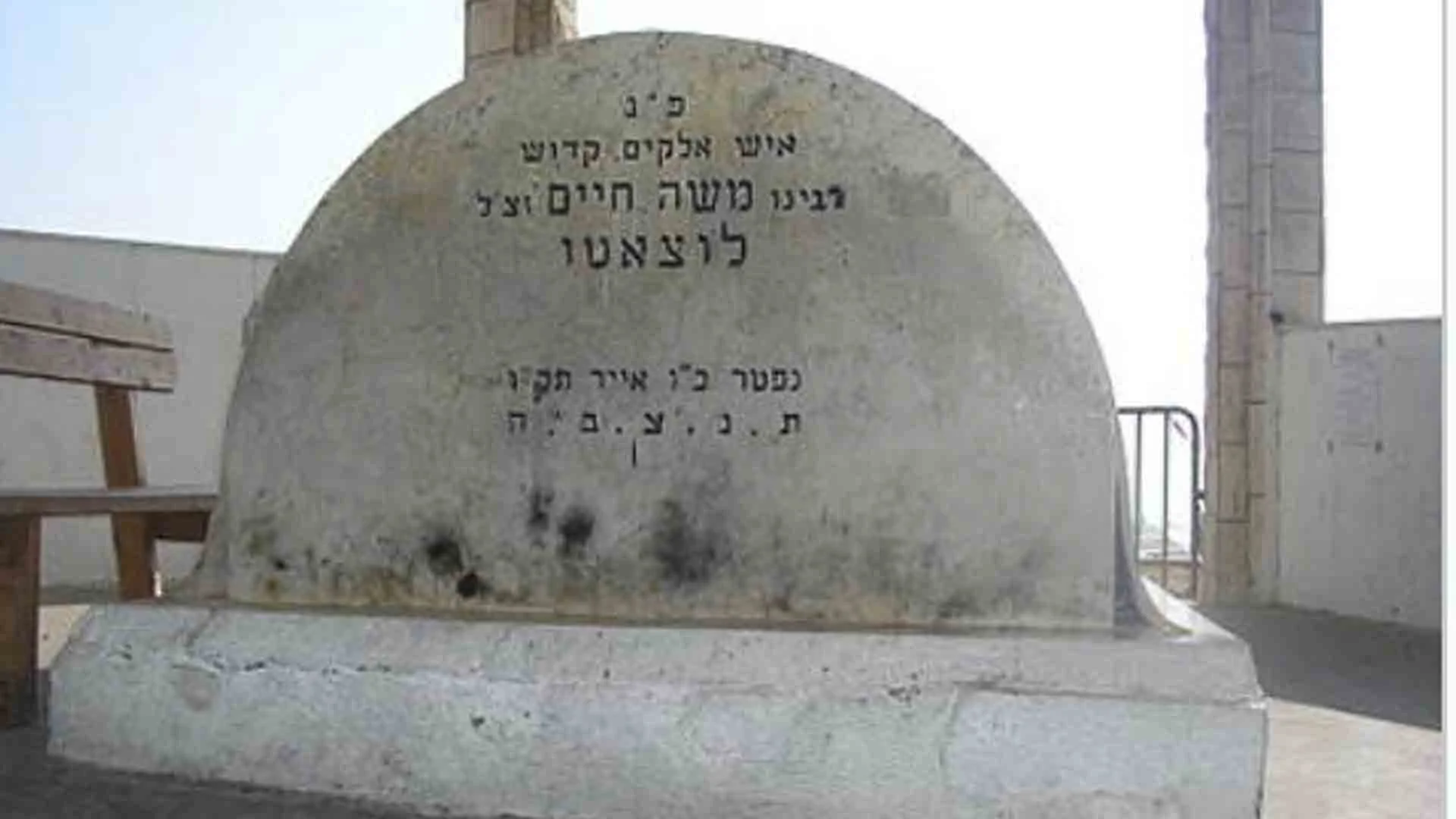
Tziyun (gravemark), or more likely the cenotaph of the Ramchal in Tiberias

Shekalim 9: Steps to Perfecting the Soul

jyungar March 30, 2021

For the source text click/tap here: Shekalim 9

To download, click/tap here: PDF

The Mesilas Yeshorim bases his thesis on the ladder of middos that Rabbi Pinchos Ben Yair presents in our daf as well as in other places in shas (Avodah Zara 20b). The rungs that the Ramchal (author of Mesilas Yeshorim) uses as chapters are somewhat different than the ones in our Gemora. (He himself states in the introduction that this statement is found in a few places in Shas, where each Gemora may have a different version of the statement.)

We will present them here with the girsa of our Gemora:

Zerizus (alertness) leads to nekiyus (cleanliness);

nekiyus leads to tahara (purity);

tahara leads to kedusha (holiness);

kedusha leads to anava (humility);

anava leads to yiras chet (fear of sin);

yiras chet leads to chassidus (piety);

chassidus leads to ruach hakodesh (divine spirit);

ruach hakodesh leads to techias hameisim (resurrection of the dead);

techias hameisim leads to the coming of Eliyahu Hanavi.

and ponder the popularity of this work in the last hundred years across the spectrum of Jewish academies of learning.

Tags 11th
Comment

Shekalim 8: The Appearance of Impropriety

jyungar March 29, 2021

For the source text click/tap here: Shekalim 8

To download, click/tap here: PDF

The Mishnah teaches that great care was taken to make sure that no one would steal – or be suspected of stealing – from these monies.

No one was permitted to take the money from the Temple office if he was wearing clothing or shoes in which he could conceal money.

To support the ruling that obligates people to show care not only before God, but also before people, and ensure that they do not suspect you of wrongdoing, the Mishnah refers to passages in Num 32:22 and Prov 3:4 that clearly indicate the need to be concerned with both heavenly and this-world suspicions.

This leads us into an inquiry as the borders of impropriety in law and in a particular shaila...

Tags 11th
Comment

Shekalim 7: Plagiarism

jyungar March 28, 2021

For the source text click/tap here: Shekalim 7

To download, click/tap here: PDF

There is a certain immortality that is achieved when a teaching is said in the name of a deceased person. It is as if “their lips move in the grave.”

Elsewhere the Talmud has this to say on the importance of proper attribution:

Which leads us to discuss plagiarism and the importance of proper citation.

Tags 11th
Comment

Shekalim 6: Sale of Joseph

jyungar March 27, 2021

For the source text click/tap here: Shekalim 6

To download, click/tap here: PDF

Tags 11th
Comment

Michelangelo’s “The Punishment of Haman”

Shekalim 5: HAMAN’S SHEKEL

jyungar March 26, 2021

For the source text click/tap here: Shekalim 5

To download, click/tap here: PDF

Tags 11th
Comment

Shekalim 4: כמין מטבע של אש

jyungar March 25, 2021

For the source text click/tap here: Shekalim 4

To download, click/tap here: PDF

The Gemara cites an additional reason for the obligation to give a half-shekel: It atones for the sin of the sale of Joseph.

First, it introduces this topic. Rabbi Berekhya and Rabbi Levi said in the name of Rabbi Shimon ben Lakish: Since the sons of Jacob sold Joseph, the firstborn of Rachel, for twenty silver dinar, the nation was commanded that each of them must redeem his firstborn son with twenty silver dinar, which is five sela, as there are four dinar in a sela.

This leads us eventually to the Eleh Ezkera Kina on Tisha B'Av and its connection of the 10 Martyrs as atonement for the Sale of Joseph.

Tags 11th
Comment

This is an ossuary, or bone box, belonging to Joseph son of Caiaphas, who was the high priest from AD 18 to AD 36.

Shekalim 3: Money Changers

jyungar March 24, 2021

For the source text click/tap here: Shekalim 3

To download, click/tap here: PDF

The Mishnah opens with the statement that on the first day of the month of Adar - they: the Temple priests and other Jewish authorities - proclaimed that the payment of the half shekel will soon be due in just one month - the first day of the month of Nisan. On that first day of Adar, the Jerusalem Talmud states that heralds went forth from Jerusalem proclaiming that the tax would be due in a month.

Now, why were there money changers in the provinces, and why were there money changers in the Temple? Because the tax was 1/2 shekel, and when people were ready to bring their shekels from their homes to Jerusalem, they needed to make change - you gave the money changer a shekel and he gave you two 1/2 shekels and you could then take your 1/2 shekel to Jerusalem to pay your tax.

This leads us to the commonly helld belief based on NT sources regarding the corruption of the money-lenders and the Parable of the Pound.

Tags 11th
Comment

Shekalim 2: God’s Currency

jyungar March 23, 2021

For the source text click/tap here: Shekalim 2

To download, click/tap here: PDF

Tags 11th
Comment

Pesachim 121: Pesachim/Chagigah

jyungar March 22, 2021

For the source text click/tap here: Pesachim 121

To download, click/tap here: PDF

The very last Mishna in the massekhet deals with the various blessings made when eating the sacrifices at the seder during the Temple period. Can the general berakha on the korban hagiga brought for the holiday cover the korban Pesah, as well, or does each need its own berakha? According to the Mishna, this question is debated by Rabbi Yishmael, who believes that one may cover the other, and Rabbi Akiva, who believes that, under all circumstances, each will need its own berakha.

This leads us on a meandering path through the hiding of the Afikoman to the culinary differences between the korban Pesach vs other kordbonos to the differences between the Exodus vs the Deuteronomy account of the korban Pesach.

Tags 11th
Comment

Pesachim 120: The Midnight Hour

jyungar March 21, 2021

For the source text click/tap here: Pesachim 120

To download, click/tap here: PDF

The Gemara identifies the position that the korban Pesah must be eaten by midnight with Rabbi Elazar ben Azarya, who understands the command to eat the sacrifice ba-layla ha-zeh (Shemot 12:8) to mean the same time that God traveled through Egypt for Makat Bekhorot, the last of the plagues, which took place at midnight ba-layla ha-zeh (see 12:12). Rabbi Akiva disagrees with this reading of the pasuk and argues that it can be eaten throughout the night, reasoning that ba-layla simply teaches us that it is a unique korban that can only be eaten at night and not on the following day. This leads us to explore the need to eat the afikoman by midnight and the famous Avnei Nezer's way around it.

Tags 11th
Comment

Pesachim 119: Epikomazein

jyungar March 20, 2021

For the source text click/tap here: Pesachim 119

To download, click/tap here: PDF

The Mishna in Pesachim 119b states: "One may not eat desert [afikoman] after the Paschal sacrifice." During the time of the Temple, the mitzva was to eat the Paschal sacrifice together with matza at the end of the meal. The Mishna means to say that after eating this matza one is forbidden to eat anything else. The Afikoman tradition is essential to the Passover Seder, and it’s been observed by Jews around the world for centuries. Yet no other Jewish practice is shrouded in more mystery than this special half-matzah.

An answer finally emerges in a rather aggressive apologetic piece by a second-century Jewish-Christian bishop, Melito of Sardis, who knew the word “afikoman” as a Passover symbol for Yeshua. His sermon is dated around 170 AD, several decades before the first rabbinic mention of “afikoman” (the Mishnah was compiled after 200 AD). This evidence has caused Jewish scholars to speculate that the Messianic symbolism in the Seder originated with the Nazarene community.

Tags 11th
Comment

Psalm 117, f. 21r in Passover Haggadah, with ritual instructions in French (Bouton Haggadah) Zürich, Braginsky Collection, B315

Pesachim 118: Hallel Ha-Gadol

jyungar March 19, 2021

For the source text click/tap here: Pesachim 118

To download, click/tap here: PDF

Aside from the standard Hallel (Tehillim 113-118) that is recited during the seder, we also are instructed by the baraita on our daf to say Hallel ha-Gadol. Although there is a disagreement recorded in the Gemara regarding which psalms make up Hallel ha-Gadol, we follow the opinion of Rabbi Yehuda who says that it is the whole of Tehillim 136.

This leads us to examine the claim by our daf that securing a person’s livelihood is as difficult for Hashem as splitting the sea?

How does emunah and bitachon operate with the need for hishtadlus in parnassa?

Tags 11th
Comment

Pesachim 117: בעשרה מאמרות של שבח

jyungar March 18, 2021

For the source text click/tap here: Pesachim 117

To download, click/tap here: PDF

Our daf (Pesachim 117a; Yerushalmi, Sukkah 3:10) states that there are ten types of songs in Tehillim, the Book of Psalms: Ashrei, Brachah, Maskil, Nitzuach, Shir, Niggun, Mizmor, Tefillah, Hodaah, and Halleluyah. The holy tzaddik (righteous person) Rebbe Nachman of Breslov revealed that the recitation of the ten specific psalms he identified, each representing one of these categories, would act as an effective tikkun (remedy, repair, or rectification) for all sins, especially sexual immorality. Their recitation would help in a process of teshuvah (repentance), leading to an awareness of the Divine Presence, which sends blessings to this world but is hidden through transgressions in thought and action. Rebbe Nachman famously said, “If you believe it is possible to destroy, believe it is possible to repair.” (Likutey Moharan II, 112.)

Tags 11th
Comment
  • Daf Ditty
  • Older
  • Newer

Julian Ungar-Sargon

This is Julian Ungar-Sargon's personal website. It contains poems, essays, and podcasts for the spiritual seeker and interdisciplinary aficionado.​