
For the source text click/tap here: Pesachim 60
To download, click/tap here: PDF
Our daf struggles with the offering of the korban Pesach brought outside the time limits and the notion of registration.
Daf Ditty
A wide-ranging commentary on the daily page of Talmud.

Our daf struggles with the offering of the korban Pesach brought outside the time limits and the notion of registration.


A person who brings a sin-offering has a choice of either bringing a sheep or a goat. If a sheep is brought, no one will know that it is a sin-offering, as it could also be a voluntary sacrifice; a goat clearly indicates that the sacrifice is being brought because of a sin.
This might have informed the curious debate between the king and queen as to the preference of goat meat over lamb.
Other contenders for reifying this debate to the spiritual realm includes the the debate between Isaac and Rebecca about their sons Esau and Jacob.
In an effort to make sense of this enigmatic piece of haggada/history we turn to the midrashic/chassidic masters to forge a connection between the king and the queen, the goats vs. the sheep and possible biblical archetypes, that of the character of Jacob vs Esau in determining what type of spiritual being is superior, a tzaddik or a Baal Teshuva.
To one extent or another, this debate rages on in our present day and age between those who choose to concentrate all their energies on the insular life and those who insist we have to step out into the world and confront our reality.

Following the Mishnaic teaching about the six customs of the people of Jericho, the Gemara tells of six actions of King Hizkiyahu, three of which received the approval of the Sages, three of which did not. One of King Hizkiyahu’s activities was suppressing the sefer refu’ot, the Book of Cures, from popular use.
Chizkiyah also concealed a book that contained healing remedies, because people would no longer be submissive when they became ill, as following the instructions in this book would bring them an instant cure.
Why did he bury what might have been a source of healing?
After reviewing the opposing reason by Rashi and Mainonides we review the very conflict between the permission to heal vs reliance in providence.

One of the activities that might be restricted on erev Pesah involves an egg farmer who prepares nests or coops for his birds. The Mishna teaches that hens can be put on eggs to warm them for hatching on the 14th of Nisan; similarly, if a hen has abandoned her post on the eggs she can be returned to it, or if the hen dies another can be brought as a replacement. These activities are not true melakhot, but they do involve a certain amount of hard work to accomplish.
“Brooding” (degira in modern Hebrew) involves a complex hormonal change in the chicken that gets the bird to sit for weeks on end in a single place.
This leads us (on a wild ride admittedly) to the physiological basis for brooding in avians to broodiness in men and women, falling in love and the Byronic hero…..

According to the Mishna, even in places where the custom was to permit people to work on Tisha b’Av, Torah scholars refrained from working. Rabban Shimon ben Gamliel taught that it would be appropriate for everyone to consider himself a scholar with regard to this custom, i.e. that anyone who can, should refrain from work on the fast day.
This leads us to the notion of mourning, Tisha B’AV (a la Soloveitchik) and ending with the poetry of Paul Celan who reshaped language in the face of the SHOAH.
“No more need for walls, no more need for barbed wire as in the concentration camps. The incarceration is chemical “

'The Plague of Frogs,' engraving by Gerard Jollain (1670)
The Rabbis sent Todos a message, saying: If you were not Todos (a great scholar and respected personage in the community), we would have excommunicated you because you are causing Jews to eat kodashim - sacrificial meat, outside of Yerushalayim.
But Todos was a powerful man leader and benefactor of the Rabbis….
This leads us to an investigation of the Jews of Rome past and present and the fascinating case of Rabbi Israel Zolli of Rome who converted.
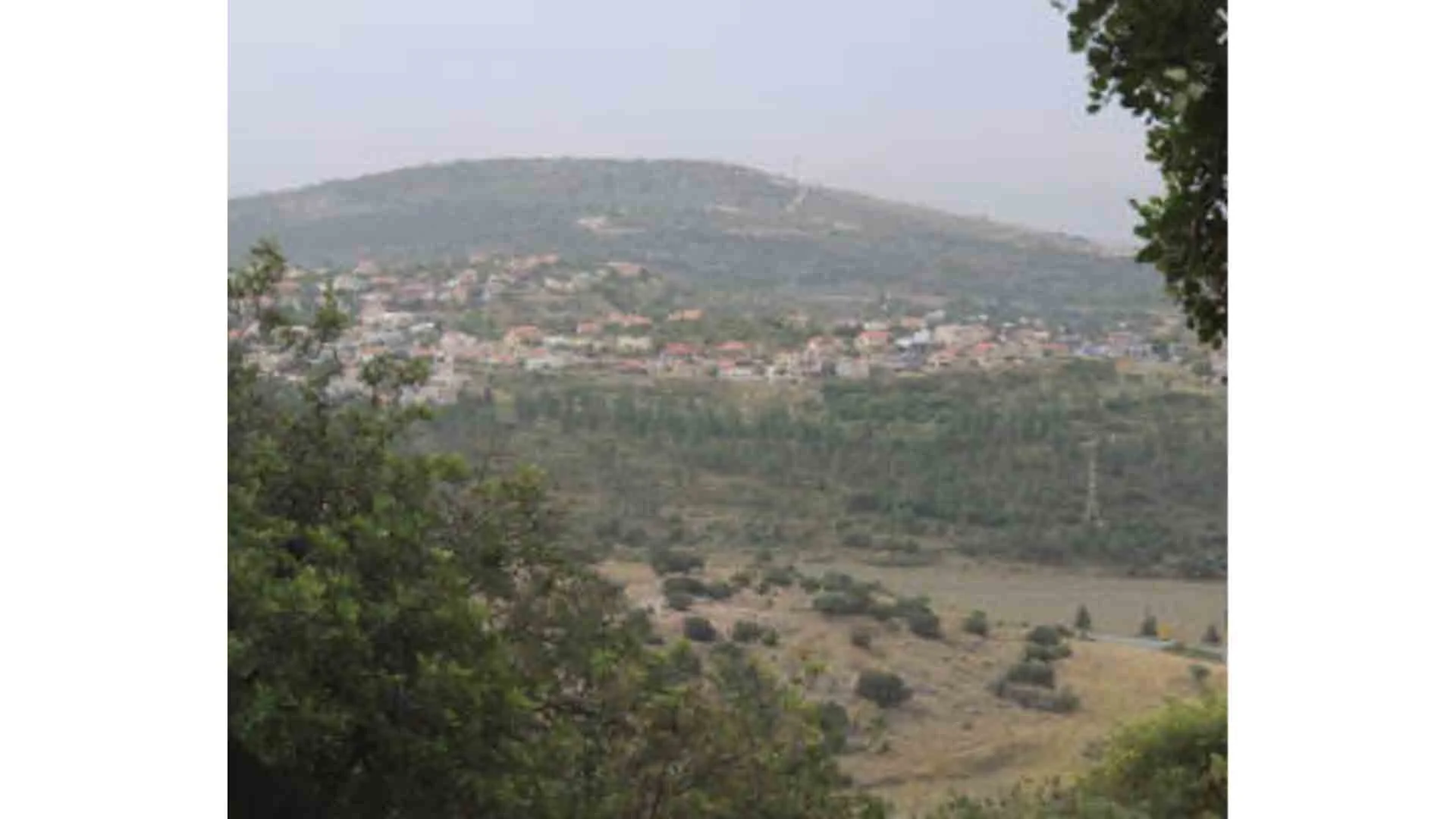
Kfar Hananiah
There are three territories in respect to the law of removal [of sheviit produce]: [these are]: Judea, Transjordan, and Galilee, and there are three territories in each one. Upper Galilee, lower Galilee, and the valley. From Kefar Hananiah upwards, the region where sycamores do not grow, is Upper Galilee. From Kefar Hananiah downwards, where the sycamores do grow, is Lower Galilee.
Ancient Kfar Hananya was a Jewish village during the period of Roman and Byzantine rule in the Galilee. After the Ottoman Empire conquered Palestine, the village came to be known as Kafr 'Inan and became an all-Muslim village.
During the 1948 Arab-Israeli War, Kafr 'Inan was captured by the Golani Brigade of the Israel Defense Forces as part of Operation Hiram and the area was subsequently incorporated into the State of Israel. The villagers were expelled.
Modern day Kefar Hannaniah has an ancient tradition but for me the erasure of the local population of Kfar Inan requires an examination of all the villages that were ethnically cleansed in 1948 during operation Hiram.

The Gemora returns to discuss various customs which one must not permit in public including wearing a wide kurdekison sandal outside on Shabbos, and we are not concerned that it will slip off and he will pick it up. Nevertheless Yehuda and Hillel, Rabban Gamliel’s sons, wore them in Birai, and were slandered, saying that they never saw anybody do that. They slipped them off and gave them to their servants, since they didn’t want to tell them it was permitted. This leads us to the discussion of the Greek etymology of the kurdekison a dancing shoe and the dance known as the Cordax (not the Lorax!).

Rava says "With regard to those women of Machoza, even though they do not work on Erev Shabbos, it is due to excessive pampering, because they don't work on any other day [either]. Even so, we call them 'indolent but rewarded.”
This statement leads us to a discussion of what shelo lishma and intentionality means.

Despite the pious recommendations in our Daf the situation on the ground for most young people today, who wish to make use of the shadchanim is demoralizing. From the “resume” to the intrusive FBI tactics used prospective in laws to the artificial first date chaperoned even in non chassidic circles and the incidence of divorce soon after marriage forces us to critique the system as is employed. Below is my daughter’s view of the landscape…

Detail of grasshopper on table in Rachel Ruysch's painting Flowers in a Vase, c. 1685. National Gallery, London
In our mishnah there is a difference of opinion concerning the visual signs of partly leavened bread. Rabbi Yehudah ben-Ilai says that when Tanna Kamma refers to partly leavened bread he means that when it comes out of the oven it has a crust with small cracks in it - cracks that look like the antennae of grasshoppers: two small cracks only in a kind of V-shape.
This leads us to ponder the use of the grasshopper for the shape of a crack and the function of its antennae.

The embarrassment of God "needing bread" philosophically, leads to the multiple symbolic interpretations….

It is hard to know when a dough becomes chametz. The Mishna and Talmud give certain identifying characteristics for chametz dough but these are not always readily apparent. In case of doubt the Talmud provides a specific time frame after which it can be presumed that the dough has become chametz. The Yerushalmi’s opinion is that after 72 minutes dough can be presumed to be chametz, but the standard version of the Bavli declares that this is assumed after only 18 minutes.
In the 19th century two rabbinic geographers debated if the text in the Talmud Bavli had become corrupted and originally agreed with the Yerushalmi’s longer timeframe.
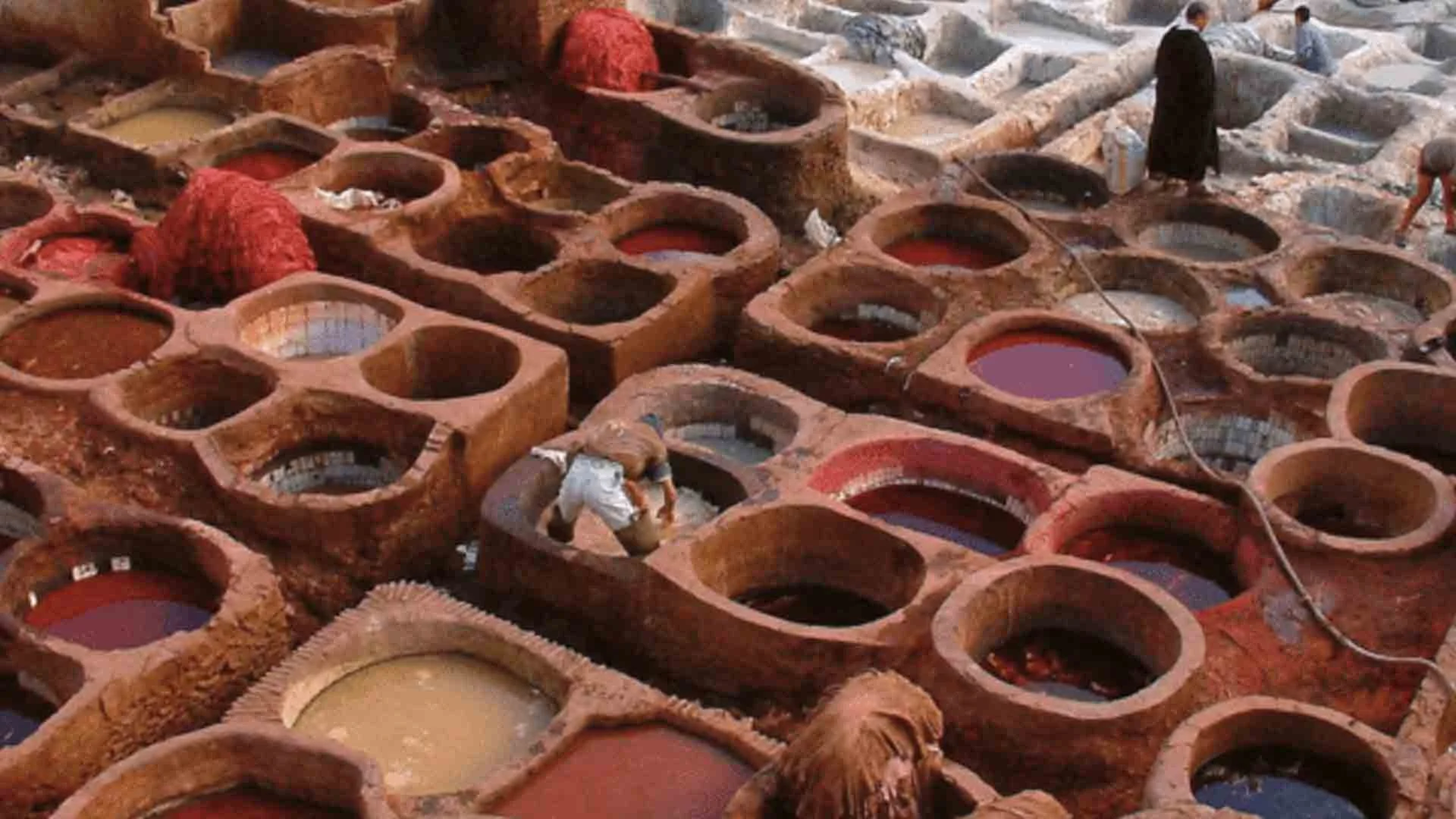
The tanners pot that chametz crept in to leads us to a review of ancient tanning practices and the germara’s (Kiddushin)
Negative view of tanning as a trade for a nice Jewish boy!

For bread, there was a whole range of condiments or dips called kemach. In modern Arabic, this word is sometimes used for vinegar pickles, but the main ninth-century condiment, al-kaamakh al-ahmar, was made by mixing fermented barley —the same material that murri was made of—with milk and salt.

With all this talk of ta’aruvos let us review the work of Heckler:
Mystical Bodies, Mystical Meals: Eating and Embodiment in Medieval Kabbalah.

Cilicia is a geo-cultural region in southern Turkey, extending inland from the northeastern coasts of the Mediterranean Sea. Cilicia has a population of over six million, concentrated mostly at the Cilicia plain. The region includes the provinces of Mersin, Adana, Osmaniye, and Hatay.
The “Wise Men” of Papunya.

Prefiguring later laws of cooking the Passover lamb itself, which will be discussed in totality later, the Talmud gives a few rules here. One should not cook it in water or in any other liquid, but only roast it on fire. However, once it is roasted, he can baste it or eat it with relishes.
The use of Chamei Teverya the Hot Springs of Tiberias (remember in Shabbes 38?) this time leading us to the use on Shabbes of solar power,solar panels and the controversy over the use of the Dud Shemesh.